Top 20 Things Bridgerton Got Factually Right & Wrong
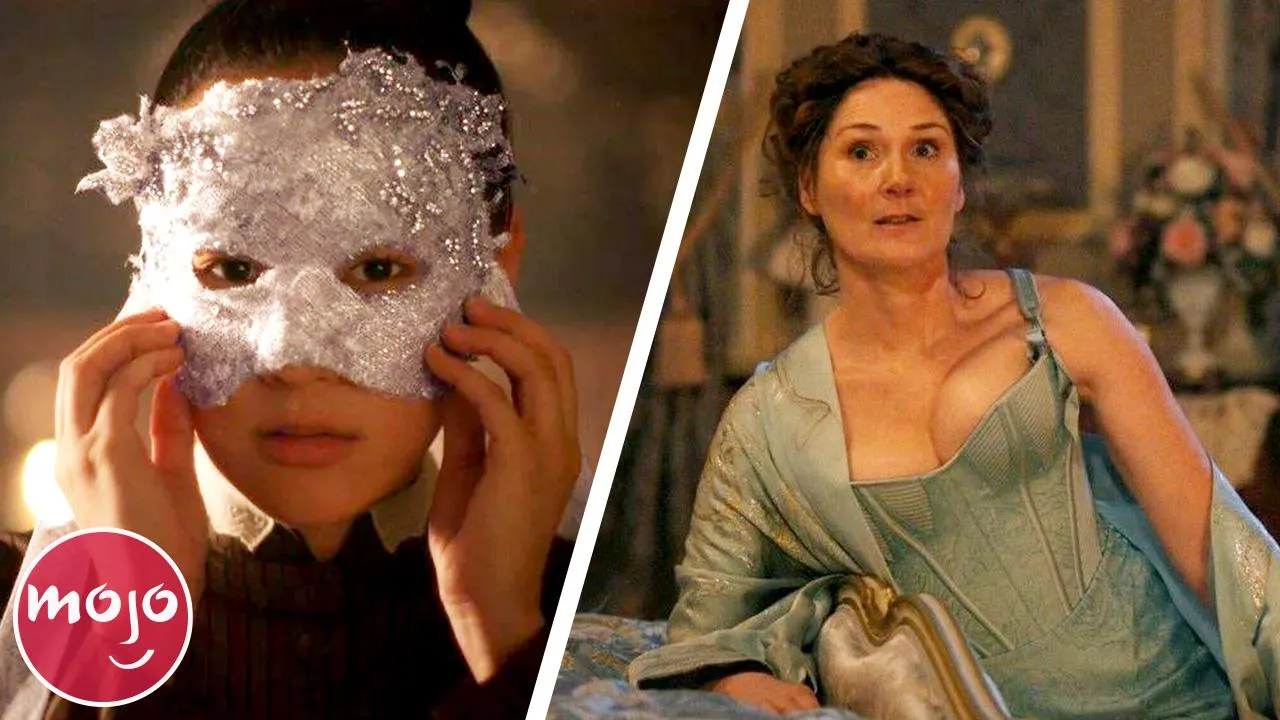
#20: Makeup & Nails
Wrong
While we’ll be talking more about the costumes later, for this entry, we’re specifically looking at season 3’s liberal use of cosmetics, which was significantly more egregious than the previous two. Viewers found themselves jarred over and over again by the Ton’s newfound love of false eyelashes, lipstick, and acrylic nails, particularly in the case of Penelope. Makeup was actually extremely subtle in the Regency era, in stark contrast to the earlier Georgian decades when people would slather their faces with white, lead paint. But the early 19th century preferred a subtler, natural look, so it’s no surprise that people didn’t like all of “Bridgerton’s” women now having “Instagram face”.
#19: Vegetarianism
Right
You’d be forgiven for thinking that Lord Debling’s unconventional vegetarianism is another piece of modernity shoved into the show to make him relatable to modern audiences, but that’s not the case! Vegetarianism has been a lifestyle choice since Ancient Greece, but it gained new popularity during the Renaissance, and was already an established choice by the time of the Regency. People would have thought Debling was strange and eccentric to be vegetarian, and they do indeed also think this in the show. Many people think Debling is odd for his disdain of animal products and are sceptical of Penelope briefly entertaining him as a potential suitor.
#18: Wedding Cakes
Wrong
In a show devoted to love and romance, it makes sense that we get to see plenty of elaborate wedding cakes. There’s a particularly impressive one at Anthony and Edwina’s wedding-gone-wrong in season 2. But just when were wedding cakes invented? Well, a bride’s pie and, later, bride’s cake, had existed since the sixteenth century, and tiered cakes were already popular, but these lavish ones covered in white icing were extremely rare and expensive until they were popularized by Queen Victoria for her wedding in 1840. They certainly could have afforded a cake like that, but the cakes in “Bridgerton” are extremely modern looking and just not representative of actual bride’s cakes of the time.
#17: The Earldom of Kilmartin
Right
Fans were shocked when the season 3 finale revealed that rather than Micahel Stirling, we were getting Michaela, with some pointing out that the plot of “When He Was Wicked” will no longer work since Michaela can’t eventually inherit the title. But would you believe that actually, she CAN? The Earldom of Kilmartin has the crucial distinction of being a Scottish title rather than an English one, which means that women are able to inherit the full titles. Presumably, this means that Francesca’s season will have two Countesses of Kilmartin at once. There are even a few English titles that allow a woman to inherit – though only if the title is created with a special remainder that makes that possible, which most aren’t.
#16: Lady’s Maids
Right
While Benedict is away in My Cottage, a new scandal hits the Ton: the “Maid Wars”. Taking place entirely through Lady Whistledown’s epigraphs in the book, in the show, we get to see the aristocracy battling over their servants – particularly, their lady’s maids. A good lady’s maid was just as coveted in real life as it is in “Bridgerton”, and poaching somebody else’s maid – who will generally have been trained up from a young age to serve only one person – really would have been enormously scandalous. Lady Gun stealing other people’s servants by sending them letters offering to overpay them gets her ostracised from society in “Bridgerton”, and the same would have happened in reality.
#15: Princess Charlotte of Wales
Wrong
Another nitpick about titles, “Queen Charlotte: A Bridgerton Story” got more than a few things wrong about the heir to the throne in 1817. Princess Charlotte of Wales, whose death sparks a constitutional crisis we’ll get to in a moment, is incorrectly referred to in the show as “the Princess Royal”. But Charlotte, Princess Royal was a completely different woman – the eldest daughter of Queen Charlotte and King George III. “Princess Royal” is a title always reserved for the eldest daughter of a sovereign; Princess Charlotte of Wales was the eldest daughter of King George IV, but he was NOT king at the time. It’s understandably confusing when they’re all named “Charlotte”, though.
#14: The Succession Crisis
Right
We’re still talking about Princess Charlotte of Wales, whose death really did lead to a succession crisis, even if they got her identity slightly wrong. While George III and Queen Charlotte had fifteen children, none produced any legitimate heirs aside from Charlotte, who died tragically young. The “Queen Charlotte” spin-off partially follows the Queen’s attempts to encourage her children to produce another heir, with Princes William and Edward both marrying in 1818. Only one, Edward, had a child, a daughter named Alexandrina. Upon taking the throne in 1837, she chose the regnal name “Victoria” and became Britain’s longest-reigning monarch, taking a record previously held by George III, which she eventually lost to Elizabeth II.
#13: The Balloon
Wrong
No “Bridgerton” scene is more infamous than the hot air balloon disaster. While it’s very true that hot air balloons were still flashy, new technology at the time, with Western iterations developed by the French in the 1780s, the immediate threat to life by a rogue balloon is blown massively out of proportion. The show wants us to believe that Penelope is in grave danger when the balloon careens towards her, leading to Lord Debling’s heroic rescue. But in actuality, she’d probably have just gotten a few bumps and bruises from being knocked over by a wicker basket. Interestingly, only two people had ever died in a balloon accident by the Regency period, when one caught fire and fell into the English Channel in 1785.
#12: Marina’s Attempt to End Her Pregnancy
Right
Trying to prevent a pregnancy and birth in Regency England was no mean feat. While a handful of contraceptive methods existed – including deeply unpleasant, reusable condoms made of animal guts – nothing was as reliable as modern interventions. The same goes for ending a pregnancy, which could be deadly for the mother. Season 1 addresses this head-on with the subplot about Marina Thompson, where she drinks an elixir made with a toxic plant and attempts to induce a miscarriage. This is all very accurate, with one herb, pennyroyal, being used for this purpose. But suffice it to say that it can have potentially lethal side effects and, like in the show, isn’t a guaranteed way to achieve this particular goal.
#11: Royal Addresses
Wrong
Perhaps this seems minor, but if you know anything about the royals, it certainly will have jarred you. Early in season four, when Queen Charlotte makes her grand entrance at Lady Bridgerton’s masquerade, she’s introduced as “her royal highness”. Later in the same episode, she’s instead called “her majesty”. You don’t have to be an expert to know that only “her majesty” is correct; “royal highness” is an inferior title, with “majesty” reserved only for the King and Queen – or exclusively for the Queen, if there is no king. Another bizarre royal mix-up happens in this episode, too, when Alice Mondrich refers to a fictional “Queen Margaret” as the Queen known for ordering beheadings. In actuality, Elizabeth I was known for that.
#10: Mad King George
Right
These days most people know King George III as the lovable tyrant from “Hamilton.” Historically speaking, he really did go mad, but it wasn’t from a bad colonial breakup. Throughout his adult life George struggled with fits of mania and delusions, causing him to periodically withdraw from public life. However, it was the loss of his favorite child, Princess Amelia, in 1810 that seems to have sent him over the edge. Deemed insane, George spent the last nine years of his life in seclusion while others took up the reins of power. Not his Queen, Charlotte, though. She may be Head Royal in Charge on “Bridgerton,” but in real life their son George stepped in as Regent, giving the Regency Era its name.
#9: Simon’s End of the Line Vow
Wrong
Rebellion pretty much goes hand in hand with Daddy Issues, but “Bridgerton’s” Simon Basset takes things to a whole new level. His vow to end his family line and destroy his toxic father’s prized legacy is...intense. It’s also highly unlikely from a historical standpoint. There was nothing more important to a man than being able to secure his family’s property and titles with an heir. Actively choosing not to would have been unheard of. Besides which, the value traditionally placed on masculine virility and the humiliation associated with impotence shouldn’t be underestimated. It strikes us as doubtful that someone as accomplished as Simon would have so little concern for his social reputation as a man.
#8: Women Earned Their Own Money
Right
Women may not have had much in the way of legal rights in the Regency era, but they weren’t completely helpless either. In “Bridgerton” we see this in characters like Genevieve Delacroix and Siena Rosso, independent, unmarried women supporting themselves. And that’s not incorrect. Marriage was considered the ultimate achievement for a woman, but plenty still established themselves in other occupations. Education was a common field, as was domestic work. Modiste Genevieve represents the many women who were employed as dressmakers or in related trades. As an opera singer Siena would have been more unusual, not unlike those women who, like Jane Austen, were able to live by their pens. Women have always done just fine for themselves.
#7: Regency Decadence
Right
Thanks to a million Pride and Prejudice adaptations, our image of the Regency tends to be a very prim one. “Bridgerton,” on the other hand, gives us a brief glimpse of the raunchy atmosphere that was thriving behind some closed doors. Between a sexual revolution in the eighteenth century and a Prince Regent who was all about having a good time, Regency Britain boasted a rollicking underground social scene similar to what we see at Henry Granville’s house. The society ballrooms of the era might have been all white gloves and perfect manners, but after hours there was a lot more sex, drugs, and rock and roll attitude than we ever would have thought.
#6: The Importance of the London Season and the Marriage Market
Right
If “Bridgerton” gets one thing completely right it’s the historical significance of the London Season. For six months every year, the wealthy would descend on the city for an endless series of social gatherings designed to encourage mingling. Mingling of the young and unmarried members of society, that is. The Season’s most important function was as a marriage market, where individuals shopped for a partner who could either strengthen or improve their social standing. It was an especially crucial period for eligible bachelorettes. While men could take their time selecting a spouse, a lady who finished her debutante Season without a husband was viewed as a failure. “Bridgerton” does an excellent job of depicting the scramble to land a man.
#5: A Lady's Virtue is Everything
Right
Okay, but SURELY it’s overreacting to shoot a guy because he took a walk alone with your sister. Not in the Regency it wasn’t. There’s a reason that unmarried ladies were supposed to keep a chaperone nearby at all times. A woman caught alone with a man could only save her reputation if he married her. Otherwise she was left open to speculation about what exactly had occurred away from prying eyes. With her virginity in doubt her marriage prospects would collapse. We’re not saying it’s fair, especially when Regency guys were expected to be “Men of the World.” It’s also not how we would have preferred Simon to marry Daphne, but we guess it’ll have to do.
#4: The Costumes
Right & Wrong
“Bridgerton” is a fantasy version of Regency England, and that is perfectly encapsulated in the thousands of eye-catching outfits created for the series. Most of the silhouettes are accurate to the period, but costume designer Ellen Mirojnick took deliberate artistic license using anachronistic colors, patterns, and embellishments to create looks that feel fresh to the modern viewer. Inaccuracies also feature in the creative hairstyling, and in the sheer amount of clothing that each character seems to have access to. And we have to talk about corsets, which were never the cruel torture devices we’ve been led to believe. Fashions of the Regency emphasized the bust, not the waist. Meaning there was no need to cinch anyone down to the size of a fruit.
#3: The Sexual Cluelessness of the Debutantes
Right
Daphne, Penelope, and Eloise all seem a little oblivious when it comes to certain facts of life. It’s almost as if the show was playing up their naivete for effect. Unfortunately, it isn’t. With purity being considered the most important quality of a young lady, girls in the Regency were kept deliberately ignorant about anything to do with sex. Unless they had caught a glimpse of their farm animals demonstrating the circle of life, a Regency lady’s only sexual education before marriage usually came from her very uncomfortable, often unhelpful, mother. Lower class women tended to be more knowledgeable though; Daphne would certainly not be the first noblewoman asking her maid to fill in some missing information.
#2: The Power of the Gossip Papers
Right
“Bridgerton” has earned more than a few “Gossip Girl” comparisons, but both series owe their premises to a much older legacy. Gossip papers, or Scandal Sheets as they were called, were hugely popular in the eighteenth and nineteenth century as newspaper publishing started to take off. Using thinly veiled pseudonyms for their subjects, countless column inches were spent detailing the love lives and scandals of society’s wealthy and renowned. “Bridgerton’s” notorious Lady Whistledown even bears some similarities to a real life anonymous gossip writer named Mrs. Crackenthorpe, self-described as “a Lady that knows everything.” The appetite Regency audiences had for these Scandal Sheets just proves that whatever else may change, people have always been thirsty for a cup of hot tea. XOXO indeed.
#1: Queen Charlotte Was a Person of Color
Inconclusive
One of “Bridgerton’s,” best features is its inclusive casting practices, starting right at the top with Queen Charlotte. But could that choice actually be based in historical fact? Well...maybe? Portraits of the Queen do seem to suggest someone of mixed ethnicity, and there’s some evidence to support the theory in contemporary descriptions of her appearance. Charlotte was also a direct descendant of a black branch of the Portuguese Royal House through Margarita de Castro y Sousa. That said, the connection was a distant one, and modern scholars remain divided on the truth of her race. With more than two centuries separating us from Charlotte’s lifetime it seems unlikely that we’ll ever have a definitive answer. We stan “Bridgerton’s” Queen regardless.
Let us know in the comments which historical hits and misses you noticed in the latest episodes of “Bridgerton”.

