The 10 BEST Handheld Fighting Games
- "Sonic Battle" (2003)
- "Soulcalibur: Broken Destiny" (2009)
- "Tekken Advance" (2001)
- "Fight Night Round 3" (2006)
- "Dragon Ball Z: Supersonic Warriors" (2004)
- "Dissidia 012 Final Fantasy" (2011)
- "Dual Blades" (2002)
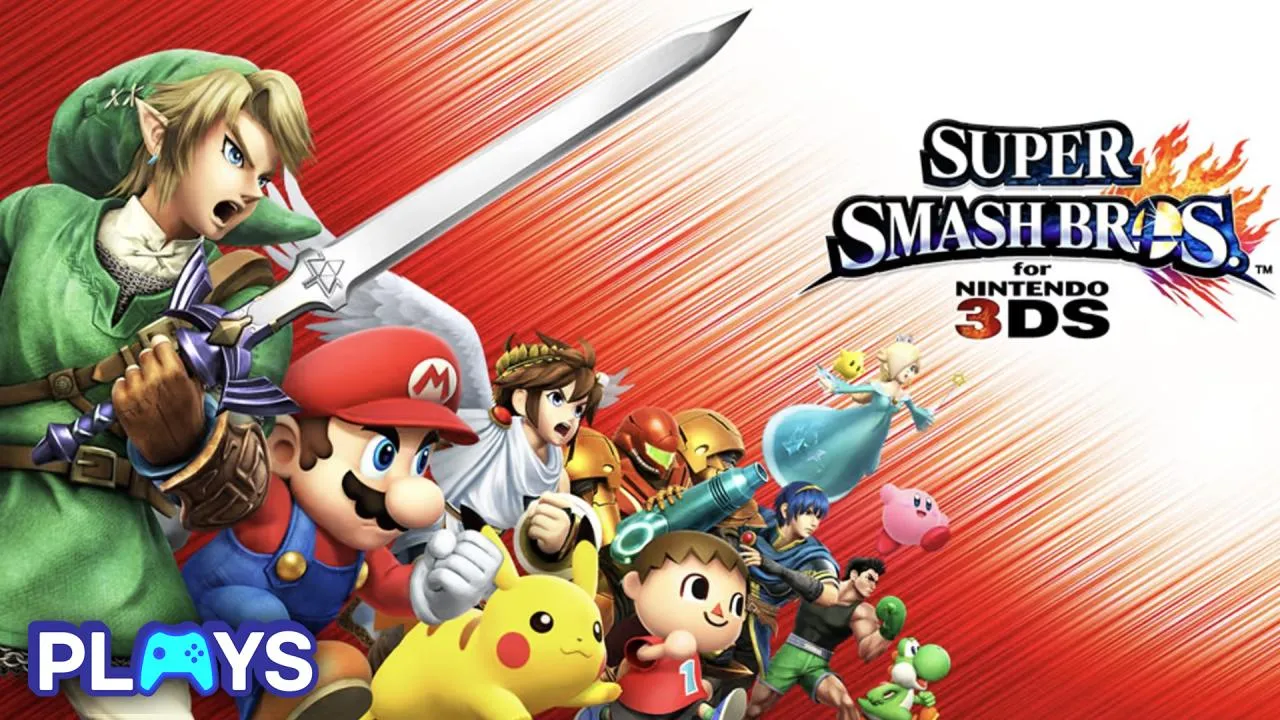
- "Super Smash Bros. for Nintendo 3DS" (2014)
- "Tekken 5: Dark Resurrection" (2005)
- "Dead Or Alive: Dimensions" (2011)
“Sonic Battle” (2003)
With the only other Sonic fighting game being the oft-forgotten “Sonic the Fighters”, it was interesting to see how a Sonic fighting game would work on the GBA. Well, it truly is one of the coolest fighting games the GBA had ever seen! The controls were super responsive, and every character boasted enough depth between their normals and special abilities to make them feel distinct from one another. On the technical side, it was astonishing to see the GBA replicate 3D graphics for its levels. Admittedly, the levels themselves weren’t super interesting, but even so, there was quite a lot to love here between the combat, technical prowess, and of course, the fights against friends.
“Soulcalibur: Broken Destiny” (2009)
Look, we can easily summarize this entry by saying “it’s good ol’ ‘Soulcalibur’ squeezed onto the PlayStation Portable” and call it a day. Not only that, it’s good ol’ “Soulcalibur” with Kratos as the token guest fighter. But really, that’s all we really needed. Even with the noticeable absence of a proper story mode, “Broken Destiny” was honestly a pretty good entry point for newer players as much of the offline focus was on training and mastering the different playstyles. We’ll admit that this entry could have given us a few more goodies, but overall, we were ready to throw down with our friends on smaller screens!
“Tekken Advance” (2001)
On the surface, “Tekken” should not work on a limited console like the Game Boy Advance. This is a game built on four buttons assigned to each limb and requires complex inputs to execute devastating moves. However, “Tekken Advance” found a way to simplify the controls yet still maintain a level of input required to pull off special moves. On top of that, the game still managed to include sidestepping, a key mechanic of the franchise, and it still ran and played as well as the home console and arcade games. Honestly, developer Eighting did a tremendous job with this micro-sized installment, so much that we hope to see it make its way to Switch Online’s GBA catalog in the future.
“Fight Night Round 3” (2006)
Sports games never really had a presence in the handheld gaming market unless one was catering to the arcade-y side of the market or if Mario wedged his way into yet another sport. But “Fight Night Round 3” was the premier boxing game every PSP owner wanted. While it didn’t look as pretty as the Xbox 360 and PS3 versions, it still played well and even boasted a career mode that was more feature-rich with customization options, cutman contracts, and the like. You could even play historical boxing matches via Rival Challenges and really appreciate the athletes that made the sport so respectable. That said, in some ways, the PSP version was perhaps the better version than the home consoles.
“Dragon Ball Z: Supersonic Warriors” (2004)
Obviously, no “Dragon Ball” game is going to feel as fast and fluid on something like a Game Boy Advance compared to a PS2 or even a GameCube. Even so, “Supersonic Warriors” did manage to make do with the limitations and still match the look and feel of the anime in scope. The way the camera zoomed in and out and the parallax scrolling was programmed made it feel like the battlefield was way bigger than it actually was. On top of that, your fights still had awesome moments like kicking your opponent into a pillar of stone so hard it causes the pillar to turn into rubble. Not bad for a pocket-sized brawler!
“Dissidia 012 Final Fantasy” (2011)
Now, the original “Dissidia Final Fantasy” is still an amazing spin-off to go back and play. However, we’re choosing “Dissidia 012” over its predecessor because of how it evolved the formula. For starters, you have more intricate mechanics to learn between the newly fleshed-out Assists and EX moves. But the biggest addition here was the new single-player mode that integrated elements of “Final Fantasy’s” exploration with the more fighting game-focused combat. Build your dream party made of various “Final Fantasy” protagonists and set forth on a journey to kill Chaos. Whether you were in it for the multiplayer or for the epic single-player, “Dissidia 012” has long been known to be the best in the series. If only Square would port these games forward already.
“Dual Blades” (2002)
If you’ve been watching our videos for a while, you might have noticed we’ve shilled for this game a number of times already. But for those who may not be in the know, “Dual Blades” was one of the nine GBA games that ever got an M-rating. And unlike the other eight M-rated GBA games, this one was honestly excellent in just about every aspect. In addition to boasting a diverse roster of characters with varying playstyles, the controls and animations have made it to where this game hasn’t aged a day. Sure, the viscera on display is far from what some would call “graphic” with its red Sharpie marker effects, but regardless, “Dual Blades” is the most impressive fighting game we had ever seen on GBA, and that’s quite the accomplishment considering this game was made by college student in Turkey at the time.
“Super Smash Bros. for Nintendo 3DS” (2014)
We are very aware that “Smash 4” has become the new “Brawl” in recent years with the bizarre split in content and the whole fiasco with Bayonetta breaking the game at the very end. Despite that, the 3DS version of “Smash 4” is still a blast to go back and play every once in a while. It honestly doesn’t feel much different to play than the home console versions aside from being on a significantly smaller screen. But with modes like Smash Run and the way Classic Mode sported a build-your-own-path structure, there is quite a lot to love about this iteration more than some may let on. If only the 3DS didn’t have such a fragile circle pad for some of us.
“Tekken 5: Dark Resurrection” (2005)
The initial version of “Tekken 5” was already remarkable with its detailed visuals and wealth of different game modes. So, how is it that “Dark Resurrection”, the PSP iteration, turned out to be so much better? Well, by simply beefing up the size of the game. In addition to featuring a few more characters, “Dark Resurrection” allowed players to take on ghosts of other players to fight against, emulating online play while also allowing us to take on arcade players from other corners of the globe. Then, there was the extra side games that “Tekken 5” didn’t receive initially. Oh, the hours we wasted on Command Attack and Tekken Bowling. Especially Tekken Bowling. The only reason we aren’t considering it the best handheld fighting game ever is because of the PSP’s d-pad not always being the most reliable in executing specific inputs. Needing a special attachment to play a game properly is never fun.
“Dead Or Alive: Dimensions” (2011)
“Dead Or Alive: Dimensions” is absolutely the best fighting game we have ever played on a handheld console. It was quite astonishing to see Koei Tecmo execute this game so flawlessly while other notable fighting game franchises were floundering in getting just their ports to work on 3DS. As “Street Fighter” and “Tekken” struggled in performance, “Dimensions” ran at sixty frames per second on 3DS when 3D was turned off. When 3D was left on, it ran at a lower frame rate, but that frame rate was still consistent through and through. Even new players could get in on the action and learn the mechanics by executing moves just by tapping on what they wanted to use on the touchscreen. It was a beautiful marriage between hardcore and casual fighting game players and a huge celebration of the might and majesty of “Dead Or Alive”!
What’s the best fighting game you’ve played on a handheld? Did it make our list? Let us know down in the comments, and be sure to subscribe to MojoPlays for more great videos everyday!