The 20 Best Gameboy Gameboy Color Games
- "Dr. Mario" (1990)
- "Bionic Commando" (1992)
- "Balloon Kid" (1991)
- "Croc 2" (2001)
- "Metal Gear Solid" (2000)
- "Mario Tennis GB" (2000)
- "Metroid II: Return of Samus" (1991)
- "Mega Man V" (1994)
- "Dragon Quest Monsters" (1998)
- "Pokemon Trading Card Game" (1998)
- "Tetris DX" (1998)
- "Wario Land 3" (2000)
- "Shantae" (2002)
- "The Final Fantasy Legend" (1989)
- "Super Mario Land" (1989)
- "Kirby's Dream Land 2" (1995)
- "Pokemon Pinball" (1999)
- "Donkey Kong Country" (2000)
- "Pokemon Gold and Silver" (1999)
- "The Legend of Zelda: Oracle of Ages" and "Oracle of Seasons" (2001)
#20: “Dr. Mario” (1990)
A falling-block puzzle game in the vein of Tetris, Dr. Mario challenges players to eliminate viruses by matching their colors with corresponding pill capsules. Its simple yet addictive gameplay, combined with the novelty of Mario donning a doctor’s coat, made it one of the most iconic and beloved titles on the Game Boy. Due to the handheld’s monochrome screen, the Game Boy version replaced the NES’s red, yellow, and blue viruses and pills with distinct shades of black, white, and gray. It didn’t pop nearly as much, but it was still LOTS of fun.
#19: “Bionic Commando” (1992)
Another NES-to-Game Boy adaptation, this one stands out as a masterclass in how to do it right. And trust me, I’m mentioning this because a LOT of times it was done wrong. Capcom carefully reworked the original to fit the Game Boy’s smaller scale while preserving the excellent physics and tight controls, allowing players to swing across the screen without feeling like they were now controlling the game with their feet. The remake also refines the level design, arguably to fit the game onto the smaller console, but somehow it just feels like they trimmed dead-end sections for a smoother, more fluid experience. This is a rare case for the Game Boy experience feeling better than the console.
#18: “Balloon Kid” (1991)
Balloon Kid builds upon the addictive Balloon Trip mode, a precursor to the endless runner genre, and games like temple run. The game introduces new mechanics, such as allowing the protagonist, Alice, to release her balloons and navigate on foot in traditional platforming style, adding an unexpected layer of strategy. Up, down, up, down. If Cuphead wasn’t inspired by this trippy nightmare I’d be surprised. This blend of innovation and charm makes Balloon Kid one of the Game Boy’s most underrated gems.
#17: “Croc 2” (2001)
I’ve always had a soft spot for Croc. He may not get the praise that other platforming icons like Crash Bandicoot and Spyro get, but I’ll never forget that ‘kershplat’ till the day I die. Croc 2 follows the same core gameplay style as the other Game Boy port from Croc, Croc: Legend of the Gobbos, but instead of a side-scrolling platformer, it adopts a top-down perspective, similar to Link’s Awakening. While the camera can be a bit frustrating at times, the game’s bright visuals, creative levels, and overall fun factor make up for it. Also, and I hate to repeat myself, IT’S CROC! HE’S ADORABLE!!
#16: “Metal Gear Solid” (2000)
Metal Gear Solid is one of the greatest stealth-adventure games ever made, and the Game Boy Color version finally gave Nintendo fans a taste of the PlayStation classic, albeit a unique entry in the series, instead of a direct port. Set seven years after the original Metal Gear, it follows its own timeline. Praised as one of the best handheld games of all time, It’s classic super-spy action with plenty of hidden surprises. The game also features a two-player VS mode for head-to-head stealth battles and a VR training mode similar to the main game. It truly adapts the intricate style of the PS1 game, to the paired down Game Boy shockingly well.
#15: “Mario Tennis GB” (2000)
As one of the more underrated N64 entries, the Game Boy Color version keeps the core gameplay intact, featuring a diverse roster of Nintendo characters and human players. What sets the GBC version apart from its N64 counterpart is the inclusion of an RPG mode. You might not think you need RPG in Mario Tennis, but you’ll be shocked at how nice it feels to move your way through the tennis ranks, and feel genuine progression on a handheld game. You’ll compete in various tournaments, and eventually, the ultimate challenge awaits, facing off against Mario himself. The greatest finale since Breaking Bad.
#14: “Metroid II: Return of Samus” (1991)
While Metroid II may be the weakest entry in the mainline Metroid series, even a mid Metroid is still an impressive Game Boy release. The world of Metroid II is larger than its predecessor’s, and Samus must acquire a greater variety of gear to take on an even deadlier lineup of Metroids. Though the game can feel sluggish at times and suffers from repetitive visuals that make navigation tricky, it successfully expands on the original’s foundation, offering more depth to both Samus and the universe she explores. And you can play it in the backseat while your parents fight over directions... I assume.
#13: “Mega Man V” (1994)
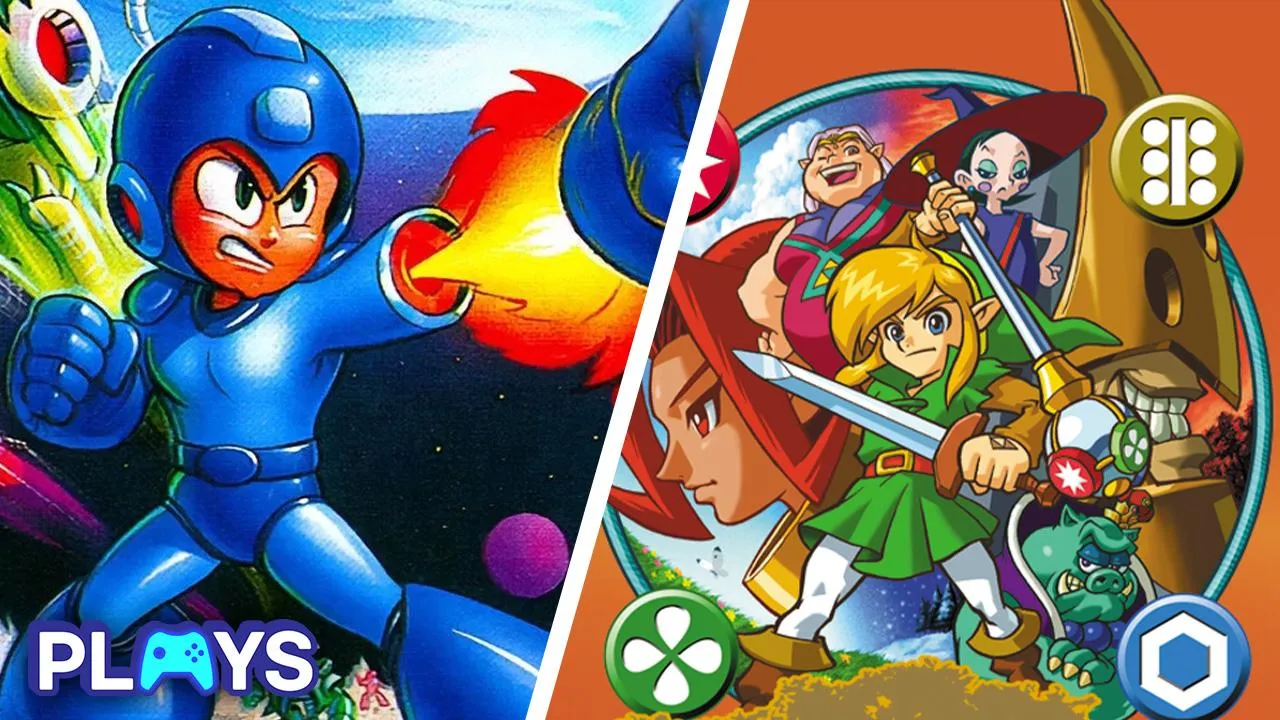
Capcom released several Mega Man games on the Game Boy, but the first four were essentially ports of recycled NES stages. It wasn’t until the fifth and final installment that Capcom ran out of existing content and made something entirely original. This time, Mega Man embarks on a journey through the solar system, battling planet-themed bosses in a fresh twist on the classic formula. Its late release, limited print run, and strong reputation have made it a pricey collector’s item, but thankfully, it’s also available on the 3DS Virtual Console for anyone who doesn’t really care about having a physical copy, and a box. Go get it.
#12: “Dragon Quest Monsters” (1998)
This vibrant RPG has a level design reminiscent of The Legend of Zelda, while its gameplay shares similarities with Pokémon, particularly in its monster-breeding mechanics. There’s a reason it was remade for the PlayStation, the formula just works. The story centers on Terry’s quest to rescue his kidnapped sister. Unlike other Nintendo RPGs, Terry doesn’t fight battles himself. Instead, he recruits and trains monsters to battle for him... Seems familiar. His first companion, Slib the Slime, may not have the same ring as Pikachu, but it works. Fight. Overcome. Succeed. Slib the Slime.
#11: “Pokemon Trading Card Game” (1998)
Capturing the excitement of the real-life card game, collecting, battling, and strategizing, and condensing it into a video game felt almost unreal at the time, and explains why this is not just one of the best, but one of the most underrated Game Boy games of all time. The battles were just as thrilling as those in the main Pokémon series, but without the constant expense of buying physical packs. The gameplay mirrors the main Pokémon RPG structure, you battle eight Club Masters and four Grand Masters, earning exclusive cards you couldn’t get in real life. GBC players could also link up to trade and battle, unlocking even more hidden surprises. It’s one of the best side games in the series, and deserves WAY more praise.
#10: “Tetris DX” (1998)
Leaving Tetris off this list would’ve been a crime, but we’ve decided to focus in on the Game Boy Color version Tetris DX, though the original Tetris release on Game Boy is just as good, albeit paired back. Few games are as universally accessible, this is a game anyone can pick up and play, adding to its appeal. It transcends generations, and chasing that high score remains one of the most intense gaming challenges out there. Actually screw this list, let’s all go play Tetris.
#9: “Wario Land 3” (2000)
Sometimes, it’s fun to step into the shoes of the bad guy, especially when that bad guy is just a little misunderstood. Wario Land 3 was met with critical acclaim upon release, but so were the first two entries, which are also worth mentioning... Just not on this list. The game follows the formula of Wario Land 2, sending us through a variety of stages as he collects new abilities to help him navigate its bizarre and inventive world. Wario Land 3 is a fan favorite and an absolute must have for any Game Boy Color collection, especially mine.
#8: “Shantae” (2002)
This is where it all began, the first entry in the Shantae series and our introduction to the half-genie hero herself. One of Shantae’s coolest features is her ability to learn new dances by defeating dungeon bosses. These dances allow her to transform into different creatures, each unlocking new areas and abilities. It’s the kind of imaginative gameplay you can easily lose hours to without realizing it. The game also features a dynamic day-and-night cycle, reminiscent of Ocarina of Time. Leaving players feeling very immersed in the tiny handheld console.
#7: “The Final Fantasy Legend” (1989)
The Final Fantasy Legend isn’t technically Final Fantasy, but it’s not too far off either. Created by one of Squaresoft’s most unconventional directors, these games took some of the more experimental mechanics from Final Fantasy II and ran wild with them. Set in bizarre worlds that include physics-defying landscapes and even a banana-smuggling cartel, these adventures let players build teams from a variety of unique races. As the world’s first portable RPG series, Final Fantasy Legend embraced its fresh, uncharted territory by doing things its own way. For better or worse, its unique charm is what makes it so enjoyable to this day.
#6: “Super Mario Land” (1989)
Super Mario Land marked Nintendo’s first attempt at a Mario platformer built exclusively for a handheld system, and when I say I put more hours into this than any other Game Boy game, I mean it. While it retained the core 2D platforming mechanics, the limitations of the Game Boy’s screen led to a drastically scaled-down and slightly offbeat experience. The result? A Mario game that felt both familiar and strangely different. If you’re a Mario fan and you haven’t played this game, you’re gonna thoroughly enjoy the almost ‘uncanny valley’ nature of it. It’s like Mario in an alternate reality.
#5: “Kirby’s Dream Land 2” (1995)
In Kirby’s Dream Land, Kirby appeared white on the game’s packaging, and he lacked his now-iconic ability to copy enemy powers, but the game’s upbeat tone and charming aesthetic laid the groundwork for what would become the widely adored franchise. The sequel, Kirby’s Dream Land 2, brought in mechanics from Kirby’s Adventure on NES, expanding on the original’s design, so while it was adapted slightly, it was still a totally original experience. Approachable, adorable, kinda like someone I know… Me. I’m kidding, I’m not approachable.
#4: “Pokemon Pinball” (1999)
How do you make a Pokémon game even better? Add Pinball. Winning formula, watch the money roll in. I’m goofin, Pokémon Pinball isn’t just a gimmick, it’s genuinely one of the best Game Boy Color titles out there. It’s fun, easy to pick up, and ridiculously addictive. Honestly, this game should come with a warning label because once you launch that first Poké Ball, it’s tough to stop. Once you pop, you won’t stop, gotta waste your day, Pokemon.
#3: “Donkey Kong Country” (2000)
If you're a Nintendo fan, chances are you've played Donkey Kong Country on the SNES, a legendary side-scrolling platformer with some of the best gameplay ever. OBVIOUSLY the game was eventually ported to Game Boy, even if it was 6 years later. The Game Boy Color port stays remarkably true to the original, with the addition of a brand-new level called Necky Nutmare, plus hidden areas, upgraded visuals, and new gameplay modes. Obviously every Donkey Kong Land entry could have also taken this spot, but we decided to focus on the Game Boy Color port because it’s impossible to get better than DK Country.
#2: “Pokemon Gold and Silver” (1999)
I decided to use only one Pokemon entry (or two technically), because it’s hard to beat the Game Boy exclusive games, but even though Pokemon Red and Blue are so unbelievably iconic, Gold and Silver is taking this spot. Where do I even begin? For starters, they introduced a real-time internal clock, making certain events and Pokémon encounters time-dependent. Pokémon could now hold items like berries, adding a new layer of strategy. Legendary Pokémon roamed the wild, creating thrilling, unpredictable encounters where their health didn’t reset between battles, keeping you hooked. Plus, we got new PokéBalls, PokéGear, and countless refinements that made an already great formula even better. It’s often forgotten being smack bang in the middle of iconic classic, and modern gem, but it deserves a replay from everyone.
#1: “The Legend of Zelda: Oracle of Ages” and “Oracle of Seasons” (2001)
Surely nobody is shocked that the number one spot goes to a Legend of Zelda title, or in this case, two. Each game has major differences, and only by completing both can players fully understand the overarching story. In Ages, Nayru sends Link to Labrynna, while in Seasons, Din transports him to Holodrum. Both feature the familiar item and weapon collection mechanics we all love, but each has its own unique cast of characters. The key distinction? Seasons leans more toward action, while Ages emphasizes puzzles. Play them together, and you’ve got one of the most unique Zelda experiences ever. Do yourself a favor and grab them both, or Link’s
Awakening? Honestly, you can’t go wrong for Zelda on a Game Boy.
