Top 30 Things From the 2000s We Will NEVER Do Again
#30: LiveJournaling
Before every thought became a tweet, a story post, or a carefully curated Instagram caption, there was LiveJournal — the digital diary of the early internet. You didn’t “post content” so much as unload your soul in a page full of custom fonts, moody layouts, and tiny mood icons. LiveJournal captured a very 2000s kind of online intimacy, where oversharing was practically a social currency. These days, most of us would rather text a friend our emotional breakdown than publish a 900-word entry titled something like “i am a storm wrapped in a cardigan.” It was chaotic, sincere, and very of its time. We’re not going back.
#29: Buy Cereal For the Toy Inside
There was a whole era when breakfast was basically a hostage situation for children. You weren’t choosing cereal because it was the healthiest or tastiest option; you were choosing it because there was a tiny plastic prize buried somewhere in the box, and your entire week might depend on getting it. In the 2000s, that little toy could sell a whole family on a sugary cereal they probably wouldn’t have bought otherwise. Today, though, we’re a lot more aware of nutrition labels, sugar content, and the fact that a flimsy sticker sheet is not worth 12 bowls of rainbow marshmallow dust. Even as kids, the thrill was rarely about the cereal itself: it was the promise of treasure.
#28: Get a Subway Footlong for $5
For a long stretch of the 2000s, “$5 footlong” was more than a promotion — it was a cultural mantra. Subway hammered it into our heads with one of the most aggressively catchy ad campaigns of the decade, and for a while, it felt like the golden age of cheap, enormous sandwiches. Subway’s prices rose over time, and that famous deal became more of a memory than a menu item. Sure, there are still sandwiches, and yes, there are still deals from time to time, but that legendary $5 promise belongs to another era — one where gas was cheaper, cell phones had buttons, and we thought a giant chain sandwich was the peak of adulthood.
#27: Make Your Hair “Crunchy”
If you lived through the 2000s, you know the texture we mean. Hair wasn’t supposed to look soft or touchable — it was supposed to stand in place like a helmet with highlights. Thanks to hair gel, hairspray, mousse, and enough product to violate several environmental guidelines, “crunchy” hair became a style all its own. The goal was maximum hold, maximum shine, and absolutely zero movement. It was the age of overstyling, when the point wasn’t to appear natural, but to look like you had spent 45 minutes getting ready for a casual pizza outing. Nowadays, the ideal is usually softer, more effortless, and a lot less likely to make your hair audibly rustle when you turn your head.
#26: Hang Out At the Mall
There was a time when the mall was the center of teenage civilization. Not a place to shop — a place to exist. If you had nowhere else to go, you went to the mall. If you had somewhere else to go… you still probably ended up at the mall. You could browse stores you couldn’t afford, loiter in front of the arcade, get a pretzel, and spend three hours doing absolutely nothing with the kind of sincerity only teenagers can manage. But the internet changed everything. Online shopping gutted retail traffic, and social lives migrated to phones, games, and streaming. Plenty of malls still exist, of course, but the era when they functioned like sacred meeting grounds has passed.
#25: Rent a Movie From Blockbuster
Few weekly rituals felt more deliciously full of possibility than wandering into Blockbuster on a Friday night, hoping the movie you wanted was actually on the shelf. You’d stare at rows of rental boxes, judge a film by its cover, and maybe leave with something you’d never heard of because the actual blockbuster title was already checked out. Then came the late fee anxiety, the frantic rewinding of tapes, and the subtle dread of returning a movie one day too late. There’s still nostalgia for the blue-and-yellow logo, to be sure. But the routine of going to Blockbuster, browsing in person, and praying the shelf wasn’t empty? That belongs to the age of VHS, DVDs, and slower weekends.
#24: Watch a Brand-New Raunchy Teen Comedy
The early 2000s were loaded with films that seemed determined to answer one question: how many awkward, hormonal jokes can fit into 90 minutes? Raunchy teen comedies were everywhere, often following the same glorious formula of embarrassment, overconfidence, and entirely inappropriate behavior. Whether it was prom chaos, fake identities, or the endless pursuit of getting into a party, these movies reflected a very specific moment in comedy where shock value and sex jokes were treated like essential ingredients. Today’s comedies tend to be a bit more self-aware, and audiences are more likely to notice when a joke leans too hard on cringe for the sake of it. Back then, though? The raunchier, the better.
#23: Play “Guitar Hero”
For a while, Guitar Hero didn’t just feel like a game — it felt like a shortcut to music superstardom. You’d strap on that plastic guitar, jam on a song you probably had no actual musical training to play, and somehow convince yourself you were basically a rock star. The song selection, the fake fret buttons, the screen lights, the frantic strumming — it all worked beautifully, especially when everyone took turns trying not to embarrass themselves on “expert.” But the novelty eventually wore thin. Sequels multiplied and rhythm games in general lost their grip on the mainstream. Add in the rise of real music streaming — and loss of space for giant plastic accessories in our homes — and the magic faded.
#22: Live Independently From Your Smartphone
In the 2000s, especially early on, you could leave the house and simply be unreachable for a while. If you made plans, you had to stick to them. If you needed directions, you asked someone, printed them out, or — in a truly ancient ritual — used a map (but more on that a little later). That kind of independence feels almost unimaginable now, when our devices are packed with calendars, bank apps, cameras, navigation, music, and more. But the tradeoff is obvious: the smartphone gave us convenience at the cost of constant availability. Then again, there was also a lot of getting lost and missing messages. Still, it’s inarguable that it was a different kind of life.
#21: Call the “Home Phone”
The home phone was once the center of family communication, and every household had its own little rules around it. Phones were attached to walls, cords got tangled, and everyone in the family knew the number by heart. Caller ID was a luxury, voicemail could be a minor miracle, and cordless phones still tied you to the general vicinity of the house. It’s hard to overstate how much this shaped 2000s life, especially before cell phones became universal. But once everyone started carrying personal devices, the home phone became less necessary and more ceremonial. Many people eventually dropped landlines entirely, since the only calls they were getting were from telemarketers.
#20: Jessica Simpson’s Dessert Beauty
One of the biggest stars of the early 2000s, Jessica Simpson had a horde of fans ready to buy anything she put her name on. In 2004, Simpson launched Dessert Beauty, a line of edible cosmetics in a variety of saccharine scents and flavors. There was everything from the shimmering Kissable Hair and Body Fragrance to the whipped body cream that came with sprinkles no one knew what to do with. We obviously had to get our hands on every cupcake-scented product this line offered. Unfortunately, legal battles led to the brand and its offshoots being discontinued. A perfect encapsulation of the cutesy, sexy, and girly vibe of the early 2000s, Dessert Beauty is now obsolete, but sorely missed.
#19: Watching TV Shows on DVD Box Sets
Since streaming became mainstream, DVDs have slowly become obsolete. Before streaming services allowed us to binge watch TV shows all in one sitting, the main option for watching your favorite TV episodes on demand was massive DVD box sets. The multi-disc sets looked impressive on a shelf and were often sought after collector’s items. Today most people consider DVD box sets expensive and unnecessary, but as Netflix and other streaming services quietly remove beloved series, some are turning back to this old-school technology. Like records in the 2010s, DVDs might be the new hot physical media for collectors.
#18: T9 Texting
What was worse, having to click 7 four times to type one letter “s,” or having to go back to fix an incorrect T9 text prediction? Thankfully, we don’t have to put up with either of these clunky typing systems anymore, but back in the 2000s we had no choice. T9 texting was intended to speed up the time-consuming process of using the 3x4 numeric keypads common to the cell phones of the early aughts. But it was frustrating when a poorly predicted text slowed things down altogether. It was remarkable how fast we were still able to fire off messages in the face of so many obstacles. Today’s youth have it easy!
#17: Play Dance Dance Revolution in an Arcade
Dance Dance Revolution was truly a revolution in arcade technology, or at least it felt like one. First released in Japan in 1998, this step-coordination game quickly took the world by storm. It seemed like it was impossible to find a DDR game in an arcade without a line of players, but we were still happy to wait. Though less popular today, it still maintains a small following of dedicated fans and players who compete in tournaments around the world. As for the rest of us, we no longer head down to the arcade with our friends for a fiercely competitive DDR session. The game will forever remain a fond memory from our youth, though.
#16: Drink SoBe
The coolest choice for a beverage on a hot day in the aughts was by far the brightly colored drinks in glass bottles with the sick lizard design. We’re talking, of course, about SoBe. The line of teas, juices, and flavored waters were ubiquitous in convenience stores in the 2000s. By now you’re probably realizing it’s been a while since you’ve seen their products on shelves and wondering, what happened? To begin, PepsiCo, SoBe’s parent company, opted for plastic packaging in 2007, causing the product to lose some of its classic feel. SoBe was having a hard time financially, eventually being removed from stores. Now, the drinks are incredibly difficult to locate.
#15: Watch Style Network
Before influencers and the curated algorithm of Pinterest, fashion-forward individuals of the early 2000s learned of the latest trends through Style Network. A spinoff of E! launched in 1998, it featured a variety of fashion-centric and makeover programming like “The Look for Less” and “Clean House.” The channel rebranded as the decade neared its close, ultimately becoming Esquire Network in 2013. It broadened its focus, expanding to cover sports, travel, and more. The unexpected change upset both viewers and stars of the Style Network due to the sudden cancellation of beloved shows. The rebrand was largely unsuccessful, and Esquire Network was pulled from television in 2017.
#14: MySpace
For many of us, MySpace was our first foray into the world of social media. Though similar in some ways to the social networks of today, there were some elements we’d never dream of using again. Navigating the social landmine of changing your top eight — a ranking of your eight closest friends — was a new kind of stress we weren’t prepared to deal with. Pages were customizable, as long as you learned to use HTML. Curating a perfect MySpace page with accompanying music was time-consuming, but seemed important at the time. Who has the energy to put that much effort into their many social media platforms today?
#13: Pay for Ringtones
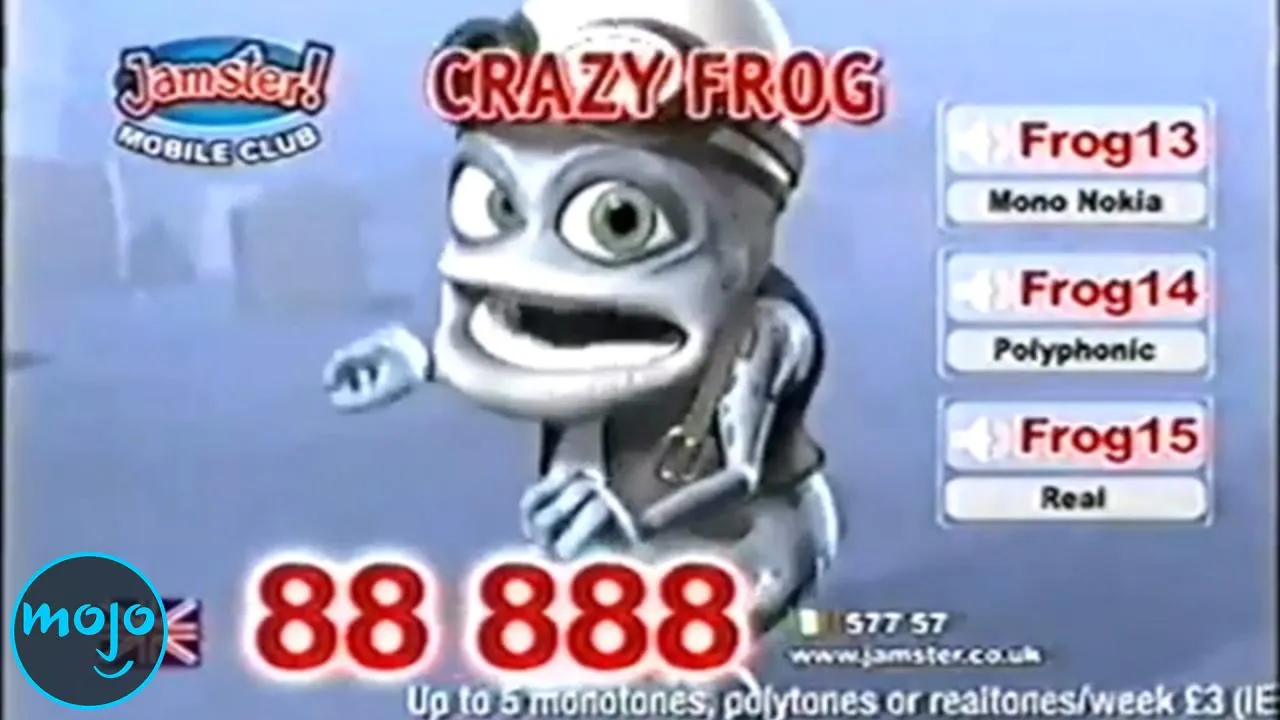
Before we all collectively decided to keep our phones on vibrate permanently, having a unique ringtone was a status symbol. It meant you either shelled out the roughly $2.50, or you recorded it directly from the radio after waiting for your favorite song to come on. Today, hearing even a default ringtone played out loud is a rarity, let alone a custom one. The rise of smartphones, with all their many apps and notifications has made it a necessity to keep your phone on silent most of the time. Plus, with the age of streaming making nearly all music easily accessible, the novelty of a special song as your ringtone just isn’t worth the money.
#12: Chain Emails
Quick, send this video to ten friends or you’ll have bad luck for a year! While there’s still plenty of spam clogging our inboxes on a daily basis these days, chain emails were unique in that they came directly from friends and family. With a message urging you to forward this email for good luck, or to avoid bad luck, or any other fake consequence, they ranged from harmless to seriously annoying. Today email is used less for socializing and more for serious matters, like work or online shopping order confirmations. As a result, the frivolous chain email has slowly fallen out of fashion, a relic of the Internet’s youth.
#11: Use a Paper Map
For better or for worse, almost no one needs to use a physical map these days. With the advent of smartphones with built-in GPS apps, we can easily find walking, driving, or public transit routes to any destination we wish to reach. This feature has become so ubiquitous, we’ve almost forgotten what a hassle clunky paper maps that were impossible to fold back up were. Granted, it’s still a good idea to keep a paper map in your car in case of emergencies or if you’re headed to a remote location. But it’s unlikely this humble navigation tool will ever be an essential travel item again.
#10: Netflix DVDs
Before streaming, the way we used Netflix was by renting DVDs through the mail. We would curate our queues carefully, hoping that none of the movies we wanted to see had a “Very Long Wait.” In a time when physical rental stores reigned supreme, being able to get just about any DVD we could think of by mail, with no late fees, felt like a miracle. And if something wasn’t available on Netflix’s streaming service, waiting a few days for the DVD wasn’t a bad tradeoff. You can still rent discs through Netflix, but their library has diminished significantly. We love the convenience of streaming, but we still miss the excitement of getting one of those red envelopes in the mail.
#9: Burning Mix CDs
We know it wasn’t exactly legal, but it’s hard to describe the thrill of putting your favorite songs on a blank CD, especially if it was for your crush. The previous generation had to record songs off the radio, so this felt like we were truly in the future. But there were still some kinks to work out. One of the worst experiences was receiving a “burn error” message right before the CD was finished. But if it all went well, these mixes soon became fixtures in our portable CD players and boomboxes. We don’t know where they went, but they were arguably the best compilations ever made.
#8: The Atkins Diet
Dr. Robert Atkins created his eponymous diet in the ‘60s, but the 2000s is when the craze really took over. Some had the misconception that all you needed to do on Atkins was avoid carbs and then you'd lose weight. But it required more discipline than simply eating bacon instead of bread. Some followers were even restricting essential foods, like certain vegetables, because they had carbs. Numerous medical associations criticized the diet for its impracticality, and it's doubtful it can cause long-term weight loss. If you’re looking to lose weight for good, it’s gonna take more than a fad diet.
#7: Using LimeWire
To find songs for our mix CDs, we had to rely on peer-to-peer file-sharing services such as LimeWire. But even though we were getting these songs for free, it wasn't always a cakewalk. Sometimes we’d find the song we want, but it was a low-quality version taken from the radio. Other times, the song would be completely mislabeled, and we were led to believe Bob Marley wrote “Don’t Worry, Be Happy,” rather than Bobby McFerrin. And then there was the possibility of downloading a virus to the family computer. The generation growing up on Spotify doesn’t know how easy they have it.
#6: Scene
Did you spend much of the 2000s at Hot Topic, hoping others would notice how cool your bright, pink hair and eyeliner were? If so, you probably considered yourself a “scene kid.” Like many other youth-led subcultures, scene thrived on defiance of the status quo, even if it meant trying to fit in with countless other scene kids. Music was another core part of scene identity, with emo and pop-punk bands like My Chemical Romance and Paramore making so many young millennials feel heard. Okay, maybe it was just a phase, but it was still a healthy stage of adolescent development, even if we don’t go so hard on the mascara now.
#5: Playing Minesweeper
Parents won’t buy you a PlayStation or Xbox? Well, there are still plenty of other ways to be a gamer. Like playing Minesweeper, for instance. If your computer had Windows, then you probably remember many rainy afternoons of clicking on squares, trying not to get blown up, figuratively speaking. At first, we would just click around randomly, but we eventually started using our critical thinking skills. Of course, sometimes, we had to guess and it would backfire. But if the internet was down and there was nothing on TV, a game of Minesweeper - or ten - was a decent solution. You can still download the app on your phone, but in such a competitive market for mobile gaming, Minesweeper will always feel retro.
#4: iPods
Want to feel old? The original iPod turned twenty years old in October 2021. We cannot overstate how much of a game-changer this was when it came to listening to music. To be able to fit hundreds of songs into one device that could fit into your pocket was like discovering fire. Sure, it was a bit clunkier than later models and you couldn’t make phone calls or surf the web on it, but that didn’t matter when you were able to soundtrack your life like never before. Who can forget the sound of the click wheel as we looked for the perfect song? The iPod reminded us why we love music all over again.
#3: Watching “TRL”
“Appointment viewing” has changed a lot since the 2000s. Now we’re binge-watching thought-provoking shows like “Squid Game,” but back in the day, we raced home to see brief snippets of music videos play while a studio audience screamed. MTV’s “Total Request Live,” or “TRL,” was a daily countdown show where the top 10 most-requested videos of each day were played. Plus, all the hottest celebrities came to promote their new releases. And who didn’t love watching when they left the studio for spring break and summer episodes? We always dreamed of making it to Times Square to be in the audience, but at least we did our part to vote our favorite videos to the top.
#2: Using Razr Phones
Before the iPhone, the most desirable cell phone was a Motorola Razr. It might’ve looked like an ordinary flip phone, but its ultra-thin design gave it a sleekness that outshone its clunkier competitors. And it wasn’t just looks. The Razr was also ahead of the curve when it came to front-facing cameras. And there was no better way to feel stylish than with a hot pink Razr. Motorola brought back the Razr as a smartphone in 2020, but the poor reviews and ridiculously high price suggest this phone is best kept as a fond memory of the 2000s.
#1: Talking on AIM
AOL Instant Messenger was the most important communication platform for so many millennials. There was hardly anything more exciting than creating your first screen name - which was no doubt something incredibly cringey - and chatting with your friends when you should be in bed. We would obsess over our away messages, get nervous about messaging our crushes and work through our problems, one message at a time. We learned what LOL, BRB, and TTYL all meant from AIM. There are other messaging platforms available now, but none fill us with the same warm feelings as this one. If we knew there was ever going to be a world without AIM, we would’ve shown it more appreciation.
Do you think any of these 2000s activities should make a comeback, or are they totally wack? Let us know in the comments!

