Top 20 Products That Caused MASSIVE Backlash
- Fen-Phen
- The "E.T." Video Game
- Tesla Cybertruck
- Nintendo Virtual Boy
- Juicero
- Segway
- Aqua Dots
- Samsung Galaxy Note 7
- Lawn Darts
- Ford Pinto
- Amazon Fire Phone
- Soylent
- Qwikster
- Children's Clothes That Seemingly Endorsed Slavery
- McDLT
- Lululemon See-Through Leggings
- Lay's Wow Chips
- Google Glass
- H&M "Coolest Monkey" Hoodie
- New Coke
#20: Fen-Phen
Sometimes, the next big thing in weight loss turns out to be the next big lawsuit. Fen-Phen came out in the 1990s and was marketed as a miracle drug that could help people lose weight fast without much effort. Millions of Americans took it, and for a while, it really did seem like the miracle pill that everyone was waiting for. But then came the horror stories: users developed severe heart valve damage and even fatal lung conditions. The FDA eventually pulled Fen-Phen from shelves, and the lawsuits flooded in. Legal damages rose to $13 billion. People died. You know the old adage - if it sounds too good to be true, it probably is.
#19: The “E.T.” Video Game
This video game wasn’t just bad - it was so bad, it nearly destroyed an industry. In 1982, Atari rushed out a tie-in game for “E.T. the Extra-Terrestrial”, hoping to cash in on the Spielberg blockbuster while the hype was hot. The result? Probably the worst video game ever made. Kids were frustrated at the stupid game, parents were furious that they wasted all that money, and retailers just wanted to get that junk off their shelves. Unsold cartridges were literally dumped in a New Mexico landfill - an act that became video game legend. But the fiasco didn’t just disappoint fans - it eroded consumer trust and symbolized both industry-wide overproduction and poor game quality, contributing to the video game crash of 1983.
#18: Tesla Cybertruck
It was supposed to be the future of transportation, but the future looked kinda weird. When Elon Musk unveiled the Tesla Cybertruck in 2019, the world did a collective double-take. Its sharp and angular steel body looked like a futuristic dumpster, and Musk promised an indestructible exoskeleton. But that promise shattered - literally - when its supposedly unbreakable window cracked on stage during the demo. You just can’t script this stuff. Years of delays and questionable design choices didn’t help, and by the time the truck finally launched in 2023, it had become as controversial as its creator, with its high price, safety concerns, and horrible build quality drawing criticism. It’s an engineering meme come to life.
#17: Nintendo Virtual Boy
Nintendo is a legendary company, but not everything they’ve done has been a home run. The Virtual Boy wasn’t even a foul ball. In 1995, the gaming giant launched this “3D” console meant to transport players into the world of virtual reality. Unfortunately, the only thing most players experienced was a throbbing headache. The headset was uncomfortable to wear, the games stunk, and the ghastly black and red color palette made it feel more like a medical device than a game system. Complaints of eye strain and pounding headaches poured in, and Nintendo discontinued the console within a year, making it one of the company’s shortest-lived products ever. This thing was even worse than the Wii U! Think about that!
#16: Juicero
We can imagine the pitch meeting for this. “It’s juice… but with Wi-Fi.” The Juicero launched in 2016 as a $700 “smart juicer” that made juice from pre-packaged fruit and vegetable pouches. Silicon Valley investors poured millions into it, calling it the future of healthy living. But then came the plot twist - someone discovered you could just squeeze the packets by hand. Save $700 and get the exact same result. Juicero became a meme overnight, mocked for being the ultimate example of tech overkill and over-engineering. The company shut down less than two years later, leaving behind a sticky trail of wasted venture capital and a cautionary tale about overcomplicating a thing we’ve been doing for millenia.
#15: Segway
Remember when the Segway was going to change urban life forever? When it was unveiled in 2001, the two-wheeled scooter was hyped as the next big thing in personal transportation. Some even predicted it would replace cars and buses! Instead, it mostly replaced walking for mall cops and city tour guides. With a ludicrous $5,000 price tag, awkward controls, and many legal restrictions barring its use, it never found an audience. Worse yet, a string of embarrassing accidents - like the owner of the company dying in a Segway accident - really didn’t help its public image. The Segway ultimately became a pop culture punchline, remembered more for slapstick comedy moments than for the revolution it was supposed to lead.
#14: Aqua Dots
What’s more fun than arts and crafts? Not accidentally ingesting drugs, we tell you that! In 2007, Aqua Dots hit toy shelves, quickly becoming one of the year’s hottest creative toys. The concept was simple and colorful - kids could arrange small plastic beads into patterns, spray them with water, and watch them fuse together. Unfortunately, some batches of the toy contained a chemical that metabolized into a powerful sedative called GHB when swallowed. Several children fell seriously ill after ingesting the beads, triggering both seizures and global outrage. The toy’s manufacturer faced many lawsuits and fines, and Aqua Dots were quickly pulled from store shelves. It was one of the most disturbing toy scandals of the 2000s, proof that not all crafts are safe fun.
#13: Samsung Galaxy Note 7
You could say that this phone had…explosive performance! The Samsung Galaxy Note 7 was released in 2016 to glowing reviews, hailed as a sleek and powerful flagship smartphone that would dominate the market. But that excitement quickly turned to panic when reports surfaced that the phones were catching fire. Faulty lithium-ion batteries caused them to overheat, steam, and even explode, turning the phone into a mini grenade. The situation became so serious that airlines banned the Note 7 entirely, and Samsung was forced to recall millions of units. Memes flooded the internet, and the company’s reputation went up in flames right alongside its phones. Samsung managed to recover but the Note 7 remains one of the biggest product disasters in tech history.
#12: Lawn Darts
Let’s be real - sharp metal missiles and backyard barbecues do not mix. Playfully known as “Jarts” (probably to mask the danger), lawn darts were a popular outdoor game in the ‘70s and ‘80s, where players tossed heavy, pointed darts toward a target ring on the grass. And like many toys from the ‘70s, these were unbelievably dangerous. Many people, including children, were hospitalized after being struck by the falling metal spears. And tragically, a few incidents did turn fatal, sparking public outrage and calls for regulation. Metal lawn darts were officially banned in 1988, and they’ve remained off the market ever since. Today, we have much safer plastic varieties that don’t have the capability of puncturing human skulls.
#11: Ford Pinto
Few cars are as notorious as the Ford Pinto. This car hit the market in 1970 as a small and affordable vehicle meant to compete with cheap Japanese imports. But beneath its modest exterior was a deadly flaw: a poorly placed gas tank that could rupture and ignite in rear end collisions. Yes, cars were literally exploding on the street. Worse yet, internal memos revealed that Ford knew about this flaw, having calculated that it would be cheaper to pay legal settlements than to fix the design! When that information went public, outrage exploded. Lawsuits, news exposés, and congressional hearings followed, cementing the Pinto’s reputation as a symbol of corporate negligence.
#10: Amazon Fire Phone
Sure, the e-commerce giant has become arguably the biggest name in retail, with a number of successful non-retail ventures under their belt as well. But did you know that, in 2014, Amazon attempted to compete with Apple by releasing the Fire Phone? Discontinued in 2015, it was an embarrassing misfire that the megacorporation would rather you forgot. Touted by Amazon for its “Dynamic Perspective” technology, the Fire Phone was blasted by critics and consumers alike, who lambasted its lack of innovation, failing to bring anything new to the table. Worst of all? None other than Greenpeace labeled the Fire Phone as the “most-polluting” phone, due to its excessive use of non-renewable energy.
#9: Soylent
It’s hard to argue that Soylent founder and software engineer Rob Rhinehart had good intentions when devising the meal replacement brand. Taking the form of powders, shakes, and bars, Rhinehart intended to revolutionize the food industry by excising the most time-consuming elements of meal preparation. However, unforeseen health consequences led to the product being banned in Canada for three years. Several reports of gastrointestinal illness — we’ll spare you the gory details — led to the company issuing a recall, offering full refunds to dissatisfied (and gassy) customers. This was in addition to the presence of significant amounts of lead and cadmium, which Soylent defended by claiming that the product was non-toxic, and that “Soylent remains completely safe and nutritious.”
#8: Qwikster
Nowadays, Netflix is known as the granddaddy of all streaming services, beating other companies to the punch in terms of delivering high-quality original content. You might also remember that the company got its start as a DVD delivery service, originating as a scrappy Blockbuster competitor before usurping the rental chain entirely. However, what you might not remember is the streaming giant’s ill-fated Qwikster service — so ill-fated that it never even properly got off of the ground. In 2011, Netflix announced its plans to split its subscription plan into two separate services: one that would cover DVD rental, and another for streaming. Customer backlash was swift and harsh, and by October of 2011, plummeting stock prices convinced Netflix to abandon Qwikster for good.
#7: Children’s Clothes That Seemingly Endorsed Slavery
This is just one of those cases that gets people wondering… what were they thinking? The aforementioned Amazon came under fire in January 2018, when it was discovered that a third-party retailer was selling… questionable merchandise. That is, according to Reuters, “a range of products [...], from mugs and bags to T-shirts modeled by young children” that featured the eyebrow-raising slogan “Slavery gets [stuff] done.” Note that the merch did not say “stuff,” but a word not exactly fit for YouTube. The goods were pulled from Amazon following the embarrassing oversight, and a spokesperson’s statement declared that “All Marketplace sellers must follow our selling guidelines and those who don't will be subject to action including potential removal of their account.”
#6: McDLT
You kind of have to admit that the McDLT was, at least on paper, not a terrible idea. As described by Chowhound, the McDLT’s goal “was to keep the hot burger patty separate from the lettuce, tomato, cheese, and condiments via a unique dual compartment container the burger chain patented.” Launched in 1984, it was intended to compete with Burger King’s beloved Whopper. Being that one is still a fast-food mainstay and the other went the way of the dodo, it doesn’t take a great deal of imagination to determine that the McDLT was a flop. That was largely due to its excessive styrofoam packaging, which critics decried as unnecessarily harmful to the environment. Can’t “McWin” ‘em all, it seems.
#5: Lululemon See-Through Leggings
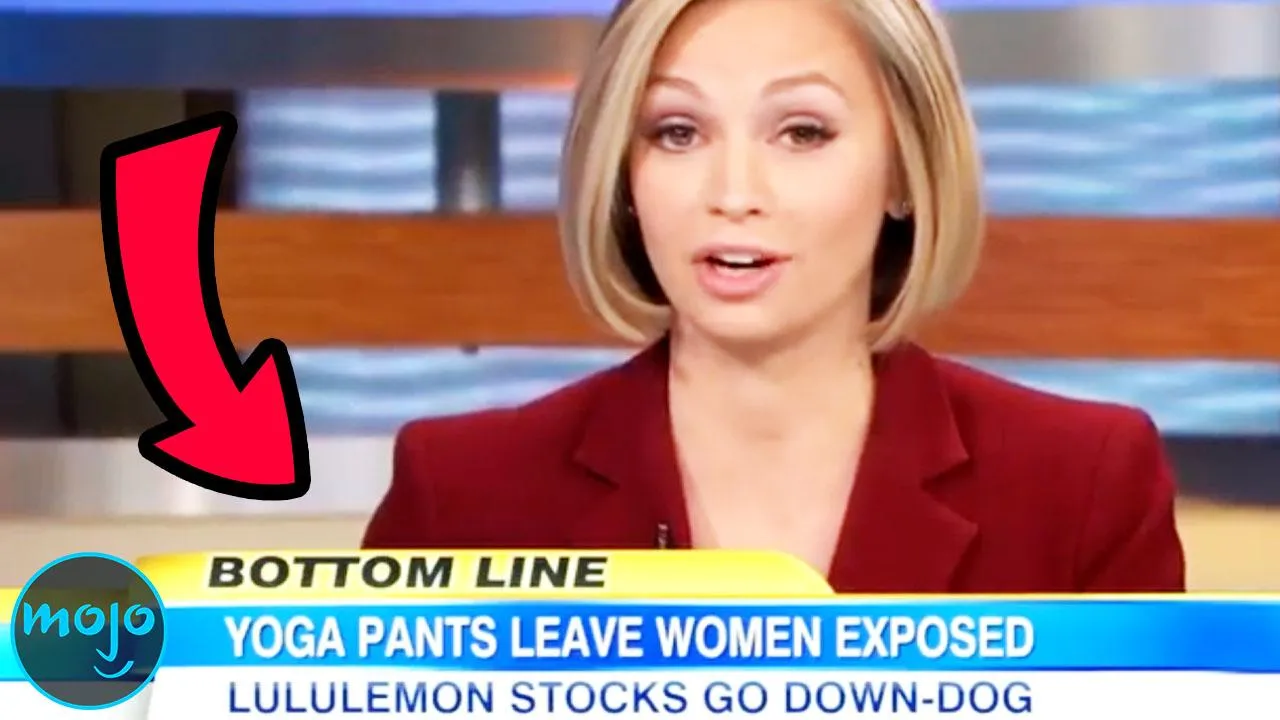
It doesn’t exactly take a business school degree to know that you probably shouldn’t blame your product’s well-established shortcomings on your customer’s bodies. That’s the route Lululemon founder Chip Wilson decided to take in 2013, when the Canadian company triggered a recall for black yoga pants… that, according to CNN Business, “were unintentionally see-through.” The recalled stock “amounted to 17% of all women's pants sold in Lululemon stores,” and resulted in a class action lawsuit accusing the retailer of misleading shareholders as a way to cut financial corners. Wilson, interviewed about the debacle on Bloomberg Television, claimed that “some women's bodies just don't actually work [for the yoga pants].” Woof!
#4: Lay's Wow Chips
The famous American potato chip manufacturer might have gotten a bit too cocky with their “Betcha can’t eat just one” slogan. Capitalizing on the then-ubiquitous “fat-free” craze, Frito-Lay introduced “Wow Chips” to the market in 1998, with the product’s fat supplanted by the food additive Olestra. Selling $400 million worth of product in its first year, that number halved by 2000. But why, you might ask? Doesn’t it sound like Frito-Lay permanently solved the problem of pesky extra calories? Ask beleaguered “Wow” consumers, who experienced severe gastrointestinal problems because of Olestra, prompting the corporation to add a warning label for the stuff. The label cautioned that “Olestra may cause abdominal cramping and loose stools.” Yeah, no kidding!
#3: Google Glass
Where do we even begin with this colossal failure? Developed by Google’s semi-secret research and development arm X Development (formerly Google X), Google Glass was the tech behemoth’s attempt to turn its users into Tony Stark, a.k.a. Iron Man. Boasting a touchpad which could navigate a heads-up display and a 5-megapixel camera, the product offered a glimpse into the future of human-technology interaction. That was until numerous privacy concerns and safety considerations were posed by the public, which posited that Google Glass could be used for nefarious purposes, like voyeurism, or even political espionage. Altogether, Google Glass was ultimately discontinued in 2023.
#2: H&M “Coolest Monkey” Hoodie
Perhaps the most baffling, most head-scratching retail blunder of all time, one has to wonder how many degrees of checks and balances this sweatshirt passed to make it through to the H&M website. The hoodie resulted in an almost immediate public boycott of the fashion brand, with musical artists the Weeknd and G-Eazy pulling out of H&M collaborations and chastising the company’s inexplicable choice to manufacture the offending merchandise. Said H&M in response, “We sincerely apologize for this image […] has been now removed from all online channels and the product will not be for sale in the United States. We believe in diversity and inclusion in all that we do, and will be reviewing our internal routines."
#1: New Coke
Sometimes, you just have to stick with what works. That’s what executives at the Coca-Cola Company should have taken to heart following the catastrophic failure of quote-unquote “New Coke.” An April 1985 effort to rejuvenate its hold on the market resulted in the decision to reformulate that classic Coca-Cola taste, citing a fear of losing their grip to Pepsi. After receiving over 40,000 calls and letters of customers’ heavy dissatisfaction, Coca-Cola reversed its decision and reintroduced “old Coke” just three months later. Although conspiracy theories abound that the whole move was a ploy to boost Coke sales, the company has consistently denied them.
Did you own any of these janky products? What did you think? Let us know in the comments below!
