Top 10 Computer Disc Games Every '90s Kid Owned
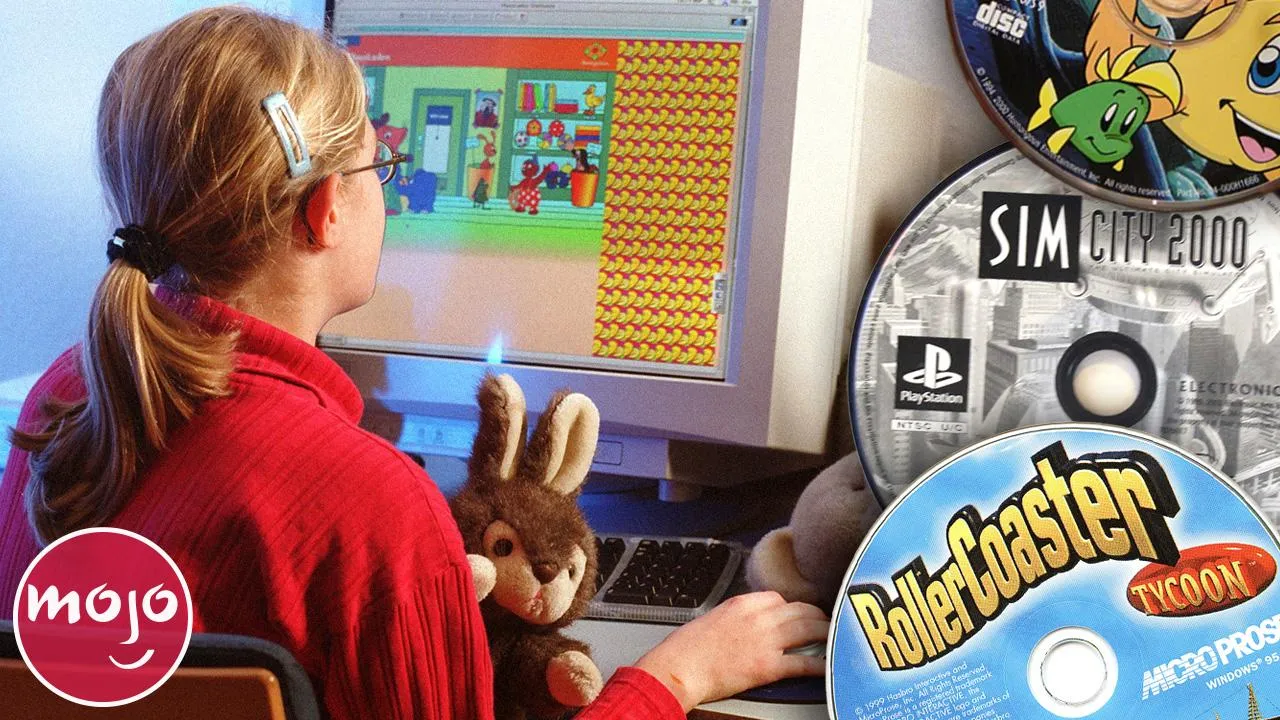
- "SimCity 2000" (1993)
- "Pajama Sam" franchise (1996-2003)
- "I Spy" franchise (1997-2015)
- "Freddi Fish" franchise (1994-2013)
- "Reader Rabbit: 1st Grade" (1998)
- "Backyard Baseball" (1997)
- "Putt-Putt" franchise (1992-2013)
- "The Oregon Trail" (1971-)
- "Barbie Cool Looks Fashion Designer" (1997)
- "RollerCoaster Tycoon" (1999)
#10: “SimCity 2000” (1993)
The original “SimCity” came out in 1989, but “SimCity 2000” was superior on every level. Released in 1993, this sequel took everything great about the first game and elevated it to skyscraper heights. Players could build subways, libraries, hospitals, and even prisons, then admire their sprawling metropolis in beautiful isometric perspective. With so many options, no two gameplays were ever the same, giving kids – and adults – endless opportunities to try different strategies and flex their creativity. Whether you were collecting taxes, balancing budgets, or preventing disasters, “SimCity 2000” actually made urban planning exciting.
#9: “Pajama Sam” franchise (1996-2003)
This series of four point-and-click games followed Sam, a kid with a superhero alter ego that helped him conquer everyday fears like darkness and thunderstorms. With clever puzzles, witty dialogue, and colorful worlds full of detail, the “Pajama Sam” games made kids feel smart, rather than talking down to them. The series clearly has staying power, since the first three games have been ported to the Nintendo Switch and PlayStation 4, giving new generations the chance to play and learn from this classic blue hero. For many 90s kids, “Pajama Sam” wasn’t just a game – he was a comforting friend who reminded us that no fear is too big to face in your pajamas.
#8: “I Spy” franchise (1997-2015)
Good old Scholastic never did us wrong. These games were based on a “Where’s Waldo”-style hidden object book series, each of which featured a different theme and location. The miniature worlds were gorgeously illustrated and packed with detail, from pirate ships to haunted houses to islands with buried treasure. Kids got to play detective with puzzles and riddles that were just challenging enough for young learners, and locations like the “Spooky Mansion” were creepy without being too scary. The “I Spy” games turn the hidden object genre of computer games into an art form.
#7: “Freddi Fish” franchise (1994-2013)
These underwater mysteries followed amateur detective Freddi and her sidekick Luther as they tracked down stolen objects and collared bad guys. The games featured tons of hidden details and Easter eggs that made them endlessly replayable, since there always seemed to be something new to discover. They rewarded players who were extra observant – sharp-eyed kids might spot cameos from other Humongous Entertainment characters like Pajama Sam, for instance. The fact that the main character was a girl also made Freddi Fish a bit of a video game anomaly, especially for the time period. With hand-drawn animation that captures a peak 90s aesthetic, this game is sure to drown any Millennial in a wave of nostalgia.
#6: “Reader Rabbit: 1st Grade” (1998)
This series was launched all the way back in 1984 with "Reader Rabbit and the Fabulous Word Factory." It eventually grew to more than 30 titles aimed at babies, toddlers, and kids up to age nine. “Reader Rabbit: 1st Grade,” released in 1998, helped kids practice simple math and reading, and it was one of the most popular learning games of its era. It centered around a group of animals performing a play and a disgruntled porcupine named Spike who makes trouble for everyone. “Reader Rabbit”’s major competitor was the “JumpStart” series, which started in 1994 with “JumpStart Kindergarten.” If you were in elementary school in the 90s or early aughts, chances are you had at least one of these discs at home.
#5: “Backyard Baseball” (1997)
This game launched the super successful “Backyard Sports” franchise, which eventually scored deals with professional athletes. But “Backyard Baseball” started as a simple game where players put together a team from a roster of neighborhood kids. It got middling reviews from critics, but it was a home run with its target audience. The gameplay could be simple or complex, with things like batting power and pitching styles all customizable. Best of all, the cast of characters was one of the most diverse in gaming history. Half the kids were girls, more than half were people of color, and even kids with disabilities were included. “Backyard Baseball” sent the message that sports are for everyone – though smart players always picked Pablo Sanchez for their team.
#4: “Putt-Putt” franchise (1992-2013)
This series was Humongous Entertainment’s first, and they started strong. In the first game, Putt-Putt the talking purple car rescues a stray dog named Pep, and the two are inseparable from then on. From the moon to the zoo to the Stone Age and the Wild West, Putt-Putt and Pep found adventures everywhere. Aimed at younger kids, these point-and-click games featured simple puzzles and moved at a slow pace. They encouraged taking your time and exploring the colorful worlds, and like other Humongous games, they were packed with detail. And if the voice of the friendly car sounds familiar in “Putt-Putt Enters the Race” or “Putt-Putt Joins the Circus,” it’s because in those games he was played by Nancy Cartwright, aka Bart Simpson.
#3: “The Oregon Trail” (1971-)
If you feel like this game has been around forever, that’s because it basically has been. The original debuted way back in 1971. It was text only – no graphics – and was developed for a middle school history class. Over the years, it evolved into more and more complex and sophisticated designs. Older 90s kids would have played the 1985 version of “The Oregon Trail,” a reinvention of the original that introduced graphics and added more options and choices for players. Kids born later in the decade grew up with the ‘95 through 2001 versions, which had more realistic graphics and sound. No matter which edition you loved, this game was a classic part of everyone’s childhood.
#2: “Barbie Cool Looks Fashion Designer” (1997)
The first version of “Barbie Fashion Designer” came out in 1996, but everyone knows the “Cool Looks” sequel was way better. These games allowed players to create outfits, then print them out to dress up their real Barbies. “Cool Looks” had more patterns and accessories, and the interface was easier to use. You could even email your designs to your friends! Both of these games were incredibly popular, outselling shooter games like “Doom” and “Quake.” They’re credited for helping to jumpstart the girls’ games movement, and the original has since been inducted into the World Video Game Hall of Fame.
Before we unveil our top pick, here are a few honorable mentions.
“Where in the World Is Carmen Sandiego?” (1996)
You Either Captured the Leader of V.I.L.E. or You Went Crazy Trying
“Big Action Construction” (1998)
All the Activities Were Fun, but Nothing Hit Like That Wrecking Ball
“Minesweeper” (1990)
This Logic Puzzle Game Was Part of the Original Windows Entertainment Pack
“Lego Island” (1997)
In the Second-Ever Lego Video Game, You Play as a Pizza Delivery Boy Named Pepper Roni
“Doom” (1993)
Not the Original First-Person Shooter Game, but It Put Them on the Map
#1: “RollerCoaster Tycoon” (1999)
People love building games and amusement parks, so putting them together was a no-brainer. “RollerCoaster Tycoon” was basically “SimCity” for theme parks. Players had a budget to build the park of their dreams, including designing the roller coasters, which was exactly as awesome as it sounds. But they also had to do the mundane tasks of business ownership, like landscaping, hiring employees, and installing concession stands and bathrooms. The game required strategy, planning, and creativity, and no two play-throughs were the same. “RollerCoaster Tycoon” became the best-selling PC game in the U.S. the year it was released and went on to spawn a multi-game franchise.
Did you play any of these games as a kid? Which was your favorite? Let us know in the comments below.
