EVERY Race In Hyrule EXPLAINED
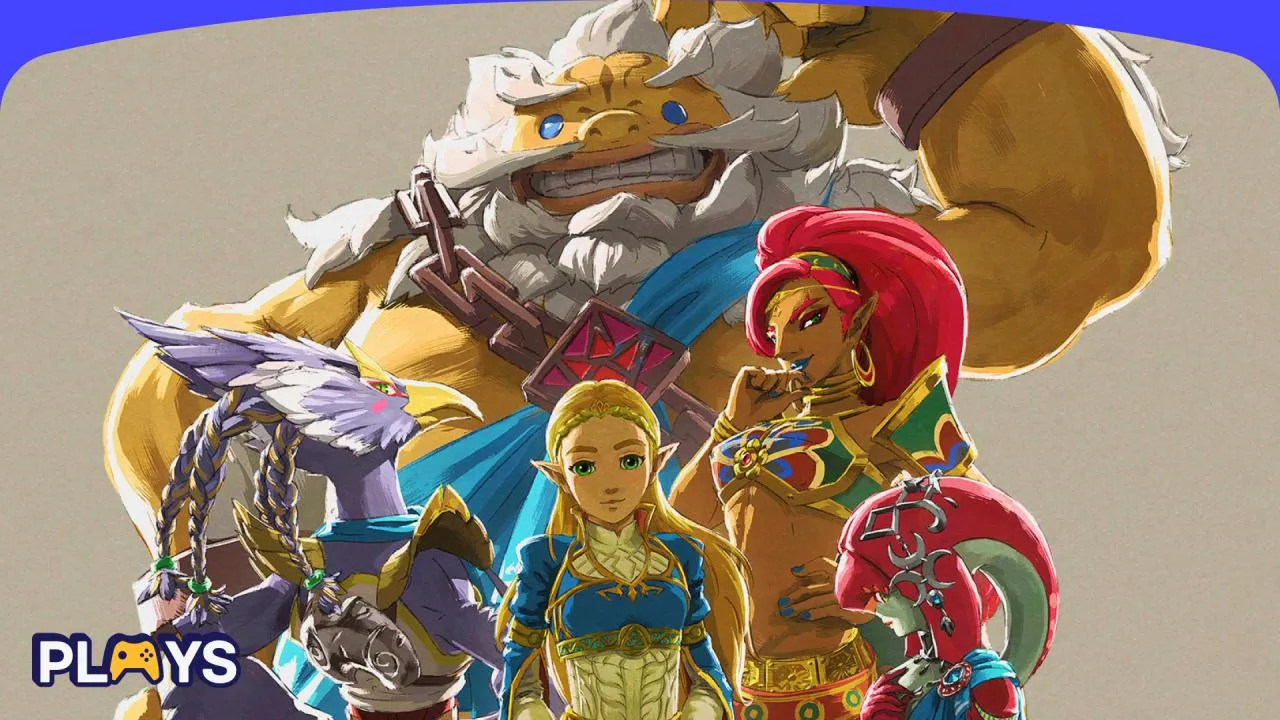
Every Race in Hyrule Explained
Welcome to MojoPlays, and today we’re looking in detail at every race that has populated Hyrule throughout “The Legend of Zelda!” We’re only looking at actual races of people, though. So, no gods or any other deity-like guardians.
Hylian
Hylians are obviously the most commonly recurring people in Hyrule, counting Link, Zelda, and a ton of other characters among their numbers. Although humanoid, the most notable physical feature is their large, pointed ears making them resemble elves from more traditional fantasy. Their origins were explained in “Skyward Sword.” After the three Golden Goddesses created all life, they left the world, entrusting its safety and that of the Triforce to a different deity, Hylia. But when demons began to attack, she placed both on a landmass and sent it into the sky.
The descendants of these people are those we see living in Skyloft during the game. And after the story’s events, Zelda and Link become the first of their kind to return to the surface world, which is then named after the Goddess who protected them and which Zelda was the mortal reincarnation of.
Since then, Hylians have been at the forefront of Hyule’s power. Not only does Zelda’s mystical bloodline carry on through members of the Royal Family, but other Hylians have shown magical prowess over the years, seemingly either due to the race’s connection to Hylia, or because of some long-forgotten link to the original Zelda on their family tree. Some magical feats other Hylians have shown over the years include the ability to send psychic messages, witchcraft like potionmaking, and the gift of prophecy through dreams or use of a crystal ball.
Sheikah
The Sheikah Tribe is an evolutionary step in Hylian genealogy. Long ago, they weren’t all that different. In “Skyward Sword,” we’re shown through Impa that her tribe stayed on the surface while the future Hylians were sent into the sky, preparing for when the Goddess Hylia would be reborn. Her blonde hair and tan skin is unlike her other appearances. But in every other game, Impa and her people are much more distinct.
Although they also have long, pointed ears, the Sheikah have much paler skin, stark white hair, and often red eyes. Despite Hylians having different skin tones in other games, the Sheikah have always stuck to this appearance. More important to their characterization is their dedication to the Royal Family. Even in games where the only Sheikah shown is Impa, which is many, the Sheikah are described as fierce protectors who use shadow magic to defend the kingdom. Curiously, before “Breath of the Wild,” their civilization was usually shown to be on the brink of collapse, with no definitive answer given as to why. This, along with their general secretiveness, has made them a race surrounded by more mystery than the others.
Pre-Hyrulean Races
There were a handful of new races introduced in “Skyward Sword,” who lived on the surface stretching back to Hylia’s time. However, they only appeared in this game, meaning that they must have either migrated away from Hyrule, evolved, or gone extinct sometime between this game and the next chronological entry, “The Minish Cap.” Although they are still forest, mountain, and water-dwelling creatures like the traditional Koroks, Gorons, and Zoras, there’s no indication that they’re related.
First up are the Kikwi of the Faron region, a flightless bird race that uses their bush-like tails as camouflage to hide from predators. Also found in the Faron region are the Parella, resembling a jellyfish-seahorse hybrid, who serve the Water Dragon. In the Eldin region, Link meets the Mogma, humanoid moles who mostly live below ground and have a strong penchant for hunting treasure.
We’d be remiss if we also didn’t mention the Ancient Robots. Their existence is a mystery, though presumably created by Hylia. You could argue they’re not a race, but they play a big role in the Lanaryu Region’s storyline, and you actually get more of their society as miners and builders, than any of the others. And since Link must activate Timeshift Stones for them to function, it’s at least obvious why this group never returned.
Twili
The Sheikah aren’t the only evolutionary branch of the Hylian tree. As described in “Twilight Princess’” history, the Twili began as a tribe of sorcerers long ago who plotted to break into the Sacred Realm and steal the Triforce. To stop them, the Goddesses sent Spirits of Light, who banished them to another realm. Over time, and in the darkness of the Twilight Realm, these Hylians evolved into the Twili.
They developed black and blue skin, with glowing green markings, and bright yellow eyes. Being that they originated in Hyrule, they also developed into a monarchy. And a peaceful one, grown happy with their new realm. That is, until the power hungry Zant meets Ganondorf, usurps Midna of her throne, and invades Hyrule. Midna and her people were eventually restored with Link’s help. But sadly, with the way into the Twilight Realm destroyed, the Twili have never made another appearance.
Zonai
Although we aren’t including gods, the Zonai are more like an in-between step. Teased in “Breath of the Wild,” only two were then explicitly shown in “Tears of the Kingdom:” Rauru and Mineru, characterized by their large, floppy ears, somewhat sheep-like features and grey skin, and a third eye in their forehead. The Zonai were an extremely advanced society of sky people, living above Hyrule, who developed all kinds of technological wonders, including a variety of constructs to serve them. Since they were descended from the gods, and had been given powerful Secret Stones to enhance their powers, many ancient Hylians worshipped them. The Zonai were also shown to live on the surface of Hyrule, as well as below it, with vast mining systems seen throughout the Depths.
Although much of Zonai history is shrouded in mystery throughout “Tears of the Kingdom,” including what happened to the remaining members, “Hyrule Warriors: Age of Imprisonment” sheds more light. The very constructs they had built to serve them wound up wiping the majority of them out, a classically tragic fate, long before Rauru became King of Hyrule.
Goron
The Goron race is one of the oldest in Hyrule, both canonically and chronologically. Although they debuted in “Ocarina of Time,” they’ve been shown to be much older. They’re shown in the prologue of “Skyward Sword,” and Link does meet a couple of them throughout his journeys on the Surface.
The Gorons have appeared in more games than most other races, outside of Hylians. A race of incredibly strong rock people, they’re usually found in warm, mountainous locations. But they’ve also shown they can adapt to other environments, and some communities appear in games that lie outside of Hyrule’s boundaries. In several games, they’ve been shown to be adept at mining, smithing, and metalworking, befitting of where they call home. Of course, things like mining for good ore probably comes naturally to a race of people that eat rocks, and can spot a difference in quality. Additionally, they’re one of the friendlier races across the series. Other than a few moments dictated by the plot, they’re often very warm and welcoming to all.
Zora
The Zoras, like many other races in Hyrule, have a bit of a complicated history. They debuted in the original game, as green, “Creature from the Black Lagoon”-type enemies that hid in the rivers and shot Link from afar. They were reimagined and redesigned for “Ocarina of Time,” looking a bit more humanoid with light blue skin. More importantly, they were made into a friendly community, living under a king and watching over Hyrule’s water supply.
However, Nintendo didn’t get rid of the classic enemies either. In “Oracle of Ages” and “Seasons,” both are shown to exist, with the friendly versions being called Sea Zoras, and the enemies being called River Zoras. This way, Nintendo could keep using both. Sea Zoras have certainly played a bigger role, especially in the 3D games. As they are allies to Hyrule, they play crucial roles in “Twilight Princess” and the era of “Breath of the Wild.”
River Zoras, on the other hand, stayed enemies until “A Link Between Worlds.” While some still do attack Link, a community of them in Zora’s Domain are friendly, with their Queen even being one of the Sages. This went a step further in “Echoes of Wisdom.” Both types of Zoras exist here, and constantly feud with each other, until Zelda steps in to fix things.
Korok
A race that needs no introduction, if only because so many of us hunted for them throughout “Breath of the Wild” and “Tears of the Kingdom.” The cheerful children of the forest live under the peaceful, watchful eye of the Great Deku Tree. Wooden in features, curious in nature, these little guys are also seemingly obsessed with puzzles.
Koroks made their debut in “The Wind Waker.” A small group of them lives on the Forest Haven with this era’s Great Deku Tree. As that game explains it, they were once the Kokiri, the forever children that Link lives among at the beginning of “Ocarina of Time,” before evolving after the Great Flood. Interestingly, the Kokiri also have origins that are stated in “The Legend of Zelda Encyclopedia,” first published in 2017. At one point, Kokiri were Hylians. But when society began to grow, building cities and moving away from nature, a group of them chose to stay in the forest. And over time, and through the magic of the Great Deku Tree, these Hylians adapted to be children forever.
Subrosian
Subrosians are technically not a race of Hyrule, as they only appeared in “Oracle of Seasons” which takes place in the neighboring location, Holodrum. But we figured we should touch on them. This is the native race of Subrosia, a land deep beneath the surface, surrounded by lava. They are another one of the franchise’s more secretive races; the only way to enter Subrosia is through a handful of portals, whose locations they are not eager to give out.
Subrosians thrive in the immense heat of their home; they even wear heavy, hooded cloaks so we never see what they truly look like. And the heat of their home isn’t the only thing they have in common with Gorons. The only race Subrosians really connect with are the Gorons, particularly over their love of dancing.
Gerudo
First seen in “Ocarina of Time,” the desert-dwelling Gerudo were introduced as an all-woman race of thieves. Every child born to the Gerudo is female, with the exception of one male every 100 years, who then gets to be their king. Which is unfortunate because the only Gerudo King we’ve ever seen is Ganondorf. Whenever there isn’t a king, the Gerudo follow a chief, a position typically passed from mother to daughter. And the race survives by finding boyfriends and husbands from surrounding areas.
Although the Gerudo were introduced as thieves, and loyal to Ganondorf, both of these elements have long since changed. Future Gerudo would resent their connection to the Evil King. And they’ve since put their thieving days behind them, being a nation of warriors and merchants. Another element that has slightly changed is their look. In the Wilds era, most Gerudo still have dark skin from untold centuries of living in the desert. But some others take features from non-Gerudo lineage, having different skin tones and hair colors.
Minish
Long before “The Minish Cap” takes place, yet ages after “Skyward Sword,” a small, mouselike race that the Hylians would dub Picori came down from the sky to save the kingdom. They gifted a hero of men a special sword and the golden Light Force, with which he drove evil out of Hyrule. Centuries later, Link gets to meet the descendants of those miniature saviors.
The Minish are an adorable, helpful, yet shy race of people as they don’t show themselves to anyone but children. They can live in a variety of different environments. Link meets communities of them in the forest, within the homes and establishments of Hyrule town, and deep within Mount Crenel. Moreover, they’re adept at a variety of skills, from weapon smithing to helping Hylians make shoes to actual wizardry.
Oocca
Our final race ‘from the heavens’ in the series (for now), the Oocca from “Twilight Princess” definitely stand out visually. This is thanks to their bird-shaped bodies, elongated heads, and human-like faces. The first members Link meets are Ooccoo and her child, Ooccoo, Jr., which also shows us what Oocca children look like; just a head and two tiny wings.
Despite having one of the most unsettling designs in the series, the Oocca are extremely technologically advanced. Somehow, without hands, they built a massive city floating in the sky and designed a completely safe cannon for people to travel to it. They’re also extremely helpful in nature. Ooccoo teleports Link out of dungeons, and groups of them in the City in the Sky let him use them to glide across gaps.
They’re also theorized in-game by researcher Shad to have founded Hyrule before departing on their floating city. “The Legend of Zelda Encyclopedia” lists another theory, that the Oocca are the ancestors of Hylians, and are the closest people to the goddess, Hylia…which seems sillier the longer you look at them.
Rito
Introduced in “The Wind Waker,” the Rito are a humanoid, bird-like race that are now a bit of an oddity. Back then, they were said to have evolved from the Zora after the Great Flood, which is a much bigger stretch than Kokiri evolving into Koroks. Regardless, they were still distinctly characterized as a unique race; beyond their avian features, they were led by a chieftain and were renowned for their mail delivery system. They also lived among a sky spirit, the dragon Valoo, who was key to their society; although bird-like, for a Rito to grow their wings, they must obtain a scale from Valoo at the top of their mountain when they come of age.
Nintendo made a few changes when the Rito came back for “Breath of the Wild.” Their bird features were enhanced with prominent talons and wings without need of a dragon scale. They had grown to be renowned for their archery rather than mail delivery. However, a curiosity that has confused players since the game’s release, is how Rito and Zora are able to co-exist.
Anouki
The Anouki have appeared in two games so far, “Phantom Hourglass” and “Spirit Tracks,” which means they might not even technically qualify as a race of Hyrule. Still, like the Subrosians, it would feel weird to leave them out. Definitely on the cuter side of things, the Anouki are found in cold locations. They have rotund, penguin-shaped bodies, human faces hooded like the Inuit, and reindeer antlers; an amalgamation of details associated with snow-covered environments.
As cute as they are, there isn’t much history or culture to explore. In “Phantom Hourglass,” the Anouki live on the Isle of Frost, under a strenuous century-old peace treaty with another tribe, the Yook. In “Spirit Tracks,” their appearance in New Hyrule is explained by their tribe having migrated from the world of the Ocean King, and they play an even smaller role.
Deku Scrub
The final race introduced in “Ocarina of Time,” the Deku Scrubs appeared as mostly antagonistic. While many were enemies, they were clearly sentient; some of them speak to Link, others will sell him their wares, and he can even meet a group who’s very passionate about his masks. They were evolved further in the sequel, “Majora’s Mask.” Although that technically doesn’t take place in Hyrule, they lived in a Monarchical society within Termina’s swamp.
Since their debut, there have been two things about the Deku Scrubs that have stayed pretty consistent. One is that they are always found in either dense forests or swamps. And the other is that they’re fairly simple-minded. From holding an innocent monkey captive for thinking he kidnapped the princess in “Majora’s Mask,” to almost causing their own downfall in “Echoes of Wisdom,” they don’t seem to think much through. Even the Business Scrubs attack before trying to sell you something, which is a horrible business model.
Fairy
Rounding out our list of Hyrule’s races is the Fairyfolk. Fairies have been in the series since the original game, where they appeared in Link’s time of need, healing him so he can keep on fighting. But as we all know, they fill far more roles than that of the healer. Several fairies have assisted Link on his journeys. Navi and the others like her from “Ocarina of Time” were created by the Great Deku Tree, to be guides for each of the Kokiri.
Fairies can also come in many forms, in a hierarchy of sorts that come with different power levels. Great Fairies, which take on a more humanoid form, can not only heal Link, but can grant him special abilities, increase the carrying capacity of certain items, or strengthen his armor, depending on the game. In some games, there is even a Queen Fairy, who bestows upon Link something far more valuable than the Great Fairies offer. Although no games have gone that in depth to their history, they remain welcome allies, boosting Link from the sidelines in his fight against evil.
Which of Hyrule’s races would you like to know more about, or see again in a future game? Share your thoughts in the comments, and we’ll see you next time!

