30 Things You DIDN'T Know About The PS1
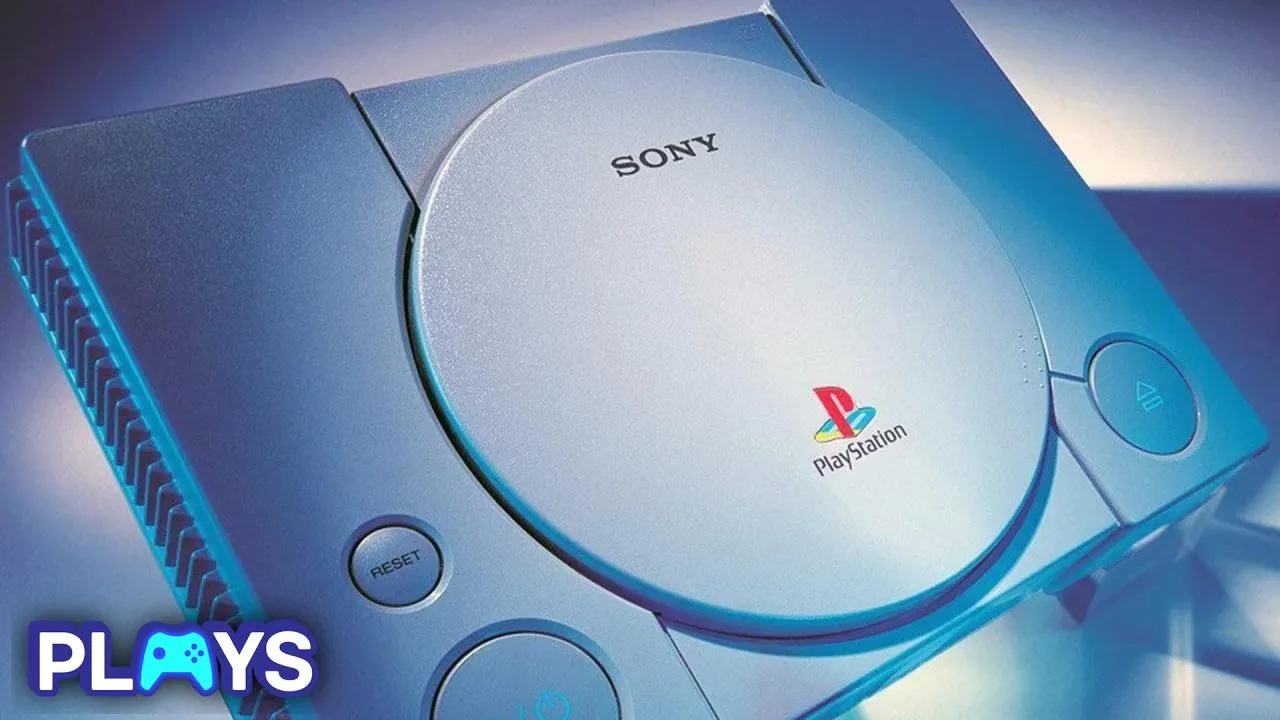
- hings You Didn't Know About the PS1
- The Nintendo PlayStation
- Prototype Controllers
- or 3D?
- The PlayStation Logo
- Cost Saving CDs
- The Bootup Sound
- Button Mapping
- Motor Toon Grand Prix
- An Audiophile's Dream
- Memory Card Save
- A Hated Mascot
- iscs
- Mystery Marketing
- E3 Mic Drop
- Price Wars
- Net Yaroze
- A Worthy Catalog
- The Rarest of Rare
- The Original PSVR
- Toys to Life
- Apple Emulator
- Pirate Aliens
- Internet Ready
- Save Your Saves
- PS1 to PS2
- Powering the Stars
- Level of Detail
- illion
- The End of An Era
30 Things You Didn’t Know About the PS1
Welcome to MojoPlays and today we’re looking back at 30 years of the PS1 and how it not only became one of the best selling and most respected consoles of all time but also made Sony one of the biggest contenders in the console wars.
The Nintendo PlayStation
It’s hard to believe we have Nintendo to thank for the PlayStation. If not for the Big N’s shady business practices, the future of Sony and PlayStation could have looked much different. Sony originally partnered with Nintendo to develop a disc-based console tentatively titled the “Nintendo PlayStation”, only for Nintendo to announce they had killed the deal and partnered with Phillips instead. Sony, understandably enraged by this sudden change even attempted to partner with Sega, only for Sega to also turn them down. Undeterred, Sony pressed forward with the PlayStation and due to its impressive processing power as well as user friendly CD based technology, it easily dominated Nintendo and even likely led to Sega dropping out of the console wars. Nintendo, attempting to maintain a stranglehold on their business inadvertently created their greatest challenger.
Prototype Controllers
Like any new piece of technology taking its first steps onto a budding market, not only did the console itself go through a few changes, but the controller ended up being the one with the most revisions. Originally Sony wanted something more akin to the SNES controller but eventually settled on classic PS1 design with the additional shoulder buttons and the handlebar grips for more comfort when using the extra buttons. Some reports have the number of prototypes at over 200 potential designs with the final one decided by then Sony president and former pilot Norio Ohga who likened the grips to that of an airplane control wheel.
2D or 3D?
Given this was still the early days of 3D in gaming, Sony struggled with whether to make their new PlayStation focus on 2D or 3D gaming. While 2D was the dominant artistic style of the time, Sony was looking towards the future with their console but was still unsure if the technology was ready for the leap to the new dimension. That is however, until Sega released Virtua Fighter in arcades and the prospects of 3D gaming became clear to Sony and they decided to focus primarily on making the PlayStation the dominant powerhouse of the budding 3D gaming scene. We still could have done without Bubsy 3D though.
The PlayStation Logo
The now iconic PlayStation logo is by far one of Sony’s most recognizable brands and much like everything else when designing the PlayStation, the logo itself went through a number of changes and iterations each with a unique approach to the classic lettering PlayStation is known for today. Reportedly there were roughly 20 variations of the design before the classic PlayStation logo we all know and love was settled on. What’s more is each of the four colors within the logo have their own meaning, representing brilliance, joy, passion, and excellence. The more you know.
Cost Saving CDs
It’s no secret that developing for cartridges was expensive, which is why Sony’s approach to CDs was such a boom for developers. Not only was the cost significantly less, but the CDs themselves also had much more processing power and memory allowing devs to develop bigger and more expansive games and worlds. Games like Final Fantasy 7 initially started development on Nintendo’s N64 but moved to the PlayStation after being convinced by the additional power and performance. Not only did this allow more graphically demanding games to be created but also significantly cut down on development time allowing developers and publishers to bring their vision to life and capitalize on current trends in half the time.
The Bootup Sound
The bootup sound of the original PlayStation is so iconic, even simply hearing it can trigger lifelong nostalgic memories of some of the best gaming moments in the 90s and nothing else even comes close. Original composer Takafumi Fujisawa crafted this incredible bootup sound to create a sense of wonder and excitement at the prospect of entering a new world before the start of every game. Considering how beloved this sound is even today and its synonymous nature with the PlayStation brand, we’d say he more than succeeded and we wish all PlayStation games still started with this iconic track.
Button Mapping
With the design of the controller finally nailed down, Sony also wanted to make their buttons stand out from the competition. While they initially were looking to adapt something akin to Sega’s Genesis controller, they instead opted for something much more comfortable and easier to map numerous control schemes to. Even more interesting is that every one of the face buttons have individual meanings behind them. The Triangle represents the player’s viewpoint, the square refers to maps and menus, and the red circle signifies yes or continue, while the blue X represents no or cancel. The designations of circle and X were eventually changed in the west due to differing viewpoints on the symbols, but the overall design has remained relatively unchanged for 30 years. And no, we will never call the X button “Cross”.
Motor Toon Grand Prix
Sony didn’t want to just create the PlayStation and let other developers craft their library, they wanted to have their hands in every aspect of the console and its rise to fame. Part of this included developing and publishing their own games and their first release didn’t make it outside of Japan but still showed great promise. Motor Toon Grand Prix was a pretty standard racing game but with an old school cartoon aesthetic that helped it stand out from the crowded genre. It did well enough to earn a sequel, but the developer and particularly game director Kazunori Yamauchi showed enough potential, they were granted the opportunity to work on their dream project which would eventually become Gran Turismo and one of the best-selling games on the PS1. Greatness from small beginnings.
An Audiophile’s Dream
Not only was the PS1 revolutionary when it came to graphical power, but the CD technology inside the PS1 and with Sony’s background in sound design, it’s no surprise the PS1 had an impressive audio output that many dedicated audiophiles still swear even today is one of the best CD players ever created. Considering at the time a solid dedicated CD player could run anywhere between $200-1000, the PS1 was not only a great console for gaming, but an affordable CD player with incredible output paired with an equally capable sound system. Specifically, it was the earlier models that far outplayed the competition, which ironically, were also typically manufactured by Sony themselves. Sony would even outprice themselves again when it came to DVD players with the PS2 and Blu-Ray players with the PS3 later down the line.
Memory Card Save
The early days of saving games was a struggle to say the least. Some games didn’t have a save feature at all or used convoluted password systems to allow players to pick up where they left off. Neither were optimal but they got the job done, for better or worse. Although they weren’t the first game console to make use of external storage, the PS1 had by far the most storage available to players with 128KB letting them save up to fifteen games per memory card. While this seems insignificant now, this simple improvement over the established formula led to a revolution for game saves going forward and thank God because the old password system was just beyond ridiculous.
The Longest Development
Not only is the original Gran Turismo the best-selling game on the PS1, but it also had the longest development cycle of any PS1 game, ever. While extended development times these days are nothing new and the typical cycle is 5-7 years at this point, back on the PS1, developers and publishers were routinely releasing new games or sequels with significant improvements year over year. The ambition of the game, alongside a small development team of only roughly 12 developers led to a prolonged development for a team dedicated to making the most authentic racing sim of the time. Considering Gran Turismo sold almost 10 million copies and launched a highly respected racing series, it’s safe to say Sony and Polyphony Digital’s gamble paid off.
A Hated Mascot
While the PS1 doesn’t officially have a mascot, if there was one gamers most associated with the console it would have to be Crash Bandicoot. Crash would routinely appear in commercials calling out Nintendo and their famous plumber, but the godfather of PlayStation Ken Kutaragi hated the character and especially didn’t like the Bandicoot representing the PS1, even in an unofficial capacity. Kutaragi wanted the PS1 to be a more mature style game system and having a wild-eyed marsupial standing outside Nintendo headquarters taunting them felt inauthentic to his vision for the console. Thankfully the rest of Sony had more appreciation for Crash or else we could have ended up with Kutaragi’s original vision for a mascot: Polygon Man. Yikes.
2-5 Discs
Although the CD based architecture of the PS1 allowed developers to create bigger and more detailed games than ever before, that doesn’t mean their ambition could always be contained by a single disc. This became a growing issue as developers began to get more ambitious and unlock the full potential of the PS1 throughout the console’s lifecycle especially with the Final Fantasy series utilizing 4 discs by the time of FF8 and FF9. And yet, there was still one game that went even further and required a whopping 5 discs: Riven: The Sequel to Mist and a staggering -for the time anyways- 2GB total in size. Much of that storage was used up on the game’s many FMV sequences within the game that many other developers at the time used much more sparingly.
Mystery Marketing
Those bizarre PS3 commercials and the somehow even stranger David Lynch PS2 ad weren’t the first time Sony’s marketing team took a bizarre approach to advertising their new hardware. With the PS1, Sony leaned heavily into what they perceived as gamers’ competitive nature and released a series of odd commercials, some with taglines such as “U R Not Ready” and a flurry of hidden messages for gamers to decipher. While most of the riddles ended up pointing to nothing more than the release date of the PS1, this bizarre marketing push worked in Sony’s favor and remains a time capsule of 90s culture and the beginning of Sony’s strange approach to advertising their consoles. Honestly, we miss this brand of advertising compared to the bland nothing of today. Also bring back Kevin Butler you cowards.
E3 Mic Drop
After their disastrous dealings with Nintendo, Sony also had to make a significant impact on a skeptical public, debuting as a brand-new console manufacturer in a market dominated by Atari, Nintendo and Sega. While at the time E3 wasn’t the enormous media bonanza it would eventually become, it was still developers and publishers best chance to get noticed and after showcasing all the specs of their new console at E3 1995, Sony’s Steve Race approached the podium and announced the PS1 price point in a pure mic drop moment by simply declaring “$299” and walking off stage to an eruption of cheers from the audience. Not only was the delivery brilliant, but the $299 price point put them $100 cheaper than their nearest competition, the Sega Saturn.
Price Wars
Sega wasn’t the only ones upset about Sony’s sly marketing to undercut the competition. After being almost wholly responsible for the gaming crash, Atari was struggling to reclaim its dominance in the gaming market and suddenly some fresh hip newcomer is going to come in and steal their thunder? Not on Atari’s watch. Atari even went so far as to threaten to go to the International Trade Commission over Sony’s competitive pricing model claiming the only fair pricing for Sony’s PlayStation would be $500, the same price the console initially launched for in Japan. It’s unknown if these attempts to force the ITC to intervene gained any traction, but guess who’s still a console juggernaut and who’s not?
Net Yaroze
Believe it or not, the PS1 had something of an indie developer scene. The Net Yaroze was a sleek black version of the PS1 that was modeled after the dev kits that Sony had sent to developers and publishers and allowed homegrown devs to bring their creations to life in the same way the big studios did. For $750, aspiring creators could order the Net Yaroze through the mail and Sony even offered support to some of these indie developers by putting their games on demo discs to get them into players hands. Many now well-regarded developers got their start thanks to the Net Yaroze, which in Japanese roughly translates to “Let’s do it together”. Although primitive by today’s standards, the Net Yaroze is still an incredibly forward-thinking machine and is incredibly rare due to its limited production.
A Worthy Catalog
Absolutely no one could accuse the PS1 of having a meager catalog of games, but few understand just how monumental the PS1’s roster of games truly was. The PS1 offered games of every genre and for every age group making it the ideal console for the entire family no matter their age. With reportedly almost one billion with a capital B games shipped for the then rookie console the sheer number of options of games to play was staggering to say the least. While the true number is unknown, many speculate as many as 3000 games were created and released for the PS1 during its lifecycle from the years 1994 to 2006. This number would only be surpassed by the PS1’s successor the PS2 with an equally eye-watering 4300 games.
The Rarest of Rare
The Net Yaroze isn’t the only rare PS1 console Sony produced and to celebrate the PlayStation selling 10 million units, Sony released the midnight blue edition of the console. This version of the console is so rare only one hundred of them were ever produced making them highly sought after collectors items. The consoles weren't the only ones to see limited releases either. The rarest game ever released for the PS1was Elemental Gearbolt Assassin’s Case Edition which came with the game, a golden lightgun, carrying case and a special edition memory card. Reportedly there were only 50 of these special editions ever produced. Sony would continue to use these limited edition PS1s for specific celebrations and sent out golden PS1s as invitations to the E3 press conference in 2013.
The Original PSVR
Virtual reality might be the latest tech these days but even after the utter failure of Nintendo’s Virtual Boy, that didn’t stop Sony from pre-emptively dipping their toes into the realms of VR. Released in 1996, the Glasstron wasn’t too dissimilar to the PSVR fans are familiar with today but was only functional specifically with one game: Mechwarrior 2. With the headset and attached earbuds, players could pilot their mech from the cockpit with the headsets primitive eye tracking allowing them more easily track their targets. Naturally, the headset didn’t take off and has become yet another relic in Sony’s legacy of abandoned peripherals.
Toys to Life
The Toys to Life craze might’ve peaked in the mid-2000s, but once again Sony was ahead of the curve on the PS1. Long before Skylanders dominated the Toys to Life scene, the PS1 had ZXE-D: Legend of Plasmalite in which you could build variations of different robots using the included pieces and the game would recognize whatever mech you built no matter how outrageous and after plugging your creation into the game, you could then battle with your mechanized warrior. Like many of the PS1’s odd peripherals, this one was ahead of its time and failed to find an audience, killing any possibility for a follow-up for decades.
Apple Emulator
Emulators are fairly common these days, but back during the PS1, Sony was quite a bit stricter about who could play their games if it wasn’t on their machine. During an Apple conference in 1999, Steve Jobs unveiled a PS1 emulator called the Virtual Game Station for the Mac and understandably, Sony was not pleased with this development and immediately filed a lawsuit against the emulator creator Connectix. While the ruling eventually ended in favor of Connectix, Sony blocked Connectix from selling their emulator while the lawsuit was ongoing and ended up purchasing Virtual Game Station from Connectix and immediately shut it down.
Pirate Aliens
Game developers have been hiding secrets in their games for years, whether it was the hidden game credits in Adventure for the Atari 2600 or the cheeky devs who somehow hid the pilot episode of South Park within Tiger Woods 99 PGA Golf Tour, there’s no shortage of interesting or even game breaking secrets. However, one that went overlooked for decades can be found in the often-forgotten Alien: Resurrection game for the PS1. Within the game, unintentionally or not, the devs included code that would allow players to play pirated games on their PS1without the need for a Mod Chip, completely bypassing all of Sony’s piracy measures. Sony’s probably pretty happy this code went undiscovered for 23 years.
Internet Ready
Internet connectivity on consoles might have still been a generation away, but Sony still found a way to allow players to connect online with the PS1, even in its most rudimentary form. Released only in Japan, using a special adapter, the PS1 could connect to a player’s cell phone and could connect to the world wide web, and even download simple games from the internet to play on your phone. Likely due to the limited capabilities and the obscurity of this specific usage for the PS1, it was discontinued rather abruptly while the PS2 would be the first true PlayStation with online play capabilities.
Save Your Saves
There’s nothing worse than accidentally deleting your beloved save file for your favorite game. Unlike today where these saves can be recovered from the cloud, back in the days of the PS1 if you accidentally deleted your save that was it and it was gone forever. However, there was a hidden feature that would allow you recover those lost saves and it wasn’t discovered until decades later. By holding down all four shoulder buttons, you can recover any recently deleted game saves, but if you turn off the console between deleting them and trying to recover them, they’re still gone forever.
PS1 to PS2
Despite the PS1 having one of the most extensive libraries in all of gaming, there were still a few games that were originally planned for the PlayStation, whether due to the imminent release of the more powerful PS2 on the horizon or the extended development time of some titles, a few planned PS1 games missed their original release and were rebuilt for the PS2. Two of the most notable are Onimusha: Warlords, which was over 50% complete before development was scrapped and restarted for the PS2 with a similar situation befalling the masterpiece Ico as well. Ico began development for the PS1 in 1998 and while development was progressing smoothly, the team’s vision grew, and their ambition necessitated the move to the more powerful PS2.
Powering the Stars
The PS1 once upon a time was one of the most powerful consoles on the market and was so reliable that even NASA took notice. Despite the technology being dated at the time, NASA chose to use the PS1’s CPU to power their Horizon Space Probe for Pluto in 2006 due to its processing power and reliability and sustainability after some important modifications. The PS1 might be a retro console today celebrating its 30th birthday, but thanks to NASA and the Horizon Probe, the PS1 will live on forever amongst the stars.
Level of Detail
The PS1 might have revolutionized 3D gaming but that didn’t mean the system still wasn’t without its limitations. One such disadvantage was the draw distance of many games which could lead to quite a lot of pop-in when the player was exploring larger worlds. Some devs got creative with solutions such as the fog in Silent Hill, while other devs tackled the issue directly. Naturally it was the wizards at Insomniac Games who developed a solution with their inventive “Level of Detail” system, which would render objects in the environment in higher detail the closer the player got to them. This eliminated the constant use of fog or other techniques to mask the system’s technical limitations and create far more expansive and detailed worlds to immerse the player in. This technique is still being used even today to even greater effect thanks to the advancements in technology.
102 Million
It goes without saying that the PS1 was an unprecedented success for Sony and for gamers. With a gaming library that still rivals anything today, a memorable marketing campaign and some of the most innovative and highly regarded games and series of all time, the PS1 more than established its place as one of the best consoles of all time. The PS1 also managed the impossible, and for the time became the best-selling console of all time, managing to sell a staggering 102 million systems in its lifetime, completely dominating the competition with the N64 only selling 32 million systems and the Sega Saturn ending its run only selling 9 million. Even today the PS1 remains the sixth best-selling console of all time.
The End of An Era
The PS1 had one of the longest lifecycles of a console, debuting in 1994 and finally being discontinued in 2006. During that time, many developers continued to support the aging system despite the much more powerful PS2 dominating the market. While many of these games were nothing more than downgraded ports of PS2 games, there was still nonetheless a strong market for PS1 games well into the system’s twilight years. The final game officially released for the PS1 after Sony announced its retirement in North America was FIFA 2005 because EA was determined to release their sports titles on anything that could run them, while the final game in Japan was a re-release of Capcom’s classic arcade title Strider Hiryu. Rest easy now PS1, your work is finally complete.
What’s your favorite little known fact about the PS1? Share your tidbits of knowledge in the comments.
