20 Horror Games That NEED to Be Remade
20 Horror Games That Need To Be Remade
Welcome to MojoPlays, and today we are looking at the classics of the spooky genre and seeing which of them deserves a top-to-bottom makeover and re-publishing. These are 20 Horror Games That WELL AND TRULY Deserve A Remake. Let’s go!
“Resident Evil: Outbreak” (2003)
It’s honestly wild that both Resident Evil: Outbreak and Resident Evil: Outbreak File #2 are still locked away on the PlayStation 2 like some Umbrella cover-up. These games were basically an early 2000s love letter in the same vein as Metal Gear Solid VR, dropping players into ten total scenarios across a collapsing Raccoon City and letting the chaos unfold from multiple civilian perspectives. It was a nice, fresh way to experience the world without interrupting the flow of the main games. The sheer variety of outcomes, character abilities, and branching events makes them ridiculously replayable, and the soundtrack absolutely slaps in that early-2000s Capcom way. The series is screaming for a remake. Think of all the voice actor cameos! What video game voice actor wouldn’t be foaming to work on that?
“Deep Fear” (1998)
Deep Fear is about as close as you can get to the Resident Evil formula without triggering a polite but firm phone call from Capcom’s legal department. Like many late-’90s survival horror imitators, it borrowed the tank controls, stiff delivery, and familiar structure. It did all this while not really improving anything, making it difficult to stand out as anything other than a clone... IF YOU JUST LOOK AT THE SURFACE! Trust me, this game rules. Where Deep Fear genuinely separates itself, though, is in how seriously it takes the survival aspect of survival horror. Set inside a doomed underwater research base, the game revolves around a constantly depleting oxygen supply. Certain flooded areas can only be explored with limited air, forcing players to hunt for refill stations and breathing masks. That mechanic doesn’t just add tension; it reshapes how you approach exploration entirely. This gameplay style is YEARNING for a remake—or maybe it’s just me?
“Dark Seed” (1992)
If you’re diving into Dark Seed hoping for deep, inventive gameplay, you might want to recalibrate those expectations. At its core, it’s a fairly traditional point-and-click adventure about a struggling writer who finds himself entangled in an alien nightmare, following genre conventions more than reinventing them. But this can all be overhauled in a beautiful remake. The real reason to experience Dark Seed isn’t the puzzles; it’s H.R. Giger. His unmistakable biomechanical art style seeps into every corner of the game, elevating it beyond its mechanics. It's the perfect game for a rehaul; it has all the pieces for greatness, and it just needs a good butcher to carve off the fat.
“Hellnight” (1998)
From the studio that brought you Persona, Hellnight attempted a defenseless first-person horror experience long before that design philosophy became trendy, but they hadn’t quite mastered how movement and visibility should function in a game where shooting isn’t an option. The result can feel awkward to control, even if the ambition is admirable. Beyond those mechanical missteps, though, the game shines. You know what that means? The PERFECT recipe for a remake. The story unfolds in a bleak dystopia, following a fugitive fleeing a cult who is suddenly hunted by a grotesque laboratory escapee. That chaos leads into a hidden underground refuge populated by society’s outcasts and drifters. Its story outweighs its gameplay, and with the right team, they could finally be evenly matched.
“Galerians” (1999)
You see it a lot in the late '90s—and actually a lot on this list, too, to be fair—games that are compared to the Capcom classics of the time. But few titles have been unfairly boxed in by the Resident Evil comparison quite like Galerians. Sure, it uses fixed camera angles and tank-style controls, but that was more a product of the era than anything else. What truly separates Galerians from its peers is its reliance on psychic abilities instead of conventional firearms. And trust me, it doesn’t make you feel overpowered. Every psychic attack drains valuable resources, takes time to activate, and pushes the protagonist’s body to dangerous limits. That constant risk transforms combat into a tense balancing act rather than a power fantasy. It’s a mechanic we’ve seen used a few times over the years, and it always adds an extra, interesting layer to the formula.
“I Have No Mouth, and I Must Scream” (1995)
I’ve been a vocal supporter of this game for years, and also on this channel, and I can only imagine the possibilities that would open up with a full remake. I Have No Mouth, and I Must Scream absolutely nails its oppressive premise—a sadistic supercomputer tormenting the last remnants of humanity. It nailed it because it felt like the game WAS the sadistic supercomputer, and it was tormenting YOU. It leaned so hard into cruelty that its puzzle design felt like it was made intentionally difficult. It’s punishing, obtuse, and borderline hostile; in the era of The Witness and The Talos Principle, gamers would eat this title up. On top of this, the writing, atmosphere, and themes are powerful enough that even if the puzzles proved too difficult, the vibes would still hold up.
“Silent Hill 4: The Room” (2004)
If Silent Hill 2 can get the full remake glow-up, then goddamnit, we can do the same with Silent Hill 4: The Room. This entry doesn’t need to be rejigged because it’s better than Silent Hill 1 or 3, but because it feels like it had the most squandered potential and ambitious ideas for this era of horror gaming. There’s a strong concept buried in there, but parts of it feel oddly hurried, and the cracks show most clearly in the sound design. For a series famous for unsettling audio, this one drops the ball. A remake could overhaul the entire audio landscape to restore that suffocating dread the franchise is known for. Eileen’s escort sections would benefit from smarter AI and less frustration, and certain puzzles could use serious refinement. There’s also room to deepen the lore, and even use the original Japanese promotional material that was cut to link it to Silent Hill f. I DON’T KNOW! I’M JUST SPITBALLING HERE! I’m just the Mojo dude; this is Konami’s problem.
“The Thing” (2002)
The Thing stands as one of the rare movie tie-ins that doesn’t feel like a lazy cash-in. I recently played the remaster, and all I was thinking was, “This has more potential than that young bloke in the Jackson 5.” Set after the events of the film, it wisely avoids over-explaining the lore and instead zeroes in on the paranoia. Who cares HOW this creature got here? It’s here now; watch your back. The real terror was never about being unarmed; it was about not knowing who to trust. The game captures that beautifully through its squad-based trust system. You command allies divided into roles, each essential in different situations, and all of this happens completely in single-player. At any moment, your trusted companion might mutate into a shrieking abomination and turn their weapons and skills against you. That constant uncertainty creates tension few single-player horror games have matched.
“Sanitarium” (1998)
Here’s an entry that plenty of people have been asking to be remade way back since 1998. You step into the role of a man who wakes up confined inside a mental institution with no memory of his identity or circumstances. In spirit, Sanitarium feels like a Disco Elysium testing ground. It doesn’t lean heavily into branching role-playing systems or intricate dialogue trees, but it achieves something equally powerful by weaponizing uncertainty. The game constantly blurs the line between delusion and reality, forcing you to question what is real. Turn that isometric view into a first-person adventure, and you’ve got the makings of a narrative that could destroy the minds of today's youth.
“Haunting Ground” (2005)
Hey Capcom, we know you LOVE Resident Evil, but don’t forget you’ve got other classics dying to be revisited. In Haunting Ground, the nightmare begins with eighteen-year-old Fiona Belli surviving a car crash, only to regain consciousness inside a cage in a shadowy castle dungeon, her memories fragmented and unreliable. Fiona was so great, they reused her likeness for Jill in Resident Evil 5! The castle’s oppressive beauty and the hide-and-seek gameplay—enhanced by your dog Hewie’s companionship—created a distinctive survival horror identity that deserves a remake. It doesn’t NEED it; it DESERVES it.
“Obscure” (2004)
Obscure is one of those horror titles that quietly slipped under the radar despite having far more going on than most people remember. Built around five distinct playable students, each with specialized abilities and their own reactions to unfolding events, the game encourages replayability by letting different personalities shape the narrative. The best part of this game, and the thing that defined my childhood: it’s co-op! And up until that point, I hadn’t experienced a game in this style cooperatively; it was unreal. What begins as a rescue mission in a high school soon becomes a giant, layered conspiracy involving kidnapping and the occult. Mechanically, Obscure was ahead of its time. It had an awesome inventory system and, most terrifyingly: the ability for your character to die. This added heavy stakes.
“Koudelka” (1999)
Let’s get a little weird for a second. Koudelka was a PlayStation-era experiment that fused turn-based tactics with full-on gothic horror, which already sounds like a fever-dream Square Enix meeting—but it was real! While it technically connects to the later Shadow Hearts series, Koudelka is easily the bleakest and most horror-focused entry in that lineage. The plot is dense, layered, and unapologetically convoluted in that very specific late-’90s Japanese way. In its own cruel way, Koudelka understood psychological horror perfectly. Let’s get a remake with turn-based combat like Clair Obscur: Expedition 33 and it’s over.
“Sweet Home” (1989)
Not many people know about this late-'80s classic, not realizing it was the entire inspiration behind Resident Evil. This Capcom classic blended RPG structure with survival mechanics, limited resources, and permanent character consequences. Its influence is undeniable, yet it remains largely inaccessible to modern audiences. Licensing tied to the original movie has likely complicated any revival, but a boy can pray. It doesn’t need a top-to-bottom recreation, just a thoughtful remake: updated visuals, refined artwork, and a polished modern translation could do what the Final Fantasy Pixel Remasters did for that series.
“Nightmare Creatures” (1997)
The thing that makes pretty much every game on this list ripe for a remake is that they are bursting with atmosphere and ambition but tripping over their own execution—and none do it more so than Nightmare Creatures. The gothic horror vibe was strong and the creature design memorable, yet awkward camera angles, stiff controls, and REALLY repetitive combat held it back from greatness. Drawing on real events like the Great Fire of London, the historical depth makes it feel so compelling. Despite mixed reviews, the game earned a sequel and even flirted with a film adaptation, proving there was interest in its world. A remake wouldn’t need to reinvent the premise, just refine it: modernized combat, smoother controls, upgraded visuals and sound, and tighter pacing could transform Nightmare Creatures into the next Resident Evil 2.
“Clive Barker’s Undying” (2001)
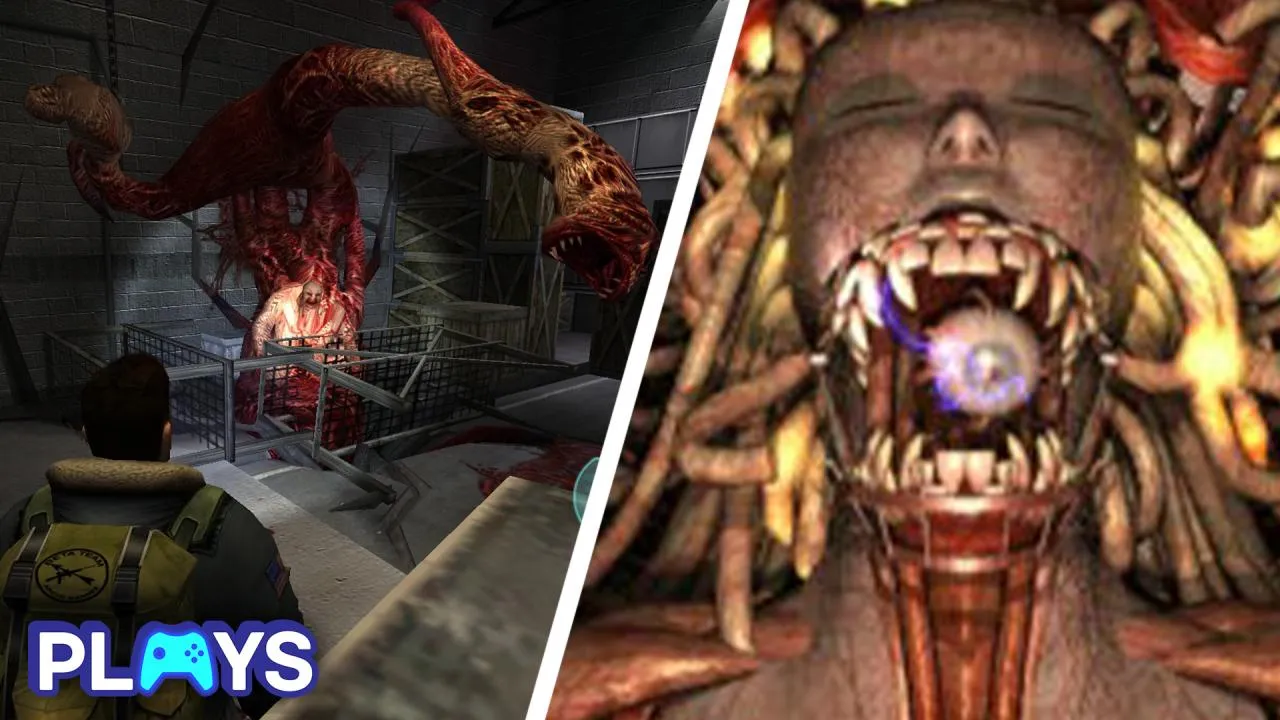
I had a friend request I try Clive Barker’s Undying just last year, and although I had no nostalgia attached—which made it hard to connect with 25 years after its release—it did tell me one important thing: this game NEEDS a remake. Beneath the dated graphics lies a layered narrative packed with loyalty, betrayal, grotesque enemies, and a mystery that unfolds very organically—arguably perfectly if it wasn’t for the second half. And while the first half does feel far stronger, the foundation is powerful. With modern visuals and refined pacing, a remake could elevate Clive Barker’s Undying to Clive Barker’s Unliving... Shut up.
“Siren: Blood Curse” (2008)
A first-party PS3 exclusive and itself a reimagining of the original Siren, Siren: Blood Curse delivered a far more polished and terrifying experience, packed with suffocating tension and deeply unsettling moments. But it came out in 2008, so it’s been basically a lifetime in game development. Come on! Let’s get cooking on its third remake. Much like early segments of Outlast, it thrives on vulnerability and panic, though it smartly balances that helplessness with occasional opportunities to defend yourself. While a straightforward remaster might seem adequate, the PS3’s notoriously complex architecture makes porting difficult, which is why titles such as Demon’s Souls and Shadow of the Colossus were rebuilt entirely. So, here’s my plan: finish Metal Gear Solid 4, and then get cracking on Siren: Blood Curse.
“The Suffering” (2004)
A lot of these entries have a defining mechanic or style that made them stand out enough to want to revisit (but prettier). The Suffering is no different, and its standout quality was that it wasn’t subtle horror; it was unapologetically brutal and grossly dark. The game embraced chaos with savage melee combat, Molotov cocktails, grotesque creature designs, and even demonic transformations. It was Manhunt with a Silent Hill/Resident Evil twist; it had a reckless confidence and no fear to dive into the depths of humanity and display it in front of you. Love it or hate it, The Suffering committed fully.
“Resident Evil – Code: Veronica” (2000)
Capcom has performed one of the craziest video game comebacks of all time as it’s been steadily rebuilding the Resident Evil legacy. They started by relaunching the series style after the devastating Resident Evil 6 and remaking entries from Resident Evil 2 through to Resident Evil 4, but there was an aggressive jump in the series between 3 and 4, and that was Resident Evil – Code: Veronica. Most fans of the series consider Code: Veronica as Resident Evil 3.5, feeling it is as important as the other numbered entries, and it deserves better. While ambitious for its time, the original shows its age in ways the others didn’t. The narrative and voice performances lack the charm or camp appeal that helped earlier titles endure, and the sprawling environments can feel confusing rather than cleverly interconnected. Its level design could benefit from tightening, guiding players more intuitively instead of leaving them wandering aimlessly. In fact, a LOT of the elements in this game are nearly great; from puzzles to gameplay, this is one that could be the perfect remake opportunity.
“Eternal Darkness: Sanity’s Requiem” (2002)
Eternal Darkness: Sanity’s Requiem has players inhabit twelve different characters across centuries, unfolding a whodunit narrative that features scary monsters, forbidden spells, and a deep mystery begging to be solved. The narrative ambition is undeniable: layered, unsettling, and thematically rich. Its biggest flaw isn’t the writing or concept, but age. A modern remake could revitalize its presentation while preserving its psychological brilliance. Historically significant as Nintendo’s first M-rated title, it earned major accolades, including “Outstanding Achievement in Character or Story Development” at the 2003 Interactive Achievement Awards. And I know me praising them sounds sarcastic, but I swear it's just because I’m usually an a**hole.
“Fatal Frame” (2001)
The Fatal Frame series has been getting a remounting unmatched by any other series on this list. We’ve got remasters for modern consoles, we’ve got the Wii installment re-released, and now it’s time to start looking at a full-scale remake. The title that truly deserves a full-scale rebuild is the original Fatal Frame, mainly because it’s the one that shows its age the most. Its structure stretches the experience thin, sending players through the same mansion across four separate nights with only minor variations. The repetition dulls what should be mounting dread. A proper remake could completely rethink that progression, transforming each day into a meaningfully distinct chapter with newly opened areas, different enemy placements, and evolving environmental storytelling. But obviously, just do your thing, developer—whoever you are—just let me be a playtester, please.

