Backrooms vs. Obsession: 2 Different Kinds of Fear EXPLAINED
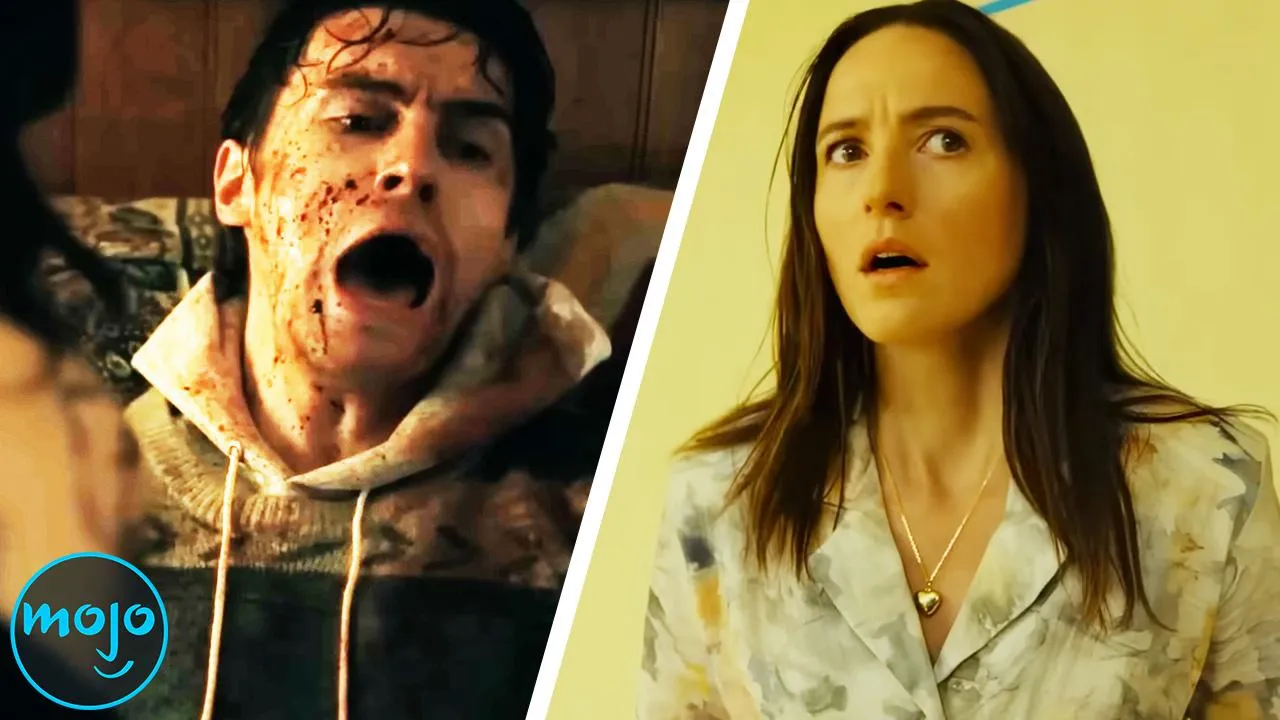
Backrooms vs. Obsession: 2 Different Kinds of Fear EXPLAINED
Welcome to WatchMojo, and today we’re breaking down the success of “Backrooms” and “Obsession,” two recent horror movies that each offer a different kind of fear.
In an era where cinema’s future seems more uncertain than ever, two films have given audiences, artists, and even studio accountants hope. On a budget of no more than $1 million, Curry Barker’s “Obsession” crossed the $100 million mark domestically in just three weeks. The same weekend that “Obsession” reached that milestone, A24 released Kane Parsons’ “Backrooms.” Over those three days, “Backrooms” made eight times its $10 million budget in North America alone, with the international box office bringing it over the $100 million threshold. Beyond their financial returns, “Obsession” and “Backrooms” seemingly have much in common, both being horror films from directors who started on YouTube. Yet, it’s the differences between these movies that make their back-to-back success encouraging for cinephiles everywhere.
While Barker and Parsons already had online followings, their first theatrical features have established them as exciting new voices on the cinema scene. Come awards season, Barker could compete for Best Original Screenplay, while Parsons would be eligible in the adapted field. “Backrooms” is based on Parsons’ found footage web series, which emerged as a viral hit in 2022. Although Parsons preserves the web series’ lore for longtime fans, his feature film also serves as a strong entry point for newcomers. Parsons manages to expand upon the original concept, providing fresh perspectives without restricting itself to the property’s found footage origins. “Obsession,” meanwhile, is a completely original work from Barker, but his signature mix of horror and twisted humor carries over from his past works.
Humor is among the main differences between “Obsession” and “Backrooms.” “Obsession” is very much an anti-rom-com. It isn’t romantic, but the film is so unapologetically uncomfortable that the audience can’t help but laugh. Sometimes it’s due to the absurdity. Other times, it’s just because of how disturbing the situation and characters are. Even at its most self-aware, “Obsession” stays rooted in horror. “Backrooms” isn’t devoid of humor. It has Chiwetel Ejiofor dressed as a pirate, after all! There isn’t a satirical element to Parsons’ film, however. The key to found footage is convincing the audience that what they’re watching is real. “Backrooms” also takes us behind the camera, maintaining the grounded spirit of a found footage film, albeit through a different lens.
Although both films are expertly shot, “Backrooms” leans more into visual storytelling. That’s not to say there aren’t some arresting conversations between Chiwetel Ejiofor’s Clark and Renate Reinsve’s Mary. Long sections of the film are practically dialogue-free, though, simply following the characters through this labyrinth of madness. Parsons almost captures the essence of a video game where exploration is part of the fun. He creates an environment we want to scratch every inch of, even if we know it’ll end badly. “Obsession” is more dialogue-driven, playing like a Gen Z version of “The Twilight Zone.” The line delivery from each performance, especially Inde Navarrette as Nikki, helps the film straddle the line between laugh-out-loud funny and unsettlingly unhinged.
Being such a visual feast, you’d think “Backrooms” would be the gorier of the two films. While there’s plenty of shocking imagery, the terror in “Backrooms” largely stems from what we don’t see. Even when a character is alone in a room, you get the sense that they’re being followed. When we do see what’s lurking in the shadows, Parsons delivers, but not always by going for the guts. Weirdly, watching an entity gradually pursue someone through the Backrooms can be more unnerving than the impending bloodshed. Where “Backrooms” takes its time, “Obsession” escalates quickly. One minute, two people are having a conversation. The next, one of them is having a face-to-face with a brick. “Obsession’s” gleeful violence is backed by clever commentary.
A toxic relationship is at the core of “Obsession,” although the source of that toxicity isn’t what some might assume. Navarrette gives the film’s creepiest performance, with Nikki’s laugh alone getting under our skin. As unsettling as Nikki’s actions are, Michael Johnston’s Bear made the wish that sparked her obsession with him. While Bear thinks he’s trapped himself in a co-dependent relationship, he’s the one who’s trapped Nikki in a personal prison stripped of any agency. Nikki suffers for no reason other than not reciprocating Bear’s feelings. To Bear, loving him isn’t so bad, but from Nikki’s POV, it’s like having someone else control your body. The real Nikki is still buried inside, powerless to break free unless Bear ends things.
“Backrooms” also centers on an entitled male who becomes obsessed. In Clark’s case, his obsession isn’t over a woman, although he carries deep resentment towards his ex-wife. Clark is more obsessed with the titular Backrooms, which can be perceived in any number of ways. The Backrooms could be seen as a metaphor for the unsolved issues that eat away at us. For Clark, it might be his failure as an architect, husband, and furniture salesman. For Mary, it may be her childhood trauma, still feeling confined to the home that her mentally unwell mother boxed her into. Whether or not someone escapes the Backrooms, a part of them is always trapped there. At least, that’s how we interpreted it.
Where “Obsession” is more direct with its commentary on relationships and so-called “nice guys,” “Backrooms” is harder to pin down. Some have argued that “Backrooms” is about getting lost in one’s memory, while others say it’s a commentary on AI. It spells nothing out, which is part of what makes “Backrooms” such an engaging experience. That’s also why the film might frustrate certain viewers looking for clear-cut answers. That may explain why “Backrooms” got a B- Cinemascore, whereas “Obsession” scored an A-. We can see why “Obsession” would be more of a crowd-pleaser. It’s funnier, faster-faced, and doesn’t skimp on the violence that most horror fans are looking for. Of course, this doesn’t mean “Obsession” is better than “Backrooms,” or vice versa.
For all of the surface-level similarities that “Obsession” and “Backrooms” have in common, both appeal to different types of audiences. “Obsession” is a fun date movie, although it could end in a breakup if your partner isn’t on the same wavelength as you. Worth it, we say! “Backrooms” is a slow burn that leaves the viewer meditating on what exactly they just watched. It’s a film you get lost in, just as the characters lose themselves. “Backrooms” is an out-of-body experience, while “Obsession” straps us in for a demented ride. To compare them really is apples and oranges, invoking two different kinds of fear. Yet, “Obsession” and “Backrooms” have each managed to find a wide audience, overshadowing the big-budget competition.
Sure, people went to see “Star Wars: The Mandalorian and Grogu” on its opening weekend. By its second, though, “Grogu” was number three behind newcomer “Backrooms” and “Obsession,” which saw a rise in attendance with each week. Major studios continue to invest hundreds of millions into movies deemed safe thanks to brand awareness. IP can still equal big bucks, as seen with “The Super Mario Galaxy Movie.” If the success of “Obsession” and “Backrooms” proves anything, though, it’s that audiences are thirsty for unique voices who don’t necessarily need massive budgets to pack theaters. YouTube not only has a huge audience that Hollywood is just starting to tap into, but it’s also a potential pipeline for talents like Barker and Parsons to usher in a promising new era of cinema.
What did you think of “Backrooms” and “Obsession?” Let us know in the comments.

