10 Things You DIDN'T Know About Termina in Majora's Mask
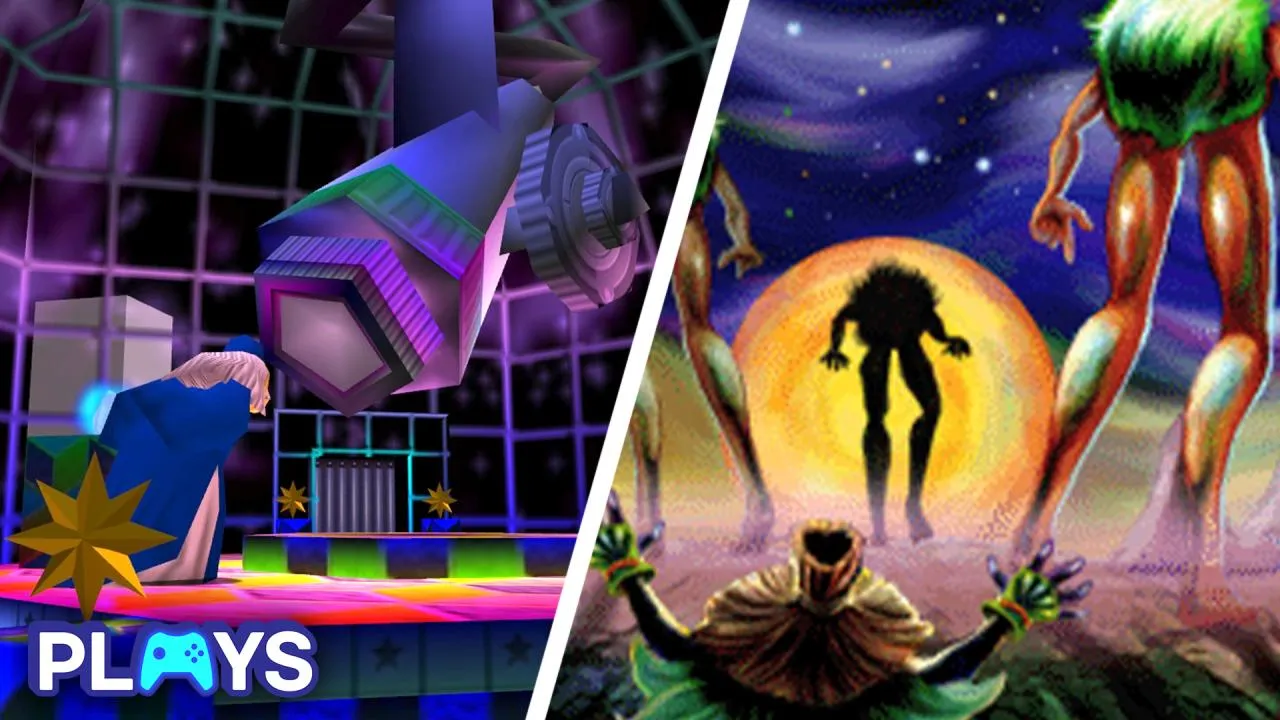
10 Things You Didn’t Know About Termina in Majora’s Mask
Welcome to MojoPlays, and today we’re showcasing some fascinating facts you might not know about Termina, the world of “Majora’s Mask.”
A Weeklong Stay
With its strange, and often melancholic storylines, and within the structure of a three day time loop, Termina is one of the most distinct settings in the “Zelda” series. But that specific amount of time, which Link would reset over and over, wasn’t originally three days. During an Iwata Asks interview around the release of the 3DS version, Eiji Aonuma stated the plan was to have Link be in Termina for a week. Thankfully, they scaled that way back, under the correct assumption that, given the dynamic schedules of events and NPCs, it would be too much to force players to remember. This also would have made development much harder than it already was, which was famously limited to a single year.
Coming and Going
The nature of Termina, what it really is, has led to a lot of discussion over the years. Vaguely some form of parallel dimension, it has spawned numerous theories about how it was created and what it represents. But when it comes to its purpose, the answer has been given. Again around the release of the 3DS version, Eiji Aonuma explained the reason for naming the world Termina. Takaya Imamura, the art director behind the game and designer of the titular mask, came up with the words ‘Majora’ and ‘Termina.’ While ‘Majora’ comes from a combination of his surname and one of his favorite movies, “Jurassic Park,” ‘Termina’ was derived from ‘terminal,’ as in a place of travel, for people to come and go. It fits both literally for Clock Town, preparing for swarms of visitors for the upcoming Carnival of Time, and thematically for Link, an outsider who saves everyone before moving on.
Marching Forward
At the time of release, Termina showcased the most advanced society we’d seen in the “Zelda” series. Other than using a telephone in “Link’s Awakening,” and a camera in the DX version, the franchise had stayed mostly grounded in medieval fantasy. Then came “Majora’s Mask.” In every corner of the world, you’d find elements of progress beyond any other society. You see this in small things, like Link once again using a camera, or even societal steps forward, like being the first game to have a mayor instead of a king. But there are also huge advancements in science like the Astral Observatory, industrialization like the Great Bay Temple, and even early thoughts of space travel as seen in Clock Town’s Bomb Shop. Hell, there are even aliens in it.
The Creation of Tingle
“Majora’s Mask” introduced Tingle, a kooky NPC you’d find around Termina selling maps of each area. Another creation of Imamura’s, reception of him grew fairly negative particularly because of how many rupees he charged us in “Wind Waker.” Here, his prices are far more reasonable, and the story of his creation is at least charming. His obsession with forest fairies, never wanting to grow up, and his green clothing were clearly inspired by “Peter Pan,” as confirmed by Aonuma. His catchphase, “Tingle, Tingle! Kooloo-Limpah!,” which he tells Link not to steal, also holds a fun Easter Egg. In Japanese, the word ‘kururinpa’ is used to describe someone who’s acting crazy, along with the recognizable motion of spinning your finger in a circle near your temple.
Money, Money, and More Money
Between Tingle’s maps, the mini-games holding tantalizing rewards, and a particularly pricey Piece of Heart at the Clock Town Bank, you end up needing a lot of money in “Majora’s Mask.” So, there are a lot of ways to earn Rupees that you can exploit across the three-day loop. We’re sure most people are aware of the hidden chests in Clock Town, as well as easily rigging the Lottery. But there are also some really great sources to farm in Termina Field. There’s the Takkuri bird near Milk Road, which drops 200 Rupees on death. Magic arrows or one of the upgraded swords makes it an easier kill. And farming it is quick since it respawns when you leave the screen and return. Plenty of other enemies drop 50 Rupees when killed with a light arrow. Although you won’t get many Rupees from it, a fun one is playing randomly-spawned songs on walls, some of which include warp themes from “Ocarina of Time.” There’s also a Guay that flies around Clock Town. If you play one of the four Temple songs, it will drop progressively larger Rupees as you follow it.
Chateau Romani
Milk appears in several “Zelda” games, usually restoring health. But in Termina, some folks like to enjoy a special type of milk, costing 200 Rupees, known as Chateau Romani. Not only does it fully restore Link’s health and magic, it gives you unlimited magic for the remainder of his current loop. For all its other drinkers, though, it’s heavily implied to be alcoholic, since it’s served in a bar and Cremia doesn’t allow her younger sister, Romani, to drink it. She eventually makes an exception…once it becomes clear the world is about to end. Despite its effects on Link, Chateau Romani actually has roots in reality. It’s thought to have been based on kumis, a drink made of fermented mare milk, traditionally found in Central and East Asia.
The Power of Four
The number four is very important in “Majora’s Mask.” Termina is guarded by four deity-like giants. Link must venture to four distinct regions to free them, found in the four cardinal directions from Clock Town, and earns four transformative masks across his journey. The Carnival of Time is celebrated with the construction of the Festival Tower. Though it’s planned to be four stories, the workers struggle to finish it in time, just as we struggle to get out of the loop, making it to the dawn of a new, 4th day. So, what’s the deal? It could be because four is an unlucky number in Japanese, as it is sometimes pronounced the same way as ‘death,’ which is ‘shi.’ It makes sense; the fourth region is literally a kingdom of the dead, and everyone will surely be dead by the 4th day’s dawn if Link fails. But there’s also a grander connection. Several cultures, from Hindus to the Aztecs to the ancient Greeks, assigned deities to the four cardinal directions, just like we see with the Giants here.
Index Warp
One of the most interesting glitches in “Majora’s Mask” allows you to warp across Termina without having activated any traditional owl statue. First, you have to activate the hidden owl statue in Clock Town, the one you can see when heading from the West side of town to the South side, but which doesn’t actually exist in the game world. By activating this statue, and it alone, it gives you access to this useful glitch. You can use the Song of Soaring to warp to any owl statue, even in places you haven’t been yet. While specific locations in the world do correspond to specific statues (warping from Deku Palace takes you to the Mountain Village, for example), there’s a set path players have found to make it most useful, particularly for speed runs. Just don’t try to warp to the Stone Tower, or your game will crash.
Fighting on the Coast
So far, we’ve talked about Termina within the confines of “Majora’s Mask.” But it’s also the setting of a memorable stage in “Super Smash Bros.” Appearing in “Melee” and “Ultimate,” the Great Bay seen here also holds a few fun facts, like how it’s usually banned in tournaments because of how easy it is to exploit circle camping. Originally, the stage was designed to let players enter the Marine Research Lab; it’s possible to use a camera hack to see inside. And specifically in “Ultimate,” where the iconic Moon can be used as an Assist trophy, it actually can’t be used here, since it plays a visual role, being caught and pushed away by the four Giants, just like the game.
The Pure Land
As is the case with many “Zelda” games, “Majora’s Mask” takes inspiration from the mythologies, folklore, and beliefs of various cultures, like the four Giants. It is also slightly unique from others in its larger focus on certain facets of Buddhism. There’s the Fierce Deity, named ‘kishin’ in the Japanese version after the wrathful forms of once-enlightened Buddhas that destroy barriers on your path to enlightenment. In a similar sense, some people believe Termina to be inspired by the Pure Land. Now, it’s far more intricate than I have time to explain here. But essentially, it is an alternate plane purified by a Buddha in which one can attain enlightenment. But because it has been corrupted and robbed of its protectors, the Giants standing in for Buddhas, Link must be the one to enlighten, or help, the people of Termina. By helping everyone, he can become a kishin, using extreme force to eliminate the barrier blocking the people of Termina from reaching enlightenment.
What are some interesting fun facts you know about the setting of “Majora’s Mask,” or just the game in general? Share your thoughts in the comments, and we’ll see you next time!

