10 Small Town Crimes That Shook The Whole Country
Murder of Skylar Neese
She wasn’t taken by a stranger. She was killed by her own friends. In Star City, West Virginia, Skylar Neese disappeared in July 2012 after climbing out of her bedroom window to meet two close friends. Surveillance footage later showed her getting into a car with Sheila Eddy and Rachel Shoaf—the last time she was ever seen alive. For months, the two girls acted concerned, even posting on social media about missing Skylar. Then, in 2013, a paranoid Shoaf confessed. The pair had planned the murder in advance, driving Skylar to a remote area and stabbing her to death. The motive? They simply didn’t like her anymore. The case led to Skylar’s Law, overhauling West Virginia’s Amber Alert system.
The Clutter Family Murders
Before it became a true crime landmark, it was just another quiet Kansas farmhouse—until one November night in 1959 changed everything. Convinced Herbert Clutter kept a safe full of cash, ex-convicts Richard Hickock and Perry Smith drove to Holcomb. There was no safe. No big score. There would be four victims, though—Herbert, his wife Bonnie, and teenage children Nancy and Kenyon—bound and executed at close range. The killers left with less than $50. Arrested weeks later, both men spent over five years on death row before being hanged in 1965. Truman Capote embedded himself in the case, interviewing both killers extensively and turning their story into “In Cold Blood,” a book that reshaped true crime forever.
Murder of Gabby Petito
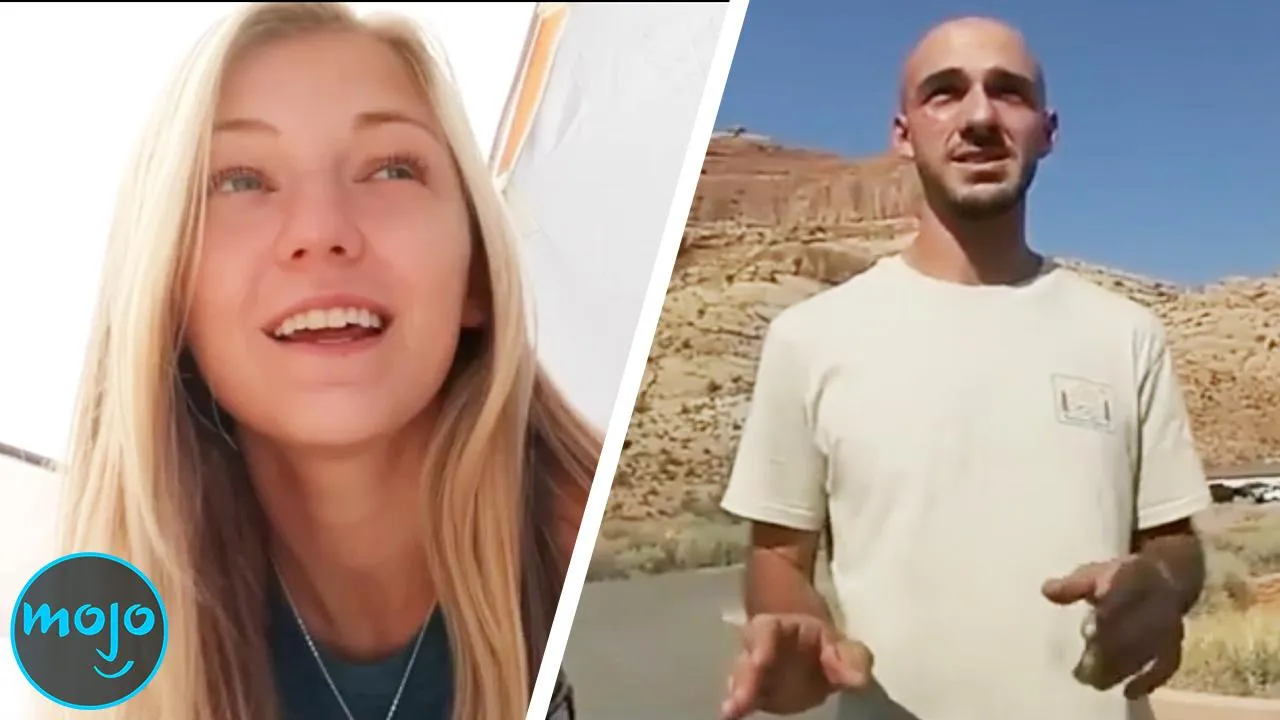
In 2021, 22-year-old Gabby Petito and her fiancé Brian Laundrie set out on a cross-country van life trip, documenting everything on social media. But in August, police bodycam footage captured a tense domestic dispute in Utah. Officers let them go, and deemed Petito the primary aggressor. Days later, she vanished. Laundrie returned to Florida alone in Petito’s van, and refused to speak. When Petito’s family reported her missing in September, the case exploded online—with thousands dissecting every detail. Her remains were later discovered on September 19th in Wyoming’s Bridger-Teton National Forest. Laundrie disappeared for weeks, then was found dead in Florida with a notebook confession beside him admitting he had killed her.
University of Idaho Murders
In the early hours of November 13, 2022, four University of Idaho students were stabbed to death inside a rental home in Moscow, Idaho. Investigators estimated the attack happened between 4 and 4:25 a.m. A fixed-blade knife was believed to be the weapon, and defensive wounds suggested some victims were awake during the attack. The killings sent shockwaves nationwide because they occurred in a quiet college town with little history of violent crime. Public fear spread quickly, and a weeks-long nationwide investigation followed. In December 2022, authorities arrested Bryan Kohberger, a criminology PhD student, after DNA evidence linked him to a knife sheath found at the scene. There’s no clear motive, which only makes it more unsettling.
Murder of Trayvon Martin
What began as a routine walk home in Florida in February 2012 became one of the most controversial shootings in modern U.S. history. Trayvon Martin was visiting his father’s fiancée in Sanford when he stepped out to buy snacks. On his way back, he was spotted by neighborhood watch volunteer George Zimmerman, who reported him as suspicious and followed him despite being advised not to. A confrontation followed, ending in a single gunshot at close range. Martin died at the scene. Zimmerman claimed self-defense. His 2013 trial ended in acquittal, triggering nationwide protests over racial profiling, policing, and injustice. The case later became a defining moment in the rise of the Black Lives Matter movement.
The JonBenét Ramsey Case
Decades later, and nobody has been charged. On December 26, 1996, the Ramsey family in Boulder, Colorado woke up to a handwritten ransom note and a missing daughter. Hours later, John Ramsey found JonBenét's body in the basement of his own home. She had been strangled. A skull fracture suggested she’d been struck with tremendous force. The crime scene was badly compromised from the start—investigators and family friends moved freely through the home before police had a chance to secure it. Early suspicion fell on the parents, and a ransom demand of exactly $118,000 raised more questions than it answered. DNA testing would later point away from the family—but toward no one else. Despite decades of investigation, the case remains unsolved.
The West Memphis Three Case
In 1993, three children were found murdered in West Memphis, Arkansas, sparking immediate shock in the small community. The bodies were found in a wooded area, and suspicion quickly fell on three teenagers: Damien Echols, Jason Baldwin, and Jessie Misskelley Jr. Prosecutors argued the killings were part of a satanic ritual, largely based on Echols’ interests in occult imagery. Misskelley gave a confession, but it contained inconsistencies and was later disputed. Despite limited physical evidence, all three were convicted in 1994. Years later, new DNA testing did not link them to the crime. In 2011, they were released under Alford pleas while maintaining their innocence. The case drew widespread criticism and became a symbol of flawed forensic and judicial practices.
The Lindbergh Kidnapping
On March 1, 1932, the son of aviator Charles Lindbergh was kidnapped from his nursery in Hopewell, New Jersey. A ransom note demanded $50,000. The money was paid, but Lindbergh Jr. never returned. Weeks later, his body was found nearby, and he was believed to have been killed shortly after the kidnapping. The case gripped the nation in a wave of media attention and fear. In 1934, Bruno Hauptmann was arrested after marked ransom bills were traced to him and wood from his attic matched the ladder used in the crime. Convicted while maintaining his innocence, he was executed in 1936. The tragedy led to the Federal Kidnapping Act and remains one of America’s most infamous cases.
Murder of Emmett Till
In August 1955, Emmett Till traveled from Chicago to Money, Mississippi—where his young life came to a tragic end. Accused of offending a white woman, he was abducted by Roy Bryant and J.W. Milam, brutally beaten, shot, and dumped in the Tallahatchie River. His mother, Mamie Till-Mobley, insisted on an open-casket funeral, exposing the horror and drawing national sympathy across racial lines. Despite widespread sympathy, an all-white jury acquitted the men in 1955. Protected against double jeopardy, they later confessed the killing in a magazine interview. The case became a major catalyst for the American civil rights movement, and Till’s story remains a powerful symbol of racial injustice today.
Which of these crimes shook you the most? Let us know in the comment section.

