The 10 HARDEST Video Game Genres
Strategy
Strategy games come in all shapes and forms, so their difficulty stems from widely different things. In a Real-Time Strategy game like “StarCraft,” you’ll have to learn to manage your economy and think long-term, all while precisely controlling your units in the moment. Whereas on the other hand, you might have a turn-based game like “XCOM” requiring you to commit to difficult high-risk decisions that might just leave one of your units permanently dead. Tough enemies might not have any obvious patterns or specific weaknesses, and more often than not you’ll be dealing with multiple highly complex systems overlapping with each other. Finally, at the core of strategy game difficulty is actually just how you deal with the information you’re presented with, which sometimes is very little!
MOBA
Multiplayer online battle arena games, or MOBAs for short, actually originated as an offshoot genre of RTS games. These days it's tough to find a gamer who hasn’t at least heard of a MOBA title like “League of Legends” or “DotA,” and one good reason for the genre’s popularity is the sheer depth and skill ceiling they offer. Just take “League of Legends” for example, which at the point of this video offers a staggering 171 different ‘champions’ to play as and master. When you factor in that a game like that is played with 9 other players per match, each with a different character, you’re looking at a ton of information and match-up knowledge to process! Nevermind the fact that the matches themselves will have you playing your characters in vastly different ways each time and having to communicate that with your teammates. MOBAs get really difficult!
Roguelike
The core challenge of the roguelike genre lies in the very concept of the genre itself: permadeath and procedural generation. While the exact definition of what makes a roguelike remains a point of contention, they typically aim to have players adapt to new situations and gameplay environments on the fly. Just look at “Hades,” in which dying over and over actually gets used as a storytelling device; you’ll be getting stronger and stronger as well as uncover more of the story with each new run you start after dying. Each run, or escape attempt, has randomly generated levels, and while dying sends you back to the start, some progress like permanent character upgrades carry over to subsequent runs. With that said, the actual action and combat of the game gets brutal– the game wants you to lose, but losing is a part of the process. Though you don’t have to!
Survival Horror
A more unconventional form of difficulty can be found in survival horror video games such as in the “Resident Evil” franchise, where resources are scarce and you never have enough ammo or healing items to get by. In those games, which the term “survival horror” was first used to describe, you’re faced with the question of whether to fight and deplete precious resources, or simply run away from encounters over and over. But there’s another layer to them mechanically; the horror aspect. You see, aiming at a monster becomes more nuanced when you’re scared out of your pants! There’s a unique sense of anxiety which the games try to instill in the player, and it’s all part of what makes survival horror games so tense and difficult.
Extraction Shooter
Extraction shooters are pretty new in gaming, and it gets pretty intense. You can pretty much get the gist of it in the name of the genre itself, as extraction shooters like “Escape from Tarkov” are match-based with the goal of shooting your way out against players and NPCs. Enter an area, get the best loot, and get out to keep your loot or gathered resources. Dying has you lose all the gear you brought in and everything you found during that session, so it’s pretty infuriating to die right at the end of a long match and lose your dream gun. Not only will your aim be tested, you might just meet a player with vastly better gear and weapons than you, so you’re always fighting for your life.
Hack & Slash
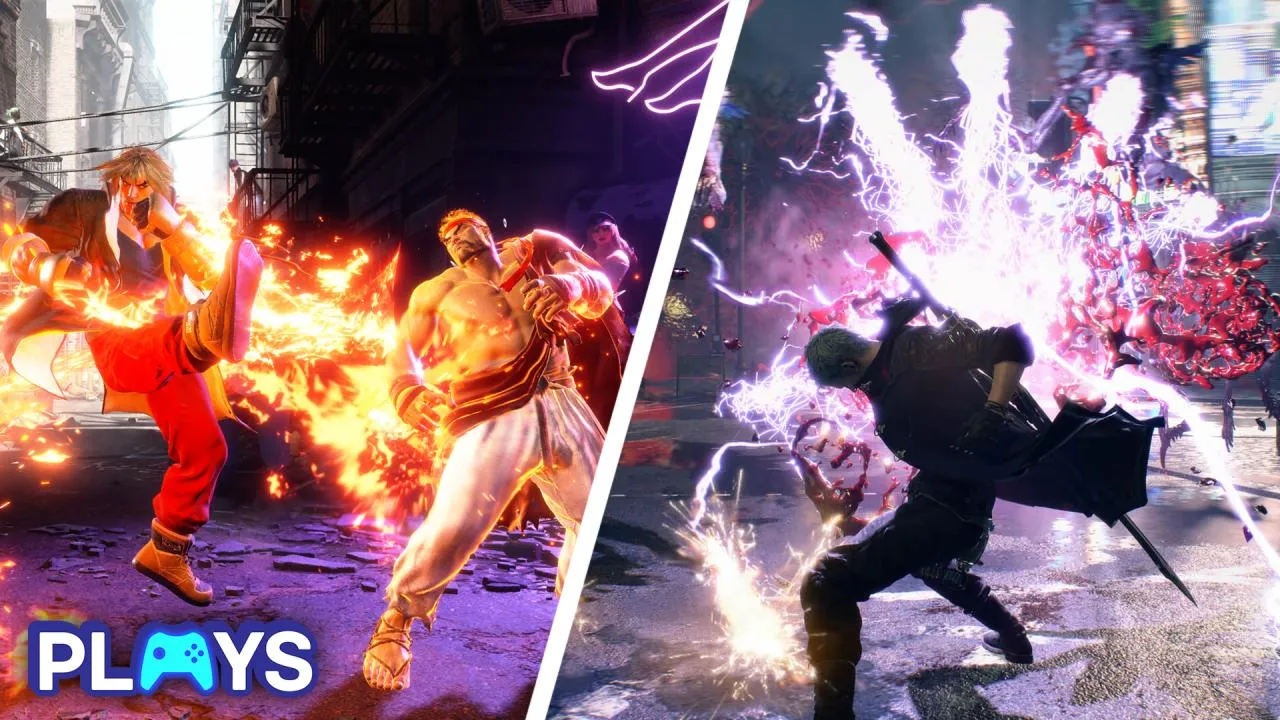
Hack and Slash games often come with sky-high skill ceilings. Games like “Ninja Gaiden 4” and “Devil May Cry 5” on their hardest difficulty modes come to mind, and they both have wild combos that’re gonna demand some brutal finger work from you to perform. That’s why a lot of hack and slash games push you to be stylish, as if the game itself wants you to break its boundaries. ‘S-Ranking’ all of the missions on ‘Dante Must Die’ mode is one thing, another is actually styling on the game while doing it. With multiple weapons and tools to swap between or use mid-combo, and a crazy movement system, the possibilities are almost endless. If you make it that far, anyway!
Fighting Games
In most fighting games, you’re playing one versus one. You’ll have movement, some sort of blocking or dodging, and a “move-list” unique to each character full of different attacks and techniques they can do. In a game like “Street Fighter” or “Tekken,” most people find the hardest combos to be outright impossible to actually perform– and that’s not even what really makes a fighting game difficult. Fighting games test your skills in a lot of different ways, from your execution to your reactions and how well you can read your opponent, or how well you can defend against them and punish. Like other genres, fighting games are nuanced, and some players might be better at one skill than another.
Platformers
Platformers started out simple and many people today mistakenly think that they still are. It’s gameplay that revolves around moving around and jumping on, well, platforms. But platformers today are so much more. Even though they’ve always been difficult, [Mario clip] games these days with platforming elements tend to deliberately make them tedious on purpose. [DS1 clip] Then there’s platformers that offer some of the most brutally difficult gaming experiences out there like “Super Meat Boy” or “Crash Bandicoot 4: It’s About Time.” It’s not that those games are particularly deep in the mechanical sense, they just leave very little margin for error. They’ll test your hand-eye coordination, and they’ll especially test your patience.
Metroidvania
Metroidvania games, named after “Metroid” and “Castlevania,” feature non-linear exploration in an interconnected world, with branching paths that often require you to come back later with a new ability to fully explore. “Hollow Knight: Silksong” is one of the best examples of a modern metroidvania title, and is built around these aforementioned qualities. Of course, what makes ‘Silksong’ so hard is its brutal combat and tight platforming. On the other side of the coin, you’ve got games like “La-Mulana” that are comically unfair. Enemies are placed awkwardly to mess with you, puzzles are vague and cryptic, and the level design is probably best described as rude. Really rude, actually!
Soulslike
The “Demon’s Souls” and “Dark Souls” games have a gameplay loop that’s so addicting, it spawned the Soulslike subgenre. One of the things that make them so addicting is the difficulty itself, which mostly comes from the progression and the combat system. It’s good at making you feel small and outmatched, and yet it’s usually balanced in a way that feels fair. Soulslike games aren’t exclusively defined by their combat systems, but they tend to be pretty similar to the “Dark Souls” blueprint. You’ll have your bonfire-esque checkpoints, your parries or ripostes, a dodge button, and a stamina bar to manage. In “Elden Ring,” you’ll find some of the hardest boss fights in gaming like “Promised Consort Radahn” and “Malenia.” Heck, take almost any Soulslike and you know it’ll have the toughest bosses you’ve ever fought.