10 BEST Handheld Final Fantasy Games
10 Best Handheld Final Fantasy Games
Welcome to MojoPlays, and today we are looking at one of the best series of all time, on my own personal favourite form of gaming, on the go! These are the 10 Best Handheld Final Fantasy Games. Let’s go!
“The Final Fantasy Legend “ (1989)
Even though "Final Fantasy Legend" was technically part of the "SaGa" series in Japan, it absolutely made sense for western players to mistake it for a classic "Final Fantasy" adventure. The setup feels incredibly familiar, with four heroes setting out on a journey while players pick different classes to shape the party. It has all the old-school JRPG ingredients too: random battles, dungeon crawling, and plenty of wandering around wondering where you were actually supposed to go next. One interesting twist is that combat happens from a first-person view, which helps the fights stand out a little from other games at the time. For a tiny Game Boy cartridge, the game squeezes in a surprisingly huge adventure and captures the spirit of early JRPGs really well, chunky pixels and all. I loved it! And I know you will too.
“War of the Visions: Final Fantasy Brave Exvius “ (2019)
Yes, "War of the Visions: Final Fantasy Brave Exvius" sounds less like a video game and more like somebody smashed random fantasy words into a blender, but the actual game is shockingly good. For a mobile tactics RPG, it goes way harder than most people would expect. The battles are packed with flashy animations, giant summon attacks, and enough dramatic slow-motion sword swings to satisfy any "Final Fantasy" fan. There is also a huge roster of characters to build teams around, whether you prefer heavy-hitting warriors or magic users turning enemies into ash. The story starts a little slowly, but the voice acting helps keep things engaging instead of feeling like endless mobile game filler. Honestly, as far as tactical games on phones go, this one punches ridiculously above its weight class.
“Final Fantasy IV: The After Years“ (2008)
"Final Fantasy IV: The After Years" is one of those sequels that quietly sneaks back in years later and goes, “Remember all that emotional trauma from before? Good news, there’s more.” This time the story focuses on Ceodore, the son of Cecil and Rosa, as another mysterious moon appears and immediately starts causing monster-related problems like moons apparently love doing in this franchise. What makes the game fun is how it mixes new faces with returning characters from the original adventure, so it still feels connected to "Final Fantasy IV" instead of just recycling old ideas. The story a lso gets surprisingly strange, but .. like in a good way, constantly throwing mysterious twists at the player. On top of that, the moon phase system changes how battles work, giving combat an extra layer of strategy beyond simply mashing attack repeatedly.
“Final Fantasy XII: Revenant Wings” (2007)
Honestly, any excuse to spend more time in the world of "Final Fantasy XII" is usually a win, and "Final Fantasy XII: Revenant Wings" ends up being way more entertaining than people give it credit for. The game ditches the MMO-style combat from the original and replaces it with a real-time strategy system that actually feels fresh for the series. Suddenly you are moving units around, summoning creatures during battles, and trying to manage chaotic fights instead of watching gambits do all the work for you. Vaan and Penelo return as the leads, which might not excite everybody exactly, but the adventure itself is still pretty charming. The story feels more like an extra side quest than a massive sequel, yet the gameplay is strong enough to carry the whole experience on its own.
“Final Fantasy VII: Ever Crisis“ (2023)
"Final Fantasy VII: Ever Crisis" basically looks at the entire "Final Fantasy VII" universe and says, “What if we squeezed all of this into one portable nostalgia machine?” The game rushes through the story a bit, but it still works surprisingly well as a greatest-hits version of Cloud’s ridiculous life, and it feels nice and new and fancy so that’s a plus! Exploring the world with the chunky old-school character models feels like a love letter to the original game, while battles suddenly explode into gorgeous remake-level visuals that honestly look way too good for a mobile title. Yes, there are gacha mechanics hanging around in the background like an unwanted salesman, but you can comfortably ignore most of them. The extra story content is the real draw here, especially the new Sephiroth material. Being able to casually replay iconic moments on your phone during a train ride is genuinely kind of awesome.
“Final Fantasy XV: Pocket Edition“ (2018)
Modern "Final Fantasy" games can sometimes feel like gigantic Hollywood productions where every character spends ten minutes dramatically staring into the distance before somebody swings a sword. That is partly why "Final Fantasy XV: Pocket Edition" ended up being such a surprisingly smart idea. Instead of trying to cram the entire massive console experience onto phones, the game trims everything down into a shorter, simpler version that focuses mostly on the story. The realistic graphics are swapped out for adorable chibi characters that make the road trip crew look like collectible figurines, and the combat is streamlined so it actually feels comfortable on handheld devices. Sure, it is missing some of the huge scale from the original release, but the emotional core of "Final Fantasy XV" is still there, just in a much cuter package.
“Final Fantasy Type-0” (2011)
"Final Fantasy Type-0" had one of the strangest development journeys in the franchise, originally being tied to the whole "Final Fantasy XIII" universe alongside the game that eventually evolved into "Final Fantasy XV". The funny thing is, once you actually play it, it barely feels connected to either of them outside of some familiar terminology like l’Cie showing up again. Instead, "Type-0" ends up doing its own thing with a much darker tone focused on endless war, loss, and teenagers being handed way too much responsibility. The game never became a huge mainstream hit, which is honestly a shame because it has a lot going for it. Between the emotional story, chaotic combat, and unique setting, it quietly became one of the most underrated spin-offs in the entire "Final Fantasy" series.
“Dissidia 012 Advance” (2011)
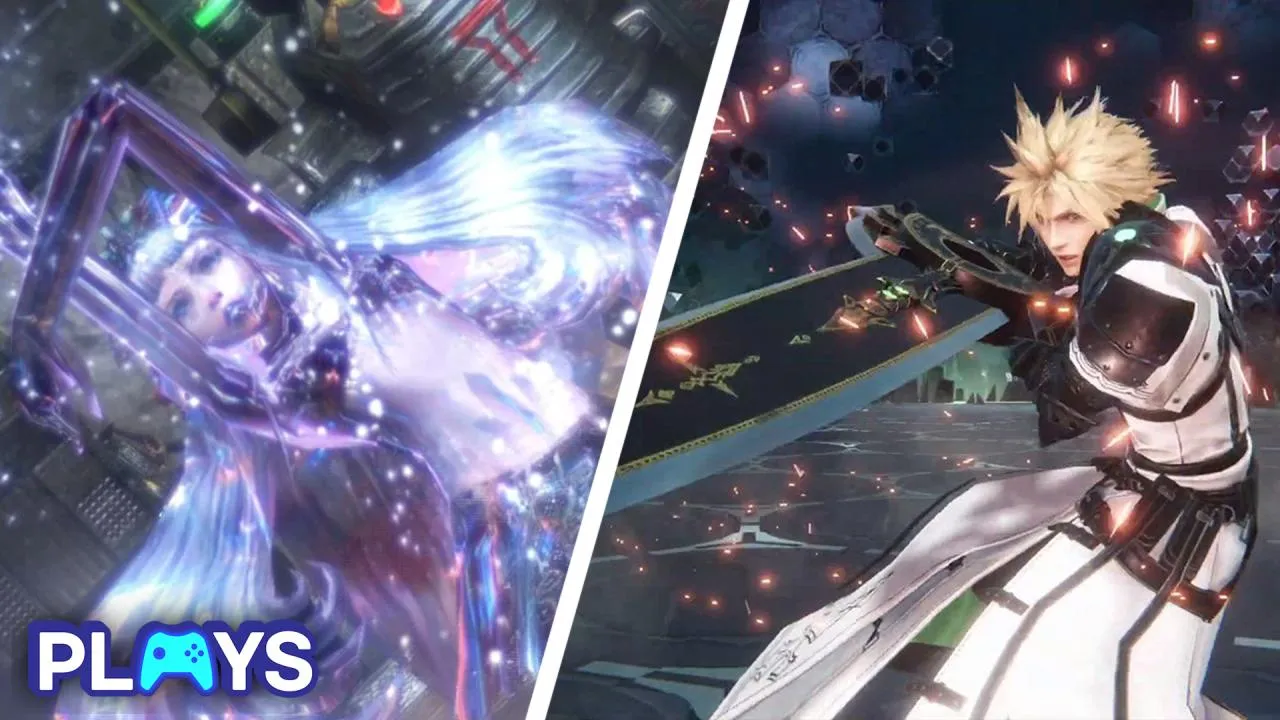
The original "Dissidia Final Fantasy" already felt like a cool experiment, but "Dissidia 012 Final Fantasy" is where the series properly figured out what it wanted to be. Instead of playing like a normal fighting game where two people punch each other until somebody explodes, it mixes RPG mechanics with flashy arena combat in a way that somehow works surprisingly well. Battles are fast, chaotic, and full of giant anime energy, but there is still strategy involved because you need to manage different resources and carefully choose when to attack. More importantly, the whole game feels like one giant love letter to the franchise. Seeing heroes and villains from across "Final Fantasy" history interact is half the fun. Honestly, watching Cloud fight Kefka in dramatic slow motion never really gets old.
“Final Fantasy 7: Crisis Core” (2007)
Long before "Final Fantasy VII Remake" finally arrived and sent the internet into complete emotional meltdown, fans were desperately clinging to anything connected to "Final Fantasy VII". Out of all the spin-offs released during that time, "Crisis Core: Final Fantasy VII" easily became one of the most beloved. The game follows Zack Fair before the events of the original story, turning a character who was once mostly mysterious flashback material into one of the franchise’s most likable heroes. Zack’s energy and optimism make him incredibly easy to root for, especially knowing how tragic everything eventually becomes. The combat also helped the game stand out, mixing action-based fighting with the bizarre roulette system that somehow made every battle feel slightly like gambling at a fantasy casino.
“Final Fantasy Tactics Advance” (2003)
Back when handheld "Final Fantasy" games were still pretty rare, "Final Fantasy Tactics Advance" felt like finding a full tactical RPG hidden inside a Game Boy Advance cartridge. Unlike the darker and more serious tone of the original "Final Fantasy Tactics", this game goes for a lighter fantasy adventure where a group of kids suddenly end up trapped in Ivalice. Even though the story is more playful and aimed at younger players, it still has plenty of charm and surprisingly emotional moments along the way. The real star of the show, though, is the combat. The Judge system constantly changes the rules of battle, meaning one fight might ban certain abilities while another punishes specific attacks entirely. It keeps every encounter feeling fresh and stops battles from turning into repetitive sword-swinging autopilot for fifty hours straight.
