10 BEST Final Fantasy Endings
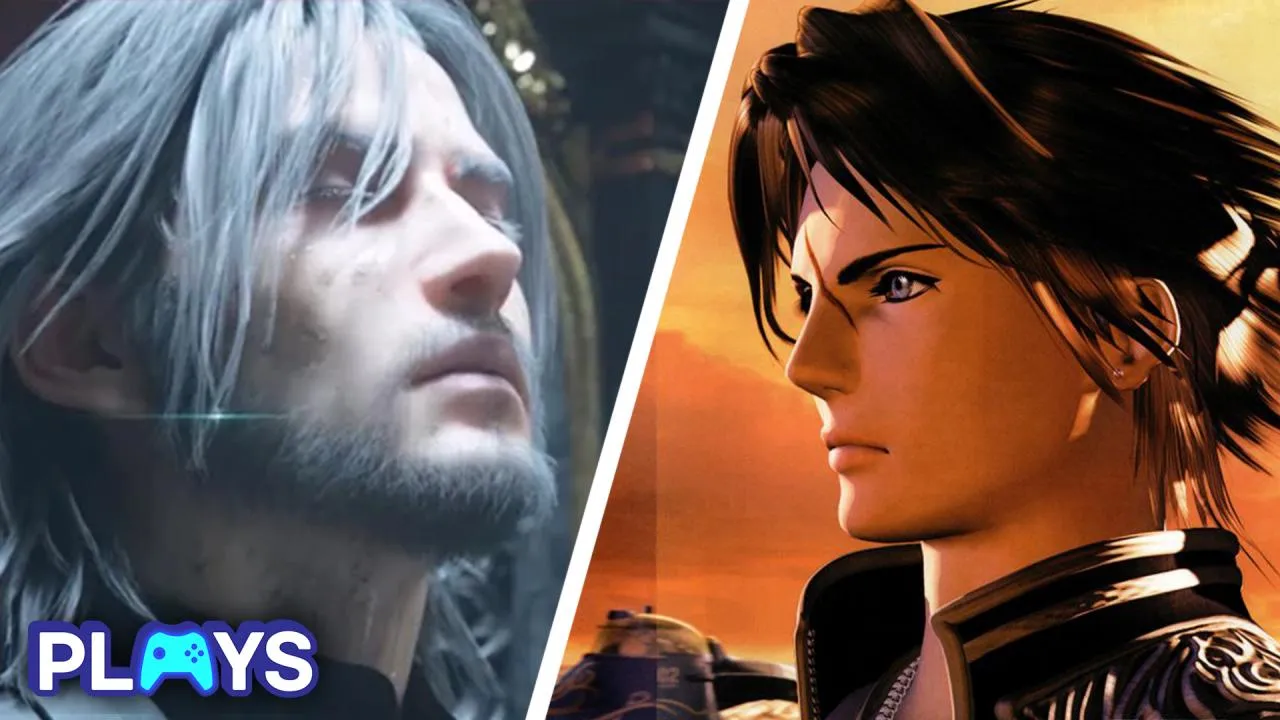
10 Best Final Fantasy Endings
Welcome to MojoPlays, and today we are jumping the gun, and getting straight to the good stuff. These are the 10 Best Final Fantasy Endings. Journeys aside, let’s look at some destinations.
“Crisis Core: Final Fantasy VII” (2007)
The ending of “Crisis Core: Final Fantasy VII” hits so hard because players already know exactly how Zack Fair’s story is supposed to end, yet the game still somehow tricks you into hoping things might turn out differently. Throughout the story, Zack is endlessly optimistic, determined to protect his friends, and genuinely believes he can still make it back to Midgar and reunite with Aerith. By the finale, he’s painfully close to getting the life he wanted, with Cloud finally beside him and freedom seemingly within reach. Then Shinra arrives with an entire army standing between Zack and the city. We all knew this would happen, and it still hits hard. The player is forced to control Zack during his final stand even though victory is impossible. The fight keeps going long after it’s obvious he cannot survive, with Zack pushing himself forward through exhaustion and mortal injuries purely because giving up is not in his nature. His death is as sad as it gets. God, I don’t want to edit this footage.
“Final Fantasy X-2” (2003)
The endings of “Final Fantasy X-2” have sparked arguments among fans for years because they completely change how players interpret Yuna’s journey after “Final Fantasy X.” The most famous outcome is the “perfect” ending, where Tidus is resurrected and reunited with Yuna if the player carefully triggers enough hidden completion requirements and dialogue choices throughout the game. For fans who desperately wanted the couple back together, it’s basically fan service, and you know what? WHAT’S WRONG WITH THAT!? If you enjoyed “Spider-Man: No Way Home”, and not this, get off your high horse. The “Sad” ending hits hard in the opposite way because she briefly embraces a vision of Tidus before letting him go. It’s heartbreaking, but it also feels more in line with the themes of growth, healing, and learning to live with loss that defined the original game.
“Final Fantasy XIII” (2000)
The “Final Fantasy XIII” trilogy has always divided the fanbase pretty heavily, but even people who dislike the games often admit the original ending is pretty strong. After spending the entire story being hunted, manipulated by fate, and constantly told they’re doomed no matter what they do, the party somehow manages to fight back against the system controlling their lives. By the finale, the group defeats Orphan, prevents Cocoon’s destruction, and finally breaks free from the Focus forced upon them. But the victory comes with a huge sacrifice. To stop Cocoon from crashing into Pulse, Fang and Vanille fully transform into Ragnarok and crystallize themselves to hold the world together. It’s one of those endings that feels hopeful and devastating at the exact same time. The heroes technically succeed, but the cost is heartbreaking. From a storytelling perspective, kudos.
“Final Fantasy IV” (1991)
The ending of “Final Fantasy IV” works so well because it feels genuinely earned. I don't know what that means really, but it sounded right when I wrote it. Compared to earlier entries in the franchise, “FFIV” put a much bigger focus on character development and personal drama, and Cecil’s journey from a guilt-ridden Dark Knight into a true hero still holds up incredibly well. By the time the party reaches the end, it really feels like the final payoff to Cecil’s redemption arc and all the sacrifices the group made along the way. But honestly, the part that sticks with most players is the epilogue afterward. Watching everyone return home and gather for Cecil’s coronation gives the game this warm, peaceful ending that makes the entire journey feel complete. Getting a smile after a whole bunch of frowns and sad faces, feels really good.
“Final Fantasy VIII” (1999)
This is one of those entries where we REALLY have to put the journey aside, looking at YOU orphanage reveal. Ignoring some of the weirder story moments, the finale of “Final Fantasy VIII” feels like somebody blended romance, existential sci-fi, and a dream sequence together and somehow made it emotionally work. By the time the party reaches Ultimecia, the game has fully embraced its weirdest ideas, throwing players into a surreal final battle fought across collapsing time itself. But the real emotional payoff comes afterward during the resolution to the time compression. As fragmented memories and scenes begin reconnecting, the ending slowly reinforces how deeply tied the cast members are, even without the orphanage reveal. The final reunion between Squall and Rinoa especially lands hard because Squall spends so much of the game emotionally closed off and terrified of connection. Watching him finally reach out breaks our hearts... At least more than the goddamn orphanage reveal.
“Final Fantasy VI” (1994)
The story of “Final Fantasy VI” is remembered so fondly because the game does something few RPGs had the courage to do at the time: lose. Kefka destroys the world, reshapes society into a miserable wasteland, and spends the second half of the game acting like a magical clown version of the apocalypse itself. Because of that, the ending had an incredibly difficult job. After all the suffering in the World of Ruin, there was no way to fully restore things to how they used to be. Once the party finally reunites and defeats Kefka, the ending focuses less on triumph and more on acceptance. Terra’s resolution especially hits hard because she survives the disappearance of the Espers by embracing the human side of herself instead of rejecting it. Some fans feel the finale softens the consequences of the World of Ruin a little too much, I want to round up all those people and clip them across the ears.
“Final Fantasy XV” (2016)
“Final Fantasy XV” has always split the fanbase because its story can feel strangely uneven at times. Huge events happen off-screen, entire plot points are scattered across movies and DLC, and the tone occasionally swings from emotional road trip to royal apocalypse in the blink of an eye. But whatever issues people have with the overall narrative, a lot of fans agree the ending absolutely sticks the landing. That’s because “FFXV” works best when it focuses on the bond between Noctis and DA BOYS. The game spends so much time building their chemistry through conversations, camping trips, and dumb little moments that by the finale, the group genuinely feels like brothers. Noctis sacrificing himself to stop Ardyn is already heartbreaking enough on its own, but the final campfire scene that came before this... I’m already getting emotional and I haven’t even had to look at the footage yet. Jesus Christ can someone else edit this video!?
“Final Fantasy VII” (1997)
“Final Fantasy VII” didn’t just become one of the biggest RPGs ever made, it completely changed how people viewed video game storytelling in general. Before 1997, nobody ever put a character's death and a snowboarding sequence within an hour of each other. Jokes aside, the game left a huge mark on gaming culture that still hasn’t faded decades later. Its ending is one of the most unusual finales in the entire franchise because it refuses to give players a neat, comfortable answer. After Sephiroth’s defeat and Holy’s activation, the game jumps hundreds of years into the future where Red XIII and his cubs overlook the ruins of Midgar, now completely reclaimed by nature. It’s a beautiful scene, but also an incredibly unsettling one because the game never directly tells players what happened to humanity. Some fans found that ambiguity frustrating, while others loved how perfectly it tied into the game’s environmental themes. It’s perfect, decide for yourself what happened to the gang... Or watch the movie.
“Final Fantasy IX” (2000)
A lot of “Final Fantasy” endings leave players with unanswered questions, usually wrapping things up right as the heroes step into an uncertain future. “Final Fantasy IX” takes a very different approach by slowing down and giving nearly every major character a heartfelt sendoff, and it doesn’t feel like fan service, it feels earned. Instead of rushing straight to the credits after the final battle, the game shows where everyone ends up a full year later, letting players see how the cast has grown after everything they survived together. The emotional centerpiece, though, is Zidane’s reunion with Garnet. After the game spends so long hinting that Zidane may have sacrificed himself, seeing him finally reveal himself in disguise during Garnet’s play performance is a gasp of relief. Garnet dropping her royal composure and running toward him is one of the sweetest moments in the franchise. THAT might be fan service, but the game didn’t have fans when it was being developed, so it doesn’t count.
“Final Fantasy X” (2001)
A huge reason so many fans consider “Final Fantasy X” the best game in the franchise comes down to how powerfully it handles its ending. It’s my third favourite game, and my first favourite ending. The entire story builds toward this bittersweet realization that defeating Sin will finally free Spira from its endless cycle of suffering, but that victory comes with an unbearable cost. After Yuna and the party defeat Yu Yevon, the Fayth can finally rest, which also means our protagonist Tidus can no longer exist in the world they fought so hard to save. The scene where Tidus slowly fades away is still one of the most devastating moments in the series because everyone reacts exactly how real people would. Tidus accepts his fate with surprising calm, but watching Yuna struggle to let him go completely destroys players emotionally. And by ‘players’, I mean me, and by ‘me’, I mean all of us.
