Top 20 British Comedy Films
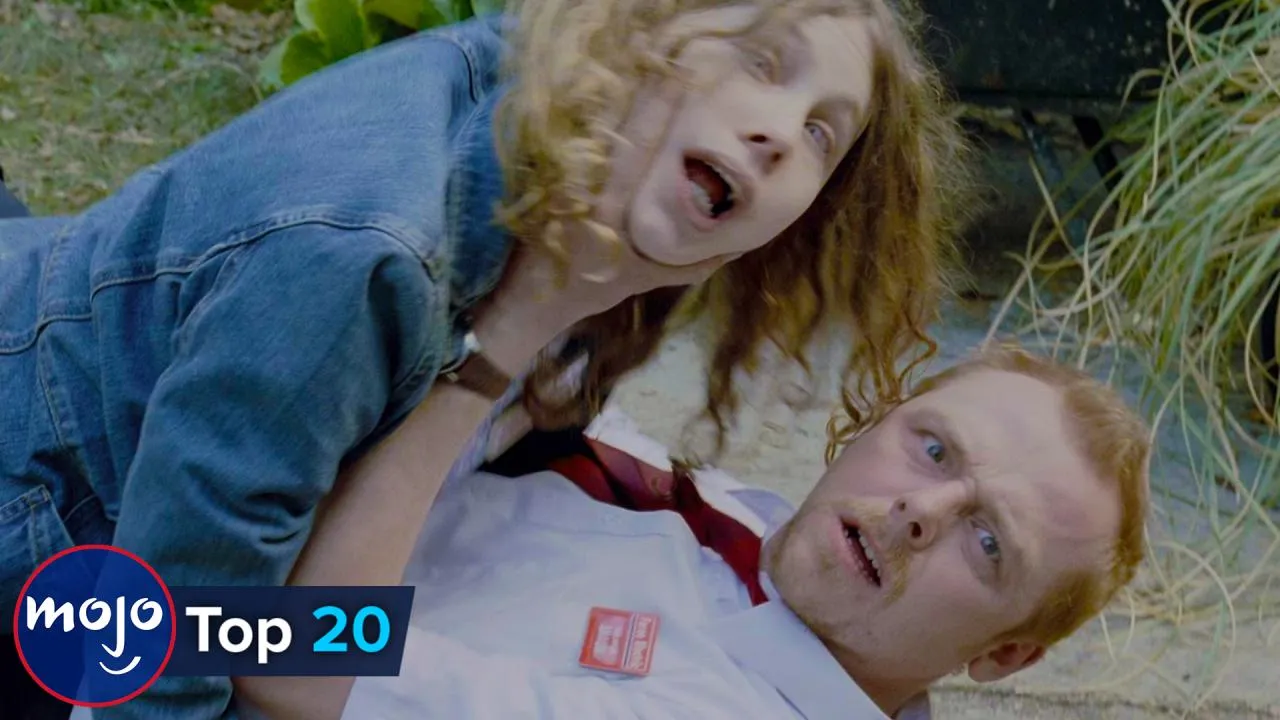
- "Paddington" (2014)
- "Bridget Jones's Diary" (2001)
- "The Full Monty" (1997)
- "Calendar Girls" (2003)
- "Death at a Funeral" (2007)
- "Wallace & Gromit: The Curse of the Were-Rabbit" (2005)
- "Monty Python's The Meaning of Life" (1983)
- "Four Weddings and a Funeral" (1994)
- "Chicken Run" (2000)
- "A Fish Called Wanda" (1988)
- "The Italian Job" (1969)
- "In Bruges" (2008)
- "Four Lions" (2010)
- "Carry On Camping" (1969)
- "In the Loop" (2009)
- "Dr. Strangelove" (1964)
- "Monty Python and the Holy Grail" (1975)
- Three Flavours Cornetto
- "The Lavender Hill Mob" (1951)
- "Monty Python's Life of Brian" (1979)
#20: “Paddington” (2014)
The film that brought beloved character Paddington Bear to a new generation is wholesome fun for all the family. He meets the latest iteration of the welcoming Brown family and moves in with them on Portobello Road, where he eventually comes face to face with villainous taxidermist Millicent Clyde – played by Nicole Kidman. With Paddington’s trademark charm and gentleness, anybody and everybody can enjoy this new take on the “Paddington” mythos. And the first sequel is just as good, with Hugh Grant appearing as the next villain, marking the beginning of his turn from bumbling romantic lead to formidable character actor. All three of the Paddington films are best in class.
#19: “Bridget Jones’s Diary” (2001)
Now for Hugh Grant playing a villain of an entirely different flavour, he broke hearts around the world as the wicked Daniel Cleaver in “Bridget Jones’s Diary”. The first, and best, of the “Bridget Jones” quadrilogy, “Bridget Jones’s Diary” is a loose adaptation of “Pride & Prejudice”. Bridget, played by Renée Zellweger doing a surprisingly impeccable English accent, is torn between the affections of two men, charming Daniel and aloof Mark Darcy, played by Colin Firth. Of course, she goes for Colin Firth in the end, but not after getting into various absurd scrapes. The most memorable is when she rocks up at a classic tarts and vicars party dressed as a Playboy Bunny, only to be informed there was a last-minute costume change.
#18: “The Full Monty” (1997)
What do you do when you’ve just lost your blue collar job, but you need to make some cash? Start stripping, of course. That was the genius answer that struck both the characters in “The Full Monty” and its screenwriters, making for one of the UK’s most enduring comedies. Inspired by the real-life Chippendales, local millworker Gaz Schofield decides to get together a ragtag group of working class men to put on a show for Sheffield’s women. Their gimmick is that they’re going to go all the way, stripping down to their birthday suits against a soundtrack of classic tunes. As well as being a phenomenal comedy, its social commentary was way ahead of its time, addressing body positivity years before it was fashionable.
#17: “Calendar Girls” (2003)
On the flipside of “The Full Monty” is “Calendar Girls”, in which a group of middle-aged Women’s Institute members decide to raise some money by posing for a nude calendar. With an all-star cast led by Helen Mirren, “Calendar Girls” is, in fact, based on a true story of women raising money for Leukaemia Research, only to be thwarted by the old farts in the WI who don’t want to have the organisation’s name on the finished product. They won out and, in real life, sold over 200,000 copies of the calendar. With Mirren joined by seasoned comedy actors Julie Walters and Celia Imrie, “Calendar Girls” was fated to be a success from the beginning. And now there’s a musical based on it, too!
#16: “Death at a Funeral” (2007)
Is this the funeral from hell? Quite possibly. Matthew Macfadyen leads the cast alongside real-life wife Keeley Hawes, flanked by Peter Dinklage and a scene-stealing Alan Tudyk. The screenplay by Dean Craig is a tightly wound masterclass in farce, with each storyline building on the last like a perfectly constructed comedic avalanche that just keeps getting bigger and more gloriously chaotic. And what really sets “Death at a Funeral” apart is its ability to balance all of that outrageous humour with genuine heart and emotion, making you laugh until you cry before making you simply cry. You’ve hopefully never been to a funeral quite like this.
#15: “Wallace & Gromit: The Curse of the Were-Rabbit” (2005)
The first full theatrical feature in the “Wallace & Gromit” canon came a few years after the runaway success of a different Aardman film we’ll be talking about later. A mash-up of B-movie monster tropes, Wallace and Gromit are this time running a pest control service trying to get control of a rabbit population explosion. Wallace has yet another love interest, this time local toff Lady Tottington, played by Helena Bonham Carter, but his romantic endeavours are thwarted when he accidentally turns himself into a were-rabbit. It’s then up to Gromit to rescue the hapless Wallace – as it always is – and also save the local vegetable growing competition. It was a box office hit, and easily one of the duo’s strongest outings.
#14: “Monty Python’s The Meaning of Life” (1983)
The first “Monty Python” joint on our list is their final feature film, “The Meaning of Life”. Though it ranks low by Python standards, that still puts it ahead of most other comedy films. Like “And Now For Something Completely Different”, it’s an assortment of sketches in a feature-length package – except that they’re all new sketches, rather than being remakes of the best moments from “Flying Circus”. The one everybody remembers, however, is the one with Mr Creosote in the French restaurant. It’s quite possibly one of the most revolting scenes ever committed to film, when Mr Creosote – who’s already been vomiting periodically – explodes. We see him somehow still alive with his chest cavity wide open and his heart beating within.
#13: “Four Weddings and a Funeral” (1994)
Made on a modest budget in the early 90s, nobody thought “Four Weddings and a Funeral” would be a hit. But, of course, it was, shooting Hugh Grant to newfound stardom. To think, he’d been about to quit acting before “Four Weddings” came along! It follows Grant as Charles, who continually runs into an enigmatic American, Carrie, played by Andie MacDowell, at numerous weddings. It’s funny, it’s charming, it’s absurd at times, but underneath all the irony and awkward moments, there’s an enormous heart, with the film covering love, loss, and everything in between. And the older you get, the more relevant it feels.
#12: “Chicken Run” (2000)
Here it is, the other Aardman film you were promised! And be honest in those comments; you knew it was going to be “Chicken Run”. Starring Julia Sawalha as rebellious chicken Ginger, “Chicken Run” is a parody of classic war films, notably “The Great Escape”, as the chickens plot to break out of their brutal poultry farm and fly to freedom. At the time, it rapidly became the highest-grossing stop-motion animated film in history. And as of 2026, it still is! Every emotional beat is struck perfectly, with flawed but likeable protagonists, a romance, and one of cinema’s all-time most frightening villains in the form of Mrs Tweedy.
#11: “A Fish Called Wanda” (1988)
Here’s a film that practically crackles with comedic electricity from its very first frame. John Cleese’s 1988 crime-comedy-farce is deliciously dark, gleefully rude, and ferociously funny. Cleese himself plays a strait-laced barrister drawn into a diamond heist gone wrong, while Jamie Lee Curtis, Kevin Kline, and Michael Palin complete one of the finest comedy ensembles in film history. Palin steals every scene he’s in as the stammering animal lover Ken, while Kline plays an insane but ineffective former CIA agent. Few comedies have managed to be simultaneously this funny and this clever.
#10: “The Italian Job” (1969)
More crime, “The Italian Job” isn’t just one of the greatest heist films ever made, but also one of the funniest. Charlie Croker, played by a young Michael Caine, has a plan to steal a fortune in gold bullion in an elaborate, Italian robbery. Everybody remembers “The Italian Job” for how it ends, though, not how it starts. Following an elaborate, nail-biting car chase over the Italian cobbles, going up and down stairs, over roofs, and even through the sewers in three Mini Coopers, the gang gets the gold. And then, disaster: their bus careens out of control, the back swinging over the edge of a cliff. The gang are stuck at one end, with all the gold at the other.
#9: “In Bruges” (2008)
While there’s just as strong a case to be made that “In Bruges” is an Irish film, starring Colin Farrell and Brendan Gleeson, it’s certainly more of an international production. Farrell and Gleeson play two hapless hitmen who are sent to Belgium to lay low after a botched assassination. It’s the chemistry between Farrell and Gleeson that makes “In Bruges” so watchable even as it becomes increasingly absurd, and it’s no wonder that the duo reunited over a decade later for another dark comedy, “Banshees of Innisherin”. Chaos is waiting for Ray and Ken at every turn, in a film as brutal as it is funny.
#8: “Four Lions” (2010)
Only Chris Morris would have been brave enough to make a film like this. Led by Riz Ahmed, now an A-lister, “Four Lions” follows a group of British Muslims as they plan a devastating attack. Morris co-wrote the screenplay with fellow comedy greats Jesse Armstrong and Sam Bain, the former of whom would go on to make “Succession”. And all that writing talent was definitely necessary to make such a potentially controversial film work – although, Morris has said that he didn’t set out to make anything contentious. In the end, there was no real outrage about “Four Lions”; it’s just that good, even if YouTube will still flag us if we tell you in any more detail what it’s actually about.
#7: “Carry On Camping” (1969)
The critics may not like the lowbrow innuendo of “Carry On”, but the public certainly does; that’s how over thirty of these filthy films got made. All focusing on sight gags, double entendre, and other bawdy humour, “Carry On” is both extremely dated and somehow timeless. “Camping” released in May 1969, at the dawn of the summer of love, when everybody was at it in dodgy camp grounds around the world. They just don’t make films like this anymore! And we’re sure a few of you remember watching it long before you were supposed to, all to see a glimpse of Barbara Windsor in THAT memorable aerobics scene.
#6: “In the Loop” (2009)
What if “The Thick of It” took place in a parallel universe? Well, you’d probably end up with something like “In the Loop”, in which only Peter Capaldi is returning as the same character he played in the BBC classic. Chris Addison, Joanna Scanlan, and Tom Hollander are here as well, but all in new roles – or, at least, they have new names. This time, we’re following Tucker as he deals with foreign policy, trying to settle a dispute between Britain and America, with the legendary James Gandolfini playing Lieutenant General George Miller. Armando Iannucci would go on to lampoon American politics even more directly, making “Veep” for HBO three years later.
#5: “Dr. Strangelove” (1964)
Yes, though it deals with American politics, “Dr Strangelove” is technically a British film, shot in the UK and starring Peter Sellers in three distinct roles – and we’ll take any excuse to talk about it. “Dr Strangelove” follows the efforts of insane general Jack Ripper as he goes rogue and tries to trigger a nuclear war, ordering his fleet of B-52s to head straight for the Soviet Union and let loose. Meanwhile, the president – one of Sellers’ roles – deals with the inherent absurdity of the Cold War and tries to warn the Russians so that they can avert the apocalypse. And, of course, there’s Dr Strangelove himself, Sellers again, constantly trying to stop himself from making a very particular hand gesture.
#4: “Monty Python and the Holy Grail” (1975)
This Pythonesque outing was their second feature film, but the first that consisted of wholly new material with its own narrative and plot. Starring Graham Chapman as a hapless King Arthur, we loosely follow Arthurian myths as he collects his famous knights and tries to find the titular grail. Along the way they have to contend with politically motivated peasants; an extremely durable knight; violent demands of the shrubbery variety; and, of course, a killer rabbit. Every scene has a line or a moment that has been quoted or replicated, and yet, the calibre of comedy is so high that we’re not even tired of hearing “it’s just a flesh wound” or “your mother is a hamster”.
#3: Three Flavours Cornetto
Maybe it’s a cop-out for us to combine all three Cornetto Trilogy entries, but can you blame us for not being able to choose? All starring Simon Pegg and Nick Frost – along with a regular cast of other well-known faces – “Shaun of the Dead”, “Hot Fuzz”, and “The World’s End” each feature a different flavour of Cornetto as a key motif. There’s truly something here for everyone: whether you want one of the greatest zombie films of all time, the only movie that makes British police look cool, or a heartbreaking romp about midlife crises intersecting with an alien invasion, you’re covered. But more than the cast, it’s the frenetic, stylish filmmaking of Edgar Wright that makes them iconic.
#2: “The Lavender Hill Mob” (1951)
We’re picking this film to represent the Ealing Studios catalogue, though you can’t really go wrong with any of its mid-century hits. “The Lavender Hill Mob” follows the antics of Alec Guinness and Stanley Holloway, playing bumbling, aspiring criminals Dutch Holland and Al Pendlebury respectively. They have a plan to steal a cache of gold, smelt it down, and recast it as little Eiffel Towers that look like cheap souvenirs. Then all they have to do is get to France and sell them, which is easier said than done – and it doesn’t sound that easy to begin with. It was a smash hit, and remains one of the funniest and most acclaimed British films ever.
#1: “Monty Python’s Life of Brian” (1979)
We know you knew that “Life of Brian” would be number one, but that doesn’t make it any less satisfying now that it’s here. So controversial that EMI withdrew funding for it – after which it was famously rescued by none other than George Harrison – “Life of Brian” has aged like wine. Graham Chapman is again in the leading role as the Pythons’ go-to comedy straight man, as Brian gets involved in anti-Roman activism – all to impress a girl. He eventually gets mistaken as a genuine prophet which, of course, leads to his crucifixion at the hands of those violent Romans. The film ends with possibly the best and most iconic song Eric Idle ever wrote, which is certainly saying something.
Be sure to let us know in the comments what the Romans have ever done for us.
