Every Handheld Video Game Console RANKED
- "N-Gage" (2003)
- "Gizmondo" (2005)
- "Gamate" (1990)
- "Watara Supervision" (1992)
- "Game.com" (1997)
- "Genesis Nomad" (1995)
- "Playdate" (2022)
- "WonderSwan" (1999) "WonderSwan Color" (2000) "SwanCrystal" (2002)
- "Atari Lynx" (1989)
- "PC Engine GT" (1990)
- "Neo Geo Pocket" (1998) "Neo Geo Pocket Color" (1999)
- "Game Gear" (1990)
- "Nintendo 3DS" (2011) "Nintendo 2DS" (2013)
- "PlaySation Vita" (2011)
- "Game Boy" (1989) "Game Boy Color" (1998)
- "PlayStation Portable" (2004) "PSP Go" (2009)
- "Nintendo DS" (2004) "Nintendo DSi" (2008)
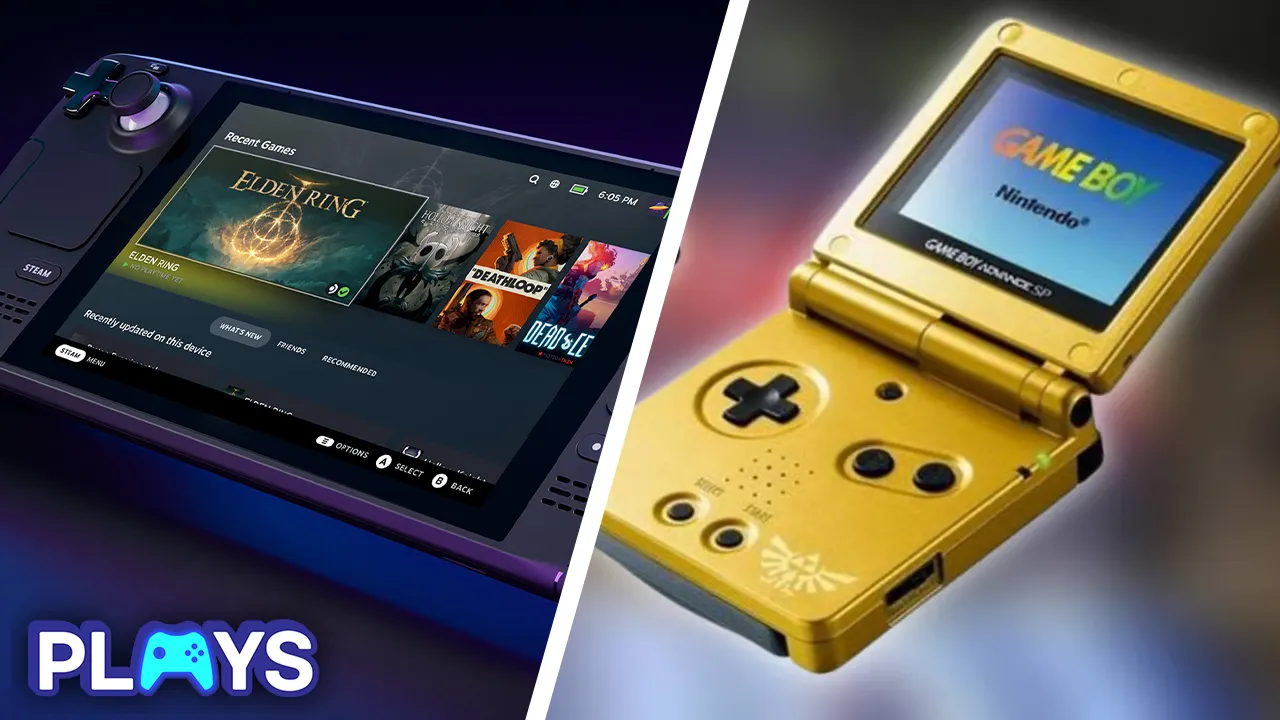
- "Steam Deck" (2022)
- "Nintendo Switch" (2017) "Nintendo Switch Lite" (2019)
- "Game Boy Advance" (2001) "Game Boy Advance SP" (2003)
#20: “N-Gage” (2003)
I don’t want to even acknowledge this with an entry, so let’s rush through it. The N-Gage, developed by Nokia (THAT’S RIGHT, NOKIA) was a hybrid device combining a mobile phone and a handheld gaming system. Officially dubbed the "game deck", Nokia designed the N-Gage to compete with the Game Boy Advance by integrating phone functionality, including SMS texting, into an all-in-one gaming device. Despite a lineup of over 50 games, including titles from major third-party developers, the N-Gage struggled commercially. And I wonder why? Its awkward button layout made gaming uncomfortable, and its distinctive shape earned it the nickname "taco phone."
#19: “Gizmondo” (2005)
One of the most infamous hardware failures in gaming history, Tiger Telematics' Gizmondo aimed to be a groundbreaking device, packing a camera, mobile data, GPS, and more! Features that were far from standard at the time. Millions were poured into its development and marketing, including extravagant launch parties, and celebrity endorsements. Despite all this, the system sold fewer than 25,000 units worldwide. If you aren’t aware, that’s pretty abysmal for sales, plus I don’t know if you ever got your hands on one of these, but it was mostly rubber, and it was stupid, sticky rubber… It sucked.
#18: “Gamate” (1990)
The Bit Corp Gamate was launched around the same time as the original Game Boy, clearly aiming to capitalize on the success of Nintendo’s iconic handheld. Unfortunately, I don’t need to tell you why in a homophobic 90’s Australia, kids refused to say they “wanted a gay mate”. Was it correct? Absolutely not. Unfortunately, I can’t change history. Between 1990 and 1995, around 70 games were released for the system, though many of the later titles were only available in the Far East. Despite being a relatively small company, Bit Corp managed to secure distribution partnerships with several Western companies. However, the Gamate’s blurry screen and lack of quality games ultimately ensured its death.
#17: “Watara Supervision” (1992)
Also known as the QuickShot Supervision, the Watara Supervision was another attempt to capitalize on the Game Boy's early 90’s success. It featured a similar monochrome display but stood out with its unique tilting design. Woah! It’s like a Game Boy with angles! Later versions of the device removed the tilting screen, likely to reduce production costs. Despite plans for an accessory that would add color to Supervision games, the device ultimately disappeared from store shelves, unable to compete with the dominance of the Game Boy, which it so desperately tried to copy.
#16: “Game.com” (1997)
Confident in its ability to compete with Nintendo’s aging Game Boy, Tiger Electronics (not to be confused with the Gizmondo’s company Tiger Telematics) launched the Game.com in 1997. Boasting a monochrome touch screen and backing from major publishers like Sega and Capcom, the company had high hopes for its new handheld, plus it was 1997 and it featured internet connectivity… wild. Despite featuring big-name titles like Sonic, Frogger, Mortal Kombat, Resident Evil, and Fighters Megamix, the game library was underwhelming. The screen was kinda poop, but praise where praise is earned, it was trying to do a LOT of things.
#15: “Genesis Nomad” (1995)
Released just as the Sega Genesis era was winding down, the Nomad was a dream come true for Sega fans, at least on paper. It featured a full-color backlit screen and could play standard Genesis cartridges without any modifications. The downside? It was the size of a brick and lacked an internal battery compartment. Instead, you had to attach a bulky battery pack to the back, making the device even more unwieldy. Worse still, six AA batteries provided a measly four hours of gameplay. You could technically plug this giant monster into the wall, but then you’ve just got a regular console, and it’s not as streamlined as the Switch.
#14: “Playdate” (2022)
Don't be fooled, Panic's Playdate may look like just another retro emulating handheld, which we are specifically avoiding on this list, but it is in fact a completely unique system with its own exclusive games. Priced at $179, the Playdate is arguably the ultimate "hipster" handheld, drawing some inspiration from Nintendo’s classic Game Boy. It features an unlit black-and-white display, but don’t worry, it’s far superior to the Game Boy’s screen. What might seem like a gimmick at first turns out to be an innovative addition to handheld gaming, and it’s flown relatively under the radar.
#13: “WonderSwan” (1999) “WonderSwan Color” (2000) “SwanCrystal” (2002)
Compact and powered by a single AA battery, the WonderSwan was even more portable than the Game Boy Pocket. Despite selling around 3.5 million units and securing support from major developers like Capcom, Namco, and Square, the WonderSwan never posed a real threat to the Game Boy’s dominance. It remained a Japan-exclusive and struggled to gain traction. The original monochrome model was followed by the WonderSwan Color and SwanCrystal, but by the time they launched, the more powerful Game Boy Advance had already taken over the market, and was dominating it.
#12: “Atari Lynx” (1989)
Notorious for its bulky design and high power consumption, the Atari Lynx remains one of the few handhelds that genuinely challenged Nintendo’s dominance in the early 90s, and to challenge Nintendo in the early 90’s is a proper David vs Goliath, if Nintendo is both David & Goliath, and the other companies are bugs hanging around David’s feet. With solid hardware and a diverse game library, it managed to sell around two million units worldwide. However, this wasn’t enough to compete with the Game Boy, which, despite being technically inferior, was far more portable, and boasted longer battery life.
#11: “PC Engine GT” (1990)
Like Atari and Sega, NEC set its sights on the handheld gaming market in the 90s with the PC Engine GT (known as the TurboExpress in the US). Featuring a high-quality display, it had all the makings of a great portable system, again - at least on paper. However, much like the Lynx and Game Gear, its biggest flaw was battery life. The device burned through AA batteries at an alarming rate, severely limiting its practicality as a true handheld console. Parents just didn’t want to invest in bi-weekly battery shopping.
#10: “Neo Geo Pocket” (1998) “Neo Geo Pocket Color” (1999)
The Neo Geo Pocket and Neo Geo Pocket Color deserved far more recognition than they received. Launched during a time when the Nintendo Game Boy dominated the handheld gaming market, SNK's compact powerhouse had plenty to offer. It boasted more power than Nintendo's system and even featured connectivity with Sega’s Dreamcast. Naturally, SNK strongly supported the device, bringing many of its iconic franchises to the platform, including Metal Slug, Fatal Fury, Samurai Shodown, Neo Turf Masters, and The Last Blade. Even Sonic and Mega Man made appearances. Unfortunately, this wasn't enough to loosen Nintendo’s iron grip on the industry. It was bested, but that doesn’t mean it wasn’t amazing.
#9: “Game Gear” (1990)
The Game Gear was Sega's first handheld console, competing directly with (that’s right, you guessed it) Nintendo's Game Boy. While the Game Boy ultimately dominated the market, the Game Gear outlasted all of the other non-Nintendo rivals, remaining in production until 1997. By the time Sega discontinued it, the system had sold over 10 million units worldwide, solidifying its place as the second most successful handheld of its era. Featuring some of Sega’s biggest franchises, the Game Gear boasts a strong library that still holds up well today.
#8: “Nintendo 3DS” (2011) “Nintendo 2DS” (2013)
In many ways, the glasses-free 3D of the Nintendo 3DS is a marvel in gaming innovation, in many other ways, it was so pointless and made me go “ooooh” the first time, and then I never used it again. Following the Nintendo DS (Nintendo’s best-selling hardware with 154 million units sold) was always going to be a challenge. While the 3DS didn’t surpass its predecessor in total sales, it boasts one of the most well-rounded game libraries out there, packed with platformers, racers, RPGs, action games, and much more. The 2DS released 2 years later stripped back the unnecessary 3D feature, bringing the price down, and making its awesomeness super affordable.
#7: “PlaySation Vita” (2011)
The demand for the PSP was high with the marketing and innovation of bringing high quality PS2 equivalent games to a handheld, but few expected just how hard it would be for Sony to convince the world that the PS Vita was worth buying. Despite its sleek design, powerful hardware, and a solid library of games, the Vita struggled commercially against the Nintendo 3DS. However, it found a dedicated underground following, with physical games still being released long after Sony had moved on. Even today, many fans argue that the Vita is one of the greatest handheld consoles of all time. I however argue that it’s 7th best… Still great.
#6: “Game Boy" (1989) “Game Boy Color” (1998)
In my recent video for best Game Boy and Game Boy Color games, there was some kerfuffle in the comments about combining them into one entry. Luckily, I wasn’t blamed, because ya’ll don’t think I write the scripts, and do the video edits... Thank god. Unfortunately, I do… And even though Nintendo has no shortage of groundbreaking, best-selling hardware, and even though the original Game Boy was the first to transcend gaming and become a true cultural icon, I’m STILL combining them into one entry, because for a lot of gamers, and thanks to backwards compatibility, they existed basically side by side. The Game Boy became as recognizable as the Walkman in the late '80s and early '90s, and in 1998, Rather than reinventing the wheel, Nintendo simply did what made the most sense, adding a splash of color to one of the most successful consumer products of all time.
#5: “PlayStation Portable” (2004) “PSP Go” (2009)
While the PlayStation Portable didn't surpass the Nintendo DS, it still sold an impressive 82 million units, far outpacing the majority of history’s handheld systems. The PSP was a game-changer, truly increasing the specs found in handhelds, dominating the DS in power, shaking players to their core with the graphical quality of the games in their hands. Its success not only broadened the appeal of handheld gaming beyond Nintendo’s core audience but also inspired major developers like Capcom, Namco, and Konami to create handheld titles that could rival home console experiences in both spectacle and gameplay. Remember Monster Hunter Freedom Unite? Remember Daxter? Remember Metal Gear Solid: Peace Walker? What a system.
#4: “Nintendo DS” (2004) “Nintendo DSi” (2008)
Imagine pitching the Nintendo DS. Here’s what I’m thinking: dual screen, touch screen pen, and a clamshell design... It doesn’t sound cool, but TRUST me. This clever blend of innovation and nostalgia resulted in one of the most successful handhelds ever, offering a unique and accessible experience. It was also backwards compatible with the much beloved Game Boy Advance, meaning you could enjoy a brand new fantastic console AND the library of one of the best handhelds ever made. The Phantom Hourglass, Mario Kart DS, Animal Crossing: Wild World, hell of a line up.
#3: “Steam Deck” (2022)
Our newest entry comes in the form of the recently released Valve Steam Deck. With powerful hardware, a sleek design, and access to one of the largest digital game libraries in the world, Steam Deck has a lot going for it. I for one have never even picked one up, and I would love nothing more than to get my hands on one of these bad boys (Valve, hit me up please). While it hasn’t reached the staggering sales numbers of the Nintendo Switch, it has still carved out a solid niche. The introduction of the OLED model only enhances its appeal, making portable AAA gaming even more immersive. Plus, the seamless cloud syncing across any device running your Steam account is a game-changer. Sit at your PC, sit at your couch, sit at your PC, sit on the train, sit at your PC, sit on the toilet at work... Rinse and repeat.
#2: “Nintendo Switch” (2017) “Nintendo Switch Lite” (2019)
It might be surprising to see such a recent console ranked so highly, but there’s no denying that the Nintendo Switch has been a game-changer, at least for me... Personally... Truly this is all about me, DEAL WITH IT! (please like this video). As the first system to unify Nintendo’s home and handheld gaming divisions, it seamlessly blends TV and portable play, offering experiences that feel both AAA in scale and perfectly suited for on-the-go gaming. It laid the groundwork for the Steam Deck, and showed developers that there is a clear market for high powered gaming that can move with the player. With an incredible library and a solid digital storefront, it’s no wonder the Switch has been a massive success. Move over to the Switch Lite, and it’s one of the most affordable handheld entries into modern gaming.
#1: “Game Boy Advance” (2001) “Game Boy Advance SP” (2003)
Launched in 2001 in the PS2 era, the Game Boy Advance was a major leap forward from its predecessor, the Game Boy Color. The GBA promised SNES-quality gaming on the go, and it delivered with excellent ports like The Legend of Zelda: A Link to the Past, Super Mario World, and Donkey Kong Country, alongside standout original titles such as Fire Emblem, Mario Kart: Super Circuit, and Metroid Fusion. Nintendo refined the hardware multiple times, starting with the original model, which lacked a backlight and ran on AA batteries. The 2003 Game Boy Advance SP introduced a clamshell design, a front-lit screen, and a rechargeable battery. It was a truly incredible upgrade to an already fantastic console, cementing its place as one of the greatest handheld consoles of all time.
