Assassin's Creed Shadows Ending and Theories Explained
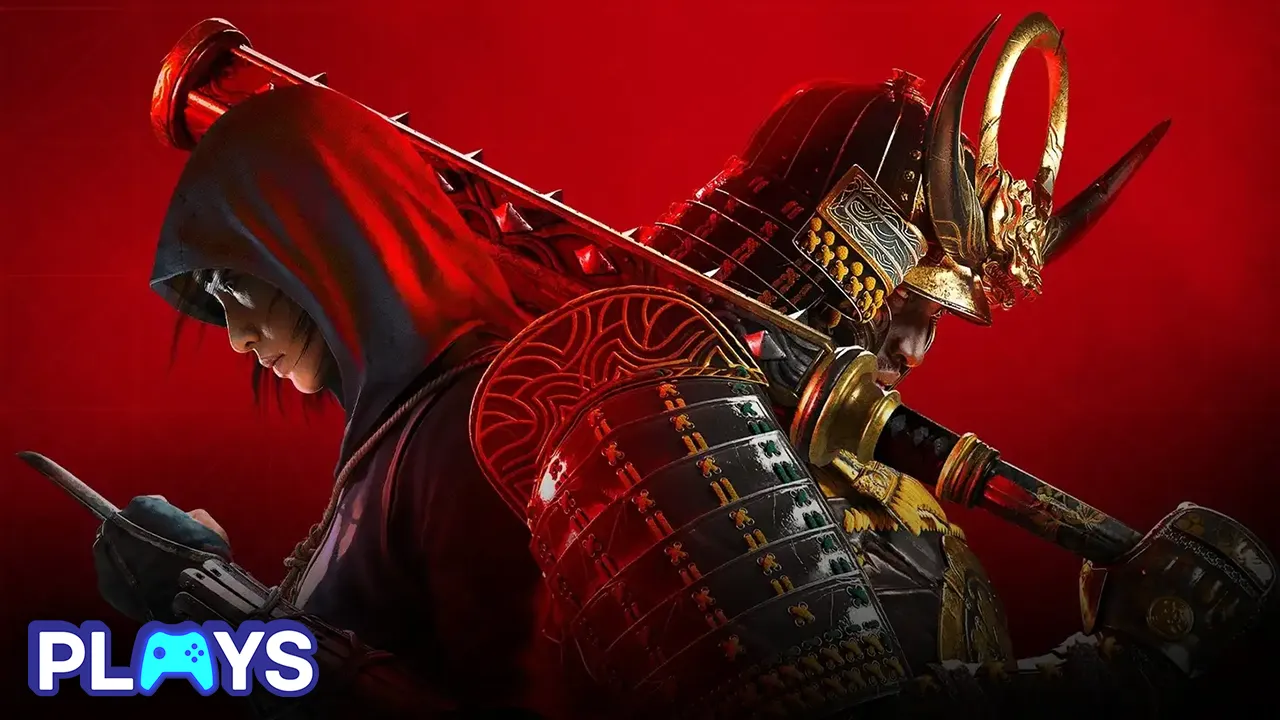
Assassin’s Creed Shadows Ending Theories
Welcome to MojoPlays, and today we’re looking at our theories for the ending of “Assassin’s Creed Shadows” and where the series might go next. It goes without saying that there are HUGE spoilers ahead not only for “Shadows”, but also “Valhalla” and “Mirage”.
Unless you’re clearing absolutely every objective, it’s going to take around fifty to sixty hours to beat “Assassin’s Creed Shadows” – and less if you’re doing story missions alone. But what’s waiting for you at the end of that campaign? Well, after Nuno Caro’s divisively abrupt end that seems to suggest we’ll be hunting more Templars in the incoming DLC, you’ll get one last rift unlocked, and will jump in to watch a brief but cryptic cutscene.
This cutscene is what we’re going to unravel, giving you some of our best theories as to what it means. We don’t currently know who the modern protagonist going through Naoe and Yasuke’s memories is, and we may never know if Ubisoft Quebec want to keep it vague; after all, “Unity” and “Syndicate” didn’t really have modern day protagonists at all, while “Black Flag” and “Rogue” DID, but they were silent and unnamed – other than their nicknames, that is. So, there’s certainly precedent for leaving all of this up to interpretation. This is certainly a disappointment to long-time fans who were waiting to learn more about Basim, since he didn’t actually appear in the modern-day sections of “Mirage” as there were none. He was left as the sole playable modern character after Layla’s untimely demise at his hands at the end of “Valhalla”.
So far, Basim has not reappeared, and nor have Shaun, Rebecca, or William Miles. Instead, our only connection to the Animus is an entity called the Guide, who talks to our anonymous player character only a handful of times during the game, mostly at the beginning and the end. The Guide is also the one who presents the Templar flashbacks, detailing Nuno Caro’s attempted conquest of Japan, at certain story moments.
But there’s another entity, Ego, who appears as a character only at the end of the game – but whose voice you heard at the very start. “Shadows” opens with a cutscene introducing you to a new type of Animus, Animus EGO, in a promotional or introductory clip presented by Abstergo Entertainment, which has been using the Animus to make consumer video games since “Black Flag”. Whether this is new hardware, software, or some sort of paid tier, we don’t know. But we do know that the Guide, whatever they are, infiltrates your Animus session to show you the truth of the historical events you’re living through. This is all very similar to “Assassin’s Creed III: Liberation”, which also has no modern-day protagonist, but presents itself entirely as an Abstergo experience – only to be hacked so that the real story of Aveline’s success over the Templars can be presented to the player.
The Guide suggests that what Abstergo wants to show you in the Animus is designed to be soothing and make people complacent, implying that the Animus is now being used not as a way to retrieve Pieces of Eden, but as a weapon of mass control in and of itself. Long gone are the days when almost nobody got to use an Animus, secretive technology kept in Abstergo’s skyscrapers that had to be reverse-engineered by the Assassins. Considering the entire point of the Pieces of Eden is to control humanity and keep them calm and peaceful, it’s definitely an interesting turn to see that the Animus is now being used in that way, and that the Templars now no longer need to hunt for Apples and Swords and Shrouds. Considering “Shadows” contains no Pieces of Eden whatsoever, this is definitely an interesting direction to take the mythology in.
At the end of the game, the Guide reappears to ask you to think about what you’ve seen, and about the endless struggle between the Assassins and the Templars. But they’re then interrupted by Ego, seemingly the Animus itself. If the Animus represents the Ego, as in Freudian psychoanalysis, then the Guide is the Id, and through these two digital constructs, we see stripped-down versions of the Templar and Assassin ideology play out. The Templars want peace through control, while the Assassins want true freedom at all costs.
But players who finished “Valhalla” will be familiar with two other mysterious entities that exist seemingly within the Animus: Layla Hassan, and Desmond Miles. At the end of “Valhalla”, Layla is tricked by Basim into resurrecting him by bringing the Staff of Hermes, which grants the wielder eternal youth and immortality, to his resting place in Norway. He’s been trapped inside an Isu supercomputer for over a thousand years, and puts Layla in his place, where she, inside the computer – a realm known in-universe as “the Grey” – meets someone called the Reader. True gamers will immediately recognize the Reader’s voice as Nolan North, and we learn that this entity is what remains of Desmond after his sacrifice at the end of “Assassin’s Creed III”. He reveals to Layla that she’s been tricked and now cannot leave, and she becomes a similar, digital being, as they work together to try and avert another Great Catastrophe, which the computer is predicting will happen.
So, now the question is: are Ego and the Guide Layla and Desmond? It’s true that the two initially came from different sides of the conflict. Layla begins her journey in “Origins” working for Abstergo, while Desmond was raised by Assassins; both of them rebelled against the groups at one point, with Layla leaving Abstergo behind and Desmond eventually returning to the Assassins after his imprisonment in the very first game. But within the Grey, could they have developed into these beings, and could Layla now symbolize the mindset of the Order, while Desmond still believes in the freedom of the Assassins? Perhaps, but that wouldn’t really fit with what those two were trying to do at the end of “Valhalla”, and it seems more likely that Ubisoft Montreal would pick up that thread with the next game.
There are other possibilities, though. There’s a chance that both Ego and the Guide are artificial intelligences, one created by Templars to control the Animus, and the other potentially created by the Assassins. But this doesn’t entirely make sense since it seems that Ego knows that the Guide exists and didn’t realize it had the power to interfere with the simulation, implying that it’s somehow also part of the Animus intentionally. Perhaps even AIs learn enough that they start to believe in the Assassin/Templar ideological divide.
And, finally, there’s another option: both of the entities are Isu. Just like the Æsir live in the Grey and ensure their own immortality and endless rebirth, so too did Juno, the series’ greatest villain – even if she did die off-screen in a comic book. We’ve already seen Juno infiltrating the Animus to communicate with people via the Grey, such as in “Assassin’s Creed Syndicate” where she speaks to you before you jump into the First World War rift. We don’t think that either of them is Juno, but there are presumably many more Isu out there, and we have no idea how many of them truly had access to the Æsir’s technology that creates the Grey and the Sages. Juno had to steal it from the Æsir in the first place, after all.
Maybe this will be explained in DLC or through the timed missions that give you in-game currency to unlock cosmetics, or maybe it’ll be another mysterious, modern-day plot thread that actually doesn’t ever get resolved. We certainly hope there will be something to it, and that maybe it will continue in the revamped “Animus Hub” that Ubisoft wants to be a launcher for all the games going forward. We’ll just have to wait and see where the series goes next.
And those were our theories about the ending of “Assassin’s Creed Shadows”. Let us know YOUR theories and predictions for the future in the comments.
