30 Idolized Figures Who Did TERRIBLE Things
30 Idolized Figures Who Did TERRIBLE Things
Welcome to WatchMojo, and today we’re looking at historical figures whose heroic light belies some very dark actions.
Cesar Chavez
Institutions across the United States proudly presented Cesar Chavez’s name for his labor and civil rights activism. In 2026, many of those institutions quietly removed that name. This was in response to a New York Times investigation which found that Chavez sexually assaulted many women and girls. That included his colleague Dolores Huerta, who claimed to withhold this information to protect the movement. Only after discovering that there were more victims did she decide to come forward. Chavez’s lionization overlooks his conflicts with peers and often authoritarian management style. But the overwhelming evidence that people were physically harmed by his ego raises questions about whether he should be the face of a noble movement.
John Lennon
The world grieved the ironic murder of revolutionary musician and peace activist John Lennon in 1980. This overshadowed another irony revealed in a Playboy interview published shortly after his head. Already notorious for his volatile demeanor, Lennon confessed to a history of casual violence in his youth. He was particularly verbally and physically abusive toward the women in his life. He deeply regretted this as he became a staunch pacifist and feminist. The gradual resurfacing of this confession has thus sparked debates about whether it undermines or legitimizes Lennon’s dedication to his cause. Perhaps he’d be the first to express that his violent past shouldn't be overlooked.
Charles Lindbergh
Piloting the first solo flight across the Atlantic Ocean in 1927 made Charles Lindbergh one of the most famous men in America. The abduction and murder of his son Charles Jr. five years later brought a different spotlight that prompted his family to relocate to Europe. Lindbergh returned at the start of World War II emboldened by Nazi associates to espouse his white supremacist views in the media. He stepped down from his platform after the U.S. entered the War, and privately condemned the Holocaust. But he never abandoned his warped reformist views. History preferred to remember the aviator’s more heroic days after his death in 1974. More recently, however, Lindbergh’s terrible advocacy has become engrained in his legacy.
Jean-Jacques Rousseau
The Age of Enlightenment owes a lot to 18th century thinker Jean-Jacques Rousseau. His treatise “Émile, or On Education” is especially renowned for respecting the natural development of a child's mind. And that makes it especially shocking that he persuaded Thérèse Levasseur to give up each one of their five children to Paris’s Hôpital des Enfants-Trouvés. Though the babies’ fates would never be known, this orphanage was infamous for its mortality rates. It was one thing for Rousseau to claim in his posthumous autobiography “Confessions” that poverty prevented him from raising a family. But his defense that the state would turn the children into good workers, if they survived, undermined the spirit of Enlightenment. Even the most important minds can fall victim to warped justification.
Pablo Neruda
Chilean poet and politician Pablo Neruda died a martyr in 1973, whether he died from cancer or was assassinated after the rise of Augusto Pinochet. His memoirs made him a pariah 45 years later. Plans to name an airport after him turned the spotlight on a passage in which he described sexually assaulting a housekeeper. The casual nature of the confession is a testament to his overall misogyny. This, as well as Neruda’s abandonment of his first family, triggered a schism in how the Chilean left-wing remembers a man once regarded as a national treasure. Neruda’s more ideological work may still be that, but the man’s crueler views and actions shouldn't be discounted.
Walt Disney
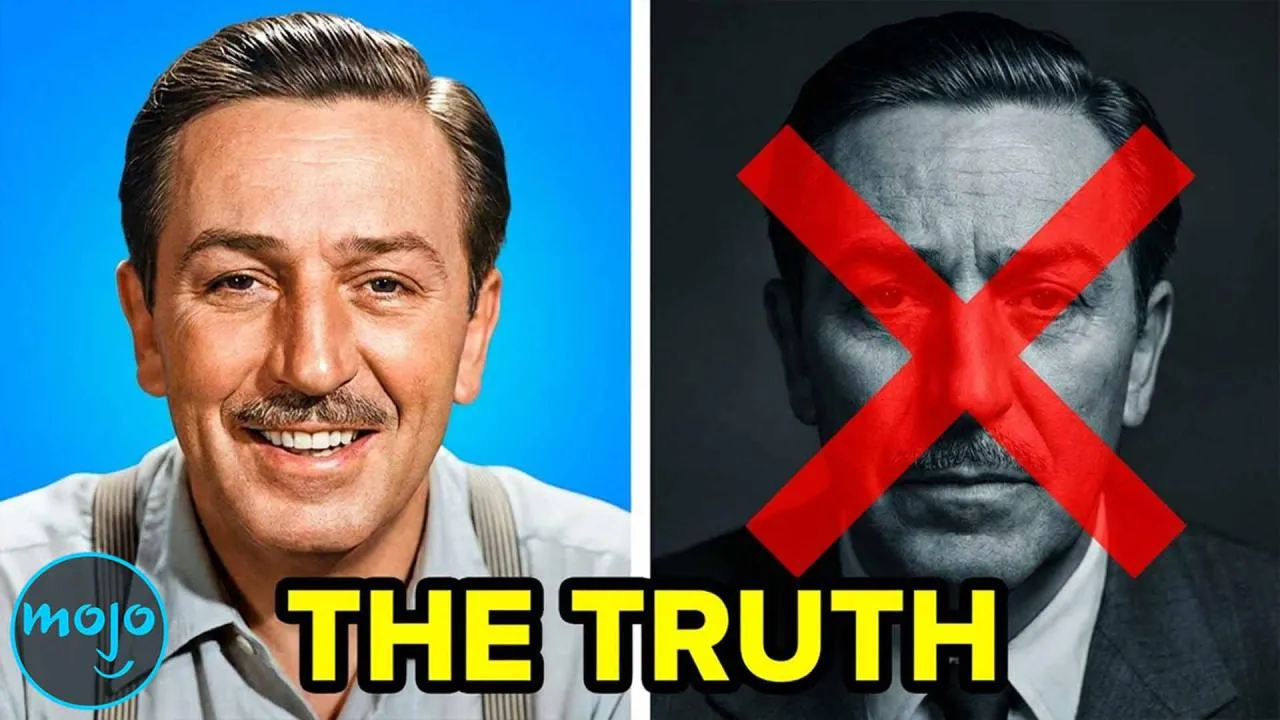
A lot of disturbing rumors hang on the legacy of one of the founders of modern family entertainment. It hasn't been proven that Walt Disney was an anti-Semite, but he was definitely an anti-unionist. Believing the labor movement to be a communist plot, he spent the last 26 years of his life working as an FBI informant to weed out subversives within his company. In 1941, he violated the Wagner Act by firing several union organizers, prompting an animators strike. The Walt Disney Company prefers to represent its founder as a more agreeable visionary for a better world. Some, however, see this sanitization as a brazen act of corporate cynicism.
Marcus Garvey
Jamaican Pan-Africanism activist Marcus Garvey wasn’t just globally influential. He’s regarded as a prophet in the Rastafari movement. He was also so dedicated to his belief in racial separatism that he met with Ku Klux Klan leaders as a comrade in 1922. Declaring himself the “Provisional President of Africa,” Garvey envisioned a one-party state with strict laws to ensure racial purity and supremacy. He led the UNIA advocacy group with such egotistical authoritarianism that W.E.B. Du Bois called him “the most dangerous enemy” to his own cause. While Garvey still inspires millions to take pride in their heritage, there’s debate about whether his management and alignments undermined the ideals of democracy and cultural harmony.
Ernest Hemingway
The world lionized Nobel Prize winner Ernest Hemingway as the rugged icon of American literature. But behind the spare prose and macho adventures was a pattern of cruelty that undermines the romantic myth. Hemingway destroyed several marriages with his infidelity and verbal, emotional and physical abuse. He’d even steal assignments from wife Martha Gellhorn out of jealousy. Friends also felt his wrath in writing, with Harold Loeb apparently being the inspiration for the foil Robert Cohn in “The Sun Also Rises.” Furthermore, Hemingway’s work as a war correspondent strained ethics to where he led a French militia during World War II, in violation of the Geneva Convention. For all his talk of honor, his shortcomings on that front are glaring.
Alfred Hitchcock
The so-called “Master of Suspense” is revered for his on-screen terror, and reviled for the off-screen. Alfred Hitchcock’s notoriously immersive directing style was especially hard on Tippi Hedron, the lead in 1963’s “The Birds.” He ordered everyone on-set to avoid her and staged real bird attacks. The result was a Golden Globe-winning performance based on real psychological trauma. Hedron nonetheless worked with Hitchcock again on the set of “Marnie,” where she allegedly turned down his advances. For one reason or another, he used his power to prevent her from working with other directors. Hedren’s career was essentially derailed at its peak. Meanwhile, Hitchcock remains celebrated as if the perils facing the “Hitchcock blondes” weren't all too real.
Alexander Graham Bell
The monumental achievement in Alexander Graham Bell bringing the telephone to the public didn’t mean much to the hearing-impaired. This wasn’t exactly incidental. Having a deaf mother and wife, Bell was a philanthropist and educator in their community. But he was also a leading figure in the eugenics movement to discourage intermarriage and procreation with deaf people. He even promoted sterilization to prevent “hereditary” deafness. Making particular strides as an “oralist,” Bell successfully lobbied the 1880 International Congress on Education of the Deaf to ban sign language. The ban wouldn’t be lifted for 130 years. Bell is often framed as a benefactor to the deaf community, but his advancements in social integration mostly provided a platform to marginalize them.
Richard Wagner
Defiance of musical tradition allowed Richard Wagner to become one of the greatest composers of all time. But his defiance of political tradition within the German Confederacy left a dark legacy. Wagner fled Dresden in 1849 after participating in the bloody May Uprising. His political advocacy then shifted toward anti-Semitism with an 1850 essay which called Jewish composers a corrupting cultural influence. This included Giacamo Meyerbeer, one of Wagner’s earliest supporters. The famed egoist had a habit of betraying peers, to the point of regularly seducing their wives. Wagner’s artistic genius is undeniable, but so is the harm he caused in his lifetime. Never mind his posthumous influence on the culture and ideology of Nazi Germany.
Queen Victoria
The Victorian Age saw over 60 years of prosperity in Great Britain. Queen Victoria’s modern vision and continental family tree earned her the nickname “Grandmother of Europe.” In Ireland, however, many dubbed her “The Famine Queen” while her government continued exporting from a starving colony. Victoria donated £2,000, but the Turkish Sultan’s donation was slashed by £9,000 to protect her image. She ascended to “Empress of India” after supporting military action and final annexation of a whole subcontinent to suppress nationalist movements. But as the “Widow of Windsor,” she emboldened republican sentiments by hiding from her duties for years after the death of Prince Albert. Whatever her title, whether Queen Victoria was an important, cruel or ineffectual figurehead remains heavily debated.
Caravaggio
Baroque art was transformed by the revolutionary techniques of Michelangelo Merisi da Caravaggio. Behind the dramatic use of lighting, however, there was a very dark personal life. Caravaggio was a notorious brawler who got into many legal scrapes in Rome, until he killed Ranuccio Tomassoni in a duel in 1606. He was sentenced to death in absentia after fleeing southward, continuing to craft masterpieces and commit violent crimes. Two years after escaping a prison in Malta, he died by either illness or assassination. Caravaggio was so despised in his own time that there were rumors of him using dead bodies as models. He was indeed a master at finding beauty even in the macabre, but there was no beauty to his exile.
Shaka Zulu
Mythologized as a military genius, Shaka Zulu united a kingdom into a formidable force beyond his lifetime. People tend to overlook his actions afterward. King Shaka’s authoritarian and imperialist rule resulted in more than a million deaths. This period of Mfecane, or “The Crushing,” also saw a great wave of migrations. The most harrowing chapter of Shaka’s reign followed the death of his beloved mother Nandi in 1827. His year-long mourning edict forbade new crops and milk, and slaughtered expectant families. Thousands were executed just for showing insufficient sorrow. This breakdown led to Shaka’s assassination by his own half-brothers’ hands the following year. His bloody efficiency on the battlefield is much harder to admire when seen in his policies.
Charles Dickens
This legendary Victorian author is remembered as a great friend of the British working class. Unfortunately, Charles Dickens wasn’t really a great friend, and was a worse husband. He regularly exploited the private quirks and tragedies of his peers for material. He also resented his wife Catherine, to the point of blaming her for the burden of having 10 children. Dickens’s affair with the much-younger actress Ellen Ternan ultimately led to a separation after 22 years of marriage. He then began a campaign to portray Catherine as mentally unstable to protect his reputation. Though Dickens failed in his attempt to have her committed to an asylum, he did succeed in cultivating a legacy that most believe to be saintly.
Abraham Lincoln
The Great Emancipator is romanticized as one of the most important politicians in American history. The image of Illinois representative-turned-President Abraham Lincoln is undermined by him espousing white supremacist rhetoric while running for office. At best, this was campaign talk that revealed “Honest Abe” to be something of a cynic. He would become something of an authoritarian during the American Civil War, when he personally suspended the writ of habeas corpus and enacted policies to suppress dissenting press. Thousands were detained just on suspicion of being Confederate sympathizers. To what extent Lincoln represented the ideals of the United States, the reality is that he betrayed many of them in a time of crisis.
Catherine the Great
They didn’t call Empress Catherine II “the Great” for no reason. She modernized 18th century Russia into a great power over three decades, but was not as modern as we now like to think. Catherine brutally exiled and executed dissents even as they shared her Enlightenment ideals. Embracing militarized colonial expansion, she divided Poland and laid the groundwork for its Russification. And while the Hulu dramedy “The Great” popularized the idea that she struggled to abolish serfdom, she actually escalated it. Criminalizing formal complaints from serfs and giving landowners the authority to deport them practically reduced millions of human beings to property. Catherine may in fact be a reminder that bringing a state to greatness often entails great cruelty.
P. T. Barnum
P. T. Barnum, also known as “the Greatest Showman,” was the inspiration for the 2017 Hugh Jackman movie of the same name. The film portrayed him as a champion of those whom society shunned, but in reality, he was the complete opposite. This circus pioneer was an ableist Victorian, and the pioneer of “freak shows.” Many view his treatment of individuals with physical oddities to be exploitative. For example, his first hoax involved purchasing Joice Heth, a blind slave, and marketing her as the 161-year-old former nurse of George Washington. He also used exotic animals, whom he often mistreated. Despite all these awful practices, he’s mythologized as a visionary showman and entrepreneur in Western culture.
Florence Nightingale
Florence Nightingale is celebrated as the founder of modern nursing, her efforts during the Crimean War earning her the title “The Lady with the Lamp.” However, she held some extreme views about race and class. She supported the killing of indigenous people under the British Empire, seeing it as a necessary evil to “civilize” such cultures. She was a staunch white Christian supremacist, believing other cultures to be inherently inferior. She also supported the Miasma theory, which claims bad smells, dirt and immorality created diseases. This means she believed sex workers spontaneously generated illness, which as we now know today, is an outlandish theory.
John A. MacDonald
Canada’s first prime minister John A. MacDonald is celebrated as one of the nation’s founding fathers, but some find him unworthy of reverence. In 1876, he implemented the Indian Act, which aimed to assimilate indigenous peoples and completely control their lives. This system forcibly displaced more than 150,000 children, placing them in state schools with often terrible conditions. They were banned from speaking in their native tongues and were regularly mistreated, so much so that many perished. His controversies didn’t end there. He was racist toward non-European immigrants, particularly Chinese laborers. He implemented a Chinese Head Tax to deter Chinese immigration, which would later turn into an outright ban in 1923, 30 years after his death.
Henry Ford
Henry Ford founded Ford Motor Company, famous for pioneering affordable cars at the beginning of the 20th century. He also published the Dearborn Independent, which frequently ran harmful anti-Semitic articles. These writings were so influential he gained support from Adolf Hitler, who called Ford an inspiration, mentioned him in “Mein Kampf,” and had his portrait in his office. He was also staunchly anti-union, employing a private security force that intimidated and abused workers and used surveillance to suppress labor unions. The Battle of the Overpass in 1937 was the most famous incident, with his security brutally beating union leaders. He also monitored his workers’ private lives, using inspectors to ensure they followed his strict moral standards.
Thomas Jefferson
Thomas Jefferson is celebrated as a Founding Father of American democracy, but his beliefs regarding slaves, race, colonialism and Native Americans fell short of his ideals of liberty. He famously wrote that “all men are created equal,” and even abolished the importation of enslaved peoples. Still, he accrued more than 600 slaves throughout his lifetime, owing his wealth and extravagant lifestyle to forced labor. His writings also reveal he believed in the biological and intellectual inferiority of Black people. Like many early Americans, he also encouraged displacing Native American communities, motivating settlers to take indigenous lands across the continent.
Henry Kissinger
Henry Kissinger came from a family of German Jewish refugees to become the Secretary of State and National Security Advisor for two U.S. Presidents. Winning the Nobel Peace Prize and several medals, he’s still viewed as an American hero to some, and a representative of inhumane imperialism to others. Kissinger opened diplomatic relations with China, but also played a major role in the Vietnam War. The bombing campaigns in Cambodia, caused massive civilian casualties. He also supported a coup in Chile in 1973, which overthrew the democratically-elected President Salvador Allende and began a dictatorship. Kissinger also supported Indonesia’s 1975 invasion of East Timor, leading to a violent occupation and the deaths of more than 200,000 East Timorese.
Julius Caesar
Caesar was a monumental figure in human history, so much so that one of our months is still named after him. He appointed himself dictator for life in 44 BCE, during the waning era of the Roman Republic. He’s revered as one of the greatest generals of all time, but his campaigns were brutal, resulting in the deaths of hundreds of thousands. This includes the widespread slaughter of Gallic tribes, which many consider to be a genocide. Entire tribes were wiped out or enslaved, a level of bloodshed that was even controversial by Roman standards. Now, he’s remembered as not just a military genius, but a figure whose ambition laid the groundwork for an Empire that would last more than a millennium.
Mahatma Gandhi
Mahatma Gandhi is considered an icon of peace, with a commitment to minimalism, vegetarianism and self-reliance. He may have adopted this attitude because weapons were unavailable to him. Surprisingly, he once said, “If we had the atom bomb, we would have used it against the British.” He also expressed racist views towards Black South Africans, referring to them with derogatory language. Gandhi is said to have expanded women’s rights, but also had misogynist beliefs, believing women should be kept in the home. One of his biggest controversies was sleeping beside young women, including his grandniece, to test his discipline, defending these “experiments” as a spiritual practice.
Thomas Edison
We credit many inventions to Thomas Edison, such as the phonograph, the light bulb and the motion picture camera. However, many of the inventions credited to him properly should be credited to others. His most notable controversy was his rivalry with Nikola Tesla and George Westinghouse during the “War of Currents,” where Edison advocated for DC, but the other two promoted AC. Edison employed aggressive tactics to discredit AC, such as publicly electrocuting animals using AC to show its dangers, which can obviously be done with DC. He also treated his employees awfully, alongside pioneering the electric chair.
George Washington
Washington is the second Founding Father to make it on our list, and probably the most famous. He led the Continental Army to victory in the American Revolutionary War and became the nation’s first president. Controversially, he owned many slaves throughout his life, despite expressing conflicted feelings about the practice. He also severely mistreated Native American tribes, displacing them and encouraging American expansion into their lands. Furthermore, he sent federal troops to suppress the Whiskey Rebellion in 1794, raising concerns about using the military against citizens. Despite this, he remains a symbol of unity for the American people and significantly influenced their founding principles.
Mother Teresa
Mother Teresa founded the Missionaries of Charity in 1950, an organization dedicated to caring for the sick, the poor, and the dying. In 1979, she was awarded the Nobel Peace Prize for her selfless work. And after her death, she was canonized Saint Teresa by the Roman Catholic Church. But sainthood has its limits. Teresa’s medical facilities were accused of being inadequate, sometimes focusing on spiritual preparation for death rather than medical treatment. Certainly, her firm opinions on reproductive rights compromised healthcare in some struggling regions. She was also associated with controversial figures like the family of Haitian dictator François Duvalier. While there’s certainly just cause to exalt Mother Teresa, one may be judged by the company one keeps.
Christopher Columbus
Columbus is thought to be the first European to explore America since Leif Erikson some 500 years earlier. He set up the first European settlement in America during the Age of Discovery, known as La Navidad. This marked the beginning of the colonial era, and the start of the end for Native American freedom. His expeditions led to the mass exploitation of native resources and peoples, alongside bringing diseases that ravaged the continent. Columbus enslaved more than a thousand natives, and 56 years after his voyage only 500 out of 300,000 natives remained on Hispaniola. His voyages were the most impactful in history, and while celebrated as a courageous explorer, his actions represent the darker consequences of colonization.
Winston Churchill
Covering all of Winston Churchill’s controversies would take multiple videos. The British Prime Minister’s admired World War II policies were tragically prioritized over the Bengal Famine, which killed 2 to 3 million people. America and Canada offered to ship food to Bengal, but Churchill actively refused to provide aid. Many consider him a white supremacist, with right-wing imperialist and contemporary Leo Amery once saying he “didn’t see much difference between [Churchill’s] outlook and Hitler’s.” He slaughtered civilian protestors in Greece, helped cause needless deaths in Ireland, and forced Kenyans into concentration camps. Some consider his famous line, “we shall fight them on the beaches,” to have been plagiarized from an Irish Republican, whom the British hanged and beheaded in 1803.
Who are some supposed historical heroes with major marks against their legacy?
