20 Respected People Who Turned Out to Be NAZI Sympathizers
- espected People Who Turned Out to Be NAZI Sympathizers
- Ingmar Bergman
- P.G. Wodehouse
- Christian Dior
- Joseph Campbell
- Ferdinand Porsche
- Richard Wagner
- Louis Vuitton
- Salvador Dali
- Walt Disney
- Edward VIII
- Torkild Rieber
- Philip Johnson
- Ezra Pound
- Charles Lindbergh
- Knut Hamsun
- Harold Harmsworth
- Coco Chanel
- Hugo Boss
- Henry & Edsel Ford
20 Respected People Who Turned Out to Be NAZI Sympathizers
Welcome to WatchMojo, and today we’re counting down our picks for historical figures who are widely admired but whose legacies are complicated by controversial associations with the Nazi Party. These are moments where reputation and history collide in uncomfortable and surprising ways.
#20: Ingmar Bergman
The man who redefined the phenomenon of cinema had a past that cast a long shadow over his legacy. Acclaimed Swedish director Ingmar Bergman admitted later in life that, as a teenager, he had been drawn to Nazi ideology. Much like many other youths of his time, Bergman was captivated by Adolf Hitler’s charisma, a reality that he later confronted in his life with regret. Bergman’s personal confession about his beliefs stands in sharp contrast to his artistic achievements, in which he has explored complex themes of the human condition and the painful nature of human relationships. His past beliefs demonstrate the power of propaganda and personality cults, while his admission remains a sobering reminder of how perception can change over time.
#19: P.G. Wodehouse
Humor doesn’t always land the way you want it. British humorist P.G. Wodehouse lived this harsh truth after being captured by German forces in France during World War II. What followed were a series of radio broadcasts that Wodehouse delivered. He described these broadcasts as lighthearted reflections on his internment under the control of Nazi forces. Unfortunately, not everyone saw it that way. The broadcasts were intended for American audiences, but many in Britain viewed them differently, interpreting them as a form of cooperation with enemy propaganda. The reaction was swift and critical, damaging his reputation significantly at the time. Regardless of his stated intentions, the broadcasts placed Wodehouse in a position that raised lasting questions about judgment and responsibility.
#18: Christian Dior
Fashion can continue, even under occupation. During World War II, Christian Dior worked for designer Lucien Lelong in Paris. All the while, the city was under Nazi control. In his role, Dior helped design clothing for clients that reportedly included wives and associates of high-ranking German officials. Dior himself never publicly expressed support for Nazi ideology, making his actions and inclusion more about circumstance and association than belief. In fact, there were members of Dior’s family who openly resisted the Nazi regime. While Dior continued to pursue fashion, his sister Catherine was actively involved in the French Resistance. It is one passage of history that highlights the difficult choices faced by individuals navigating life under Nazi rule.
#17: Gerhard Kittel
In a historical moment when scholarship became entangled with ideology, the respected theologian Gerhard Kittel actively tried to align his theological philosophies with Nazi racial ideology. Known for his work on the “Theological Dictionary of the New Testament”, Kittel was a respected figure in the scholarly community. Unfortunately, he also supported interpretations that sought to reshape religious narratives to reflect contemporary political beliefs, especially those of the Nazi Party. Kittel was influenced by the prevailing systems of power in his time to reinforce broader ideological goals brought forth by the Nazis. The exposure of these efforts later raised important questions about Kittel’s own legacy and the relationship between academia and ideology.
#16: Joseph Campbell
His ideas shaped the foundations of storytelling and the hero’s journey, but his views possibly leaned more towards the villains. American writer Joseph Campbell had a profound influence on literature and film. However, biographical accounts of his life have suggested that Campbell expressed an early interest in aspects of Nazi ideology during his younger days, with some even remarking that his initial reaction to Nazism was one of enthusiasm. Though these claims are disputed, they remain an open subject of discussion among scholars, with widely varying interpretations. On one side stands Campbell’s enduring intellectual legacy, and on the other are the complexities of his personal views. Together, they add layers of nuance to his hero’s journey and to how his legacy is to be remembered by later generations.
#15: Ferdinand Porsche
Innovations often come at a cost, sometimes in the form of a dirty legacy. A pioneering automotive engineer, Porsche helped develop the Volkswagen Beetle. Touted as the “People’s Car”, Porsche was commissioned to design the car by none other than Adolf Hitler himself to develop an affordable vehicle for the German populace. The connections don’t stop there. Porsche was also a member of the Nazi Party and an honorary leader of its paramilitary forces. The party supported his projects as part of its broader industrial vision, where forced labor thrived under harsh conditions. Despite the global impact of his engineering achievements, Porsche’s story reflects how technological progress can be intertwined with political systems, raising lasting questions about accountability and historical context.
#14: Richard Wagner
His music has endured the test of time but so has the controversy. German composer Richard Wagner is one of the most influential figures of classical music. His operas and innovative style have continued to influence modern media, theater, and classical composition. But, beneath his advanced harmonics, Wagner’s writing stands out for its strong antisemitic views, which later aligned with ideologies promoted during the Nazi era. The Führer himself was an admirer of Wagner’s work, further linking his legacy to that period in public perception. Today, Wagner’s compositions continue to be performed worldwide, and yet his mixed legacy is a unique case study on the separation between artistic achievement and personal belief.
#13: Louis Vuitton
Brand reputation plays a major role in today’s competitive marketplace, and for the most elite, even the slightest controversy can prove disastrous. Among many other global luxury brands, Louis Vuitton has consistently ranked in the top, but not many know that its legacy is tied to a controversial chapter in history. During World War II, members of the Louis Vuitton family were linked to the Vichy government in Nazi-occupied France. Historical accounts suggest that business operations continued under the regime, with certain activities aligning closely with its leadership. In an era where commercial success seemingly intersected with political realities, these alleged associations have added complexity to the brand’s history, showing how businesses can become entangled with governing powers during periods of occupation.
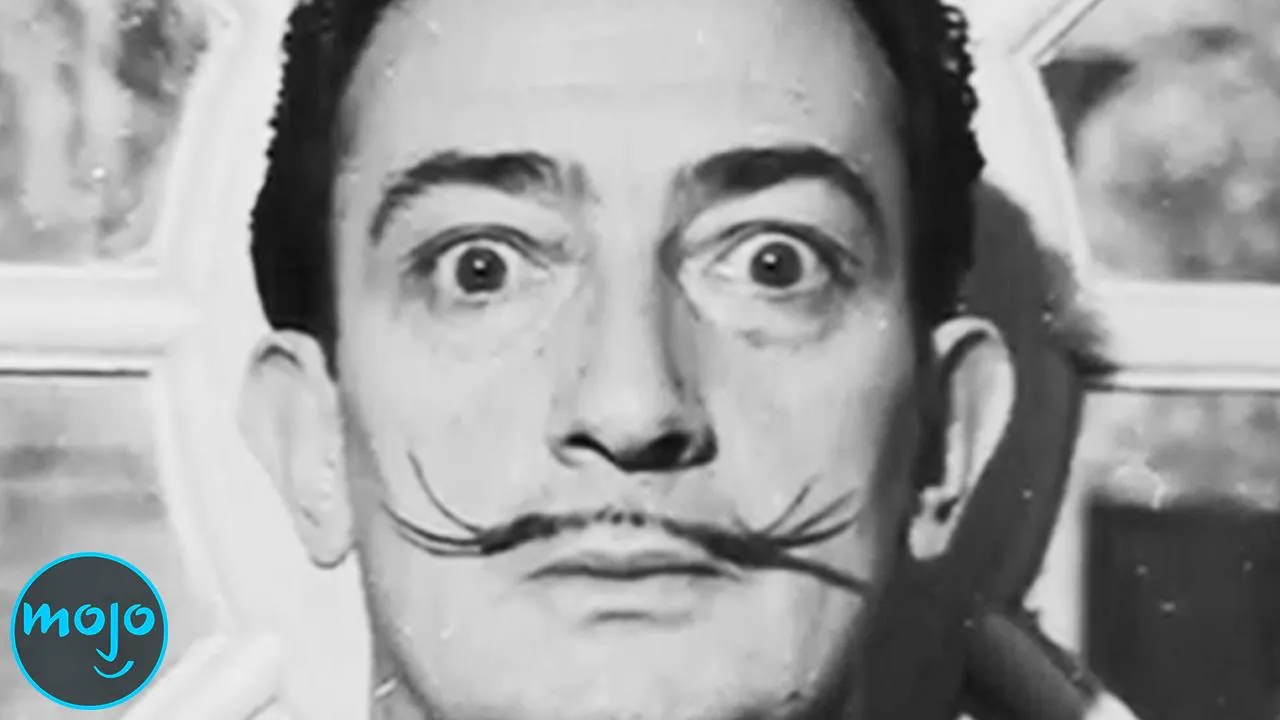
#12: Salvador Dali
Artists are not shy of their fair share of controversy. For Spanish surrealist Salvador Dali, this came about a man he publicly admired. Reports from biographers indicate that Dali expressed a bizarre and public admiration for Adolf Hitler in the 1930s, even referring to the dictator as a “dream” figure. One of the most recognizable artists of the twentieth century, Dali was renowned for his skill and precise draftsmanship. But since his passing, Dali’s perspectives have been widely debated. It is yet another striking case of the contrast between an artist’s imaginative creativity and the rigidity of the ideas he seemed to admire. Though Dali remains influential in the art world, these reported views continue to shape discussions about the complexities behind his legacy.
#11: Walt Disney
Admired by millions and the founder of an entertainment juggernaut, Walt Disney is a figure whose life has been shrouded in debate. The subject of an ongoing controversy, some accounts claim Disney attended meetings linked to pro-Nazi groups, even hosting German filmmaker and Nazi propagandist Leni Riefenstahl to his Hollywood studios. These claims remain debated among historians, with no clear consensus on Disney’s personal beliefs. What makes Disney’s case especially notable is the contrast between his company’s contributions to U.S. wartime efforts and these reported associations. Disney’s life continues to captivate many to this day. His alleged identity as a quasi-Nazi highlights how historical narratives can remain contested, even for figures whose influence shaped global culture.
#10: Edward VIII
Following his abdication from the throne, Edward VIII became Duke of Windsor. In 1937, he and his wife, Wallis Simpson famously visited Nazi Germany, personally met Adolf Hitler, and was even photographed giving a Nazi salute - actions that were quickly and ferociously exploited by German propaganda. Edward was also known to hold pro-German views, and captured documents also revealed Nazi hopes to reinstall Edward as King if Britain were to be defeated. In fact, it was so bad that British intelligence considered him a security risk to the country and he was sent away to the Bahamas. Though never explicitly proven to be a collaborator, Edward’s actions showed, at best, exceedingly poor judgment regarding the Nazi regime.
#9: Torkild Rieber
After emigrating from Norway to the United States, Torkild Rieber rose through the corporate ranks and became chairman of the prosperous oil company Texaco in 1935. He also held many pro-fascist affiliations and is widely regarded as a Nazi sympathizer. Rieber covertly supplied oil to dictator Francisco Franco during the Spanish Civil War, directly violating U.S. neutrality laws. He also arranged oil shipments to Nazi Germany and toured industrial sites with Hermann Göring, with German intelligence describing him as “a sincere admirer” of Hitler. And in 1940, Rieber hosted a German agent in New York and attended pro-German business events, which, once revealed by the press, led to widespread public outrage. Under incredible pressure, Texaco’s board forced Rieber to resign in 1940.
#8: Philip Johnson
Maybe you don’t know his name, but you probably know his works. A highly respected architect, Philip Johnson served as head of architecture at the Museum of Modern Art and designed buildings like 550 Madison and The Glass House in Connecticut. And this dude was a huge Nazi sympathizer. He admired Hitler, personally attended Nazi rallies in Germany, and wrote for fascist, antisemitic publications like Social Justice. He openly praised Hitler and his political manifesto, “Mein Kampf.” He called the German invasion of Poland a “stirring spectacle.” Heck, he even tried to start a fascist political movement in the U.S. However, by the early 1940s, Johnson distanced himself from those beliefs and actions and later called them “the stupidest thing I ever did.”
#7: Ezra Pound
Famous poet Ezra Pound was a huge fascist sympathizer, an admirer of Hitler, and a prominent vocal supporter of Benito Mussolini’s tyrannical regime in Italy. And while he didn’t formally align himself with Nazism, his views and actions overlapped with many far-right ideologies of the time, including his raging antisemitism. Pound believed that fascism was a path to economic and cultural reform, and he made hundreds of propaganda broadcasts for Fascist Italy in which he attacked the west, praised the concept of eugenics, and pleaded with the Allies to surrender. In fact, he was later arrested by American forces and indicted for treason due to these wartime broadcasts, resulting in a long stint in a psychiatric institution.
#6: Charles Lindbergh
Famed aviator Charles Lindbergh was widely seen as a Nazi sympathizer in the late ‘30s and early ‘40s, which significantly tarnished his accomplishments. After visiting Germany multiple times, Lindbergh praised its military strength and accepted the Service Cross of the German Eagle from Hermann Göring, sparking public outcry. He also advocated against American intervention and was known to harbor antisemitic views, like giving a speech in which he blamed Jews for pushing America toward war. He also held strong beliefs in the ideas of racial hierarchy and eugenics, strongly echoing aspects of Nazi ideology. And even though Lindbergh did turn to the war effort after Pearl Harbor, his reputation was, and remains, stained by his earlier views and controversial positions.
#5: Knut Hamsun
A highly regarded writer, Knut Hamsun influenced the likes of Ernest Hemingway and Franz Kafka and won the Nobel Prize in Literature in 1920. Twenty years later, during the Nazi occupation of Norway, Hamsun openly supported the puppet regime led by Vidkun Quisling and conducted meetings with top Nazi officials, including Joseph Goebbels, with whom he had a cordial relationship. He also briefly met Hitler in person, and shortly after the Nazi leader’s death in 1945, Hamsun published an obituary for him in the Norwegian newspaper Aftenposten, in which he praised Hitler as “a reforming character of the highest order.” Following the war, Hamsun was arrested for treason and fined 325,000 Norwegian kroner.
#4: Harold Harmsworth
You’ve probably never heard the name Harold Harmsworth, but you’ve certainly heard of his newspaper, The Daily Mail. Through his famous paper, Harmsworth became a leading figure of tabloid journalism and helped pioneer the concept. Unfortunately, he also used it to publish his fascist beliefs. Harmsworth expressed admiration for Hitler during the early years of Nazi rule and supported British fascist leader Sir Oswald Mosley. He also visited and sent letters of admiration to Hitler, and these letters were later used as propaganda to show alleged British support for the Nazi regime. Harmsworth’s views turned him into a pariah, and he eventually fled Britain. He desperately attempted to repair his image but died in 1940 before he could do so.
#3: Coco Chanel
To this day, Chanel is considered one of the leading names in fashion. It’s just too bad that its namesake has such a problematic reputation. Coco Chanel had a romantic relationship with German military officer Baron Hans Günther von Dincklage, who was working Nazi intelligence in Paris. This relationship gave her certain privileges during the German occupation, including residence at the Ritz Hotel, which was also being used by high-ranking Nazis. But it gets worse. Declassified documents show that Chanel was registered as a Nazi agent and allegedly participated in an intelligence operation to open secret peace negotiations with Winston Churchill. Finally, she attempted to use Nazi antisemitic laws to wrest control of Parfums Chanel from the Jewish Wertheimer family.
#2: Hugo Boss
Style and industry became entrenched with a troubling legacy when Hugo Boss decided to join the Nazi Party in 1931. Two years later, Adolf Hitler became Chancellor and the Third Reich was truly on its way. Hugo’s company later produced the very uniforms associated with groups such as the Hitler Youth and the SS. During World War II, Hugo’s factory operations relied on forced labor. The source of this labor was none other than prisoners of war alongside Polish and French workers, and others from territories occupied by the Nazi regime. In another unfortunate case of a global fashion brand meeting controversy, it wasn’t until 2011, decades after these series of events, that the company issued a formal apology for its actions.
#1: Henry & Edsel Ford
Perhaps the most influential industrialist of the 20th century was also a huge Nazi sympathizer. Ford maintained business dealings with Nazi Germany throughout the ‘30s and early ‘40s, but that was the least of it. Ford personally financed and published a series of antisemitic articles in his newspaper, The Dearborn Independent, and these articles were later compiled into a book titled “The International Jew”, which spread false conspiracy theories about Jewish people. Hitler later praised Ford in “Mein Kampf” and even cited him as an inspiration towards Nazi ideology. And in 1938, Ford proudly accepted the Grand Cross of the German Eagle, the highest honor that Nazi Germany could give a foreigner.
Which of these reveals surprised you the most? If there’s another historical figure with a complicated past we should cover, drop it in the comments!
