20 Offensive Commercials That Aged Poorly
- ffensive Commercials That Aged Poorly
- Real Beauty Campaign
- Great Jeans
- Tsunami Relief
- Felicia the Goat
- The "Manly" Men
- Fly Me
- Willie Horton
- Debbie Spend-It-Now
- The Gift that Gives Back
- Firing Gerbils out of a Cannon
- Live for Now
- Nothing Comes Between Me and My Calvins
- Talking Pandas
- Sometimes Lighter Is Better
- Ashton Kutcher's Dating Video
- The New Golf
- Chinese Food
- Pipe Job
- Innocence is Sexier Than You Think
- Laundry Day
20 Offensive Commercials That Aged Poorly
Welcome to MsMojo, and today we’re talking about the ads that were a bad idea to begin with, and only look worse with the benefit of hindsight.
Real Beauty Campaign
Dove
This long-running ad series pushed a message of body positivity by featuring ethnically and physically diverse models. But in 2017, Dove missed big on Facebook. The three-second clip showed a Black woman changing out of a shirt in a color similar to her skin tone. A white woman in a white shirt is revealed in her place, who also changes shirts to become a woman with another skin tone. The message tried to be a reminder that all humans are inherently beautiful. But instead, viewers were offended, seeing the ad as racially insensitive at worst and confusing at best. Outlets such as Gawker and CNN, as well as thousands of commenters, sounded off angrily. Dove issued a formal apology, but the damage was done.
Great Jeans
American Eagle
This idea could have worked. Using a beautiful person to model “great jeans” seems like a marketing no-brainer. The timing and execution were just so off-base. In one ad, Sydney Sweeney makes an explicit reference to biological genes, and that was American Eagle’s big mistake. First off, the pun is no longer clever once you explain it. Second, referring to a blonde-haired, blue-eyed white woman as having “great genes” instantly made many people think of eugenics, or at least white supremacy. Considering the political climate in the U.S. when this ad was released, it’s amazing that American Eagle didn’t anticipate the backlash. Then again, maybe they planned the whole thing from the start. It did get a lot of people talking about their jeans.
Tsunami Relief
WWF
No, we’re not talking about the pro wrestling company. This controversy’s all about the World Wildlife Fund. The ad was made by a Brazilian agency the company worked with and was meant to be released outside of America. However, it didn’t take too long for U.S. commenters to get wind of it. The advertisement was created to show the horrific loss of life from a 2004 tsunami. But that message was lost because the agency chose to use an exaggerated image of the 9/11 attacks to show how many died in the natural disaster. Shortly after people saw the ad, WWF said it “should never have been made.” Using one tragedy to talk about another only ended up upsetting double the amount of people.
Felicia the Goat
Mountain Dew
When PepsiCo pulled Tyler the Creator in to help them promote Mountain Dew, the unique musician made three bizarre ads where he voiced a goat. In one of the controversial commercials, he provides the voice for a violent goat who’s in a police lineup. We then see an injured woman being asked to identify who attacked her. As the goat tries to intimidate the woman into staying silent, it becomes clear that the rest of the police lineup consists only of Black men. The commercial drew flack for making light of violence against women. Additionally, many felt that the ad was racist because it stereotyped Black men as criminals. It didn’t take long before Mountain Dew shelved the ad entirely.
The “Manly” Men
Snickers
Snickers is well known for ads that push limits to get a laugh. But this Super Bowl display may have taken things a little too far. When their lips accidentally touch while sharing a Snickers, two mechanics decide they must do something manly … to, what, reaffirm their heterosexuality, we guess? So, they rip out a patch of chest hair. But Snickers didn’t stop there. The company’s website included several alternate endings to the commercial where the “manly” actions increased in stupidity and danger, including drinking motor oil and slamming heads with the car’s hood. The extra footage also included football players’ reactions to the advert, with many expressing disgust at the men kissing. After outrage about the ad’s homophobia, Snickers agreed to pull it.
Fly Me
National Airlines
The “Fly Me” campaign from National Airlines initially featured its actual female stewardesses smiling broadly for the camera. While the picture was innocent on the surface, the suggestive slogan suggested something a lot more risqué was going on. National Airlines went on to release more varieties of the same ad in print and on TV to pull in customers. While some consumers responded positively to the campaign, others protested it. People felt the suggestive ads encouraged customers to treat stewardesses like potential romantic partners instead of professionals. National was far from the only company to use sex to sell a product. An infamous Tipalet tobacco ad featured the slogan, “blow in her face, and she’ll follow you anywhere.”
Willie Horton
George H.W. Bush
Crime was a hot-button issue in the 1988 presidential campaign. Democrat Michael Dukakis’s prison furlough program was a particular target. While on furlough through this program, inmate William Horton committed some gruesome crimes, which eventually landed him back in prison for life. His wild-looking mugshot was plastered all over people’s televisions alongside a vivid description of his deeds. The racial overtones of the commercial couldn’t be more obvious. Including Horton’s photo and referring to him as “Willie” – even though he never went by that nickname – make it that much more blatant. More than 20 years later, Rick Perry tried to outdo the bigotry of the Horton ad with his own commercial complaining about gay people being allowed in the military.
Debbie Spend-It-Now
Pete Hoekstra
If you thought the Horton ad was racist, wait until you see this one. Republican Senate candidate Pete Hoekstra ran the ad in Michigan during the 2012 Super Bowl. It plays on his opponent’s name, Debbie Stabenow, accusing her of weakening the state’s economy and allowing China to steal American jobs. Even worse, the commercial directed people to a website that used a stereotypical Chinese font and was covered in Chinese flags. Hoekstra denied that the ad was racist, but it was immediately slammed by Chinese-American advocacy groups, the NAACP, and more. If it’s any consolation, Hoekstra lost that election to Stabenow in a landslide.
“The Gift that Gives Back”
Peloton
Sometimes an ad misses the mark and costs the company billions. That’s what happened with this Peloton Christmas commercial showing a husband gifting his wife an exercise bike. The ad quickly drew criticism for being “sexist and dystopian.” Many felt the ad was preaching the outdated concept of “staying thin to keep your man,” with some deeming it “offensive” and “dumb.” Meanwhile, Peloton insisted that the ad was about the emotional and mental changes customers are said to experience after receiving a Peloton. Either way, the advert didn’t have many fans, and Peloton ended up losing around $1.5 billion over it. That’s one expensive ad!
Firing Gerbils out of a Cannon
Outpost
Some commercials are extremely weird in the hopes that they’ll make the product stick in viewers’ minds. Outpost, on the other hand, decided to go for shock value. The online discount computer retailer released a series of ads in the late 90s that had nothing to do with computers, but certainly were memorable. One featured toddlers getting tattooed with the name Outpost.com; another saw a high school marching band getting mauled by wolves. But the one that really got people’s goat, so to speak, shows a man shooting gerbils out of a cannon. People worried that the commercial made light of cruelty to animals, and that kids might even try to emulate it. The marketers, however, seemed to know exactly what they were doing.
“Live for Now”
Pepsi
According to Pepsi, their “Live For Now” ad was meant “to project a global message of unity, peace, and understanding.” But after it was released, it only managed to universally convince everyone that the soda company’s new commercial was terrible. The infamous ad features a group of people marching forward until they encounter a line of police. After a tense moment, Kendall Jenner is able to broker peace by giving an officer a Pepsi. The company’s push for unity rang hollow because of the blatant and forced product placement. People also didn’t take too kindly to seeing a company commercialize protests in an important era for social justice. Years later, the SNL parody has become far more beloved than the loathed commercial itself.
“Nothing Comes Between Me and My Calvins”
Calvin Klein
Sydney Sweeney’s “great jeans” campaign wasn’t an original idea. And believe it or not, the 1980 version featuring Brooke Shields is even more disturbing. The ads show Shields contorted into all kinds of positions, and include the suggestive tagline, “Nothing comes between me and my Calvins.” What made them so controversial? Shields was only 15 when they were shot. Calvin Klein jeans sales soared after the campaign, and the brand learned that controversy sells. In 1995, it released a series of ads featuring young models in what looks like a creepy basement. The voice of the man behind the camera commenting on their bodies and asking them to take their clothes off would make anyone’s skin crawl.
Talking Pandas
Salesgenie
A commercial or ad campaign missing the mark is bad enough. But this one really didn’t need to do … any of what it did. SalesGenie, a marketing company, ran an ad during the 2008 Super Bowl showing a family of pandas that spoke in highly stereotypical Asian accents. That depiction would be bad enough already for its racial insensitivity. But the family was also struggling to keep their business, called “Ling Ling’s Bamboo Furniture Shack,” afloat. They had stereotypical names, too. It makes sense that many people didn’t respond well to this commercial! The CEO opted to take it off the air, telling the New York Times at the time, “We never thought anyone would be offended.”
“Sometimes Lighter Is Better”
Heineken
In 2018, Heineken ran one of those commercials that makes you wonder how many people approved of it beforehand. Here’s the scene: A light-skinned bartender passes a woman a beer, which breezes past other patrons first. The hangup was that the woman was white as well, while the people the bottle slid by were Black. A lower-calorie beer can be a great option! But that has nothing to do with the drink’s color, or the color of anything or anyone else, for that matter. Oh, also, reggae music was playing in the commercial. Heineken’s odd combination of tagline and imagery had celebrities talking, with people like Chance the Rapper calling it out on X at the time. When an ad’s hook implies that light things are better than dark things, it might need a bit of revision.
Ashton Kutcher's Dating Video
Popchips
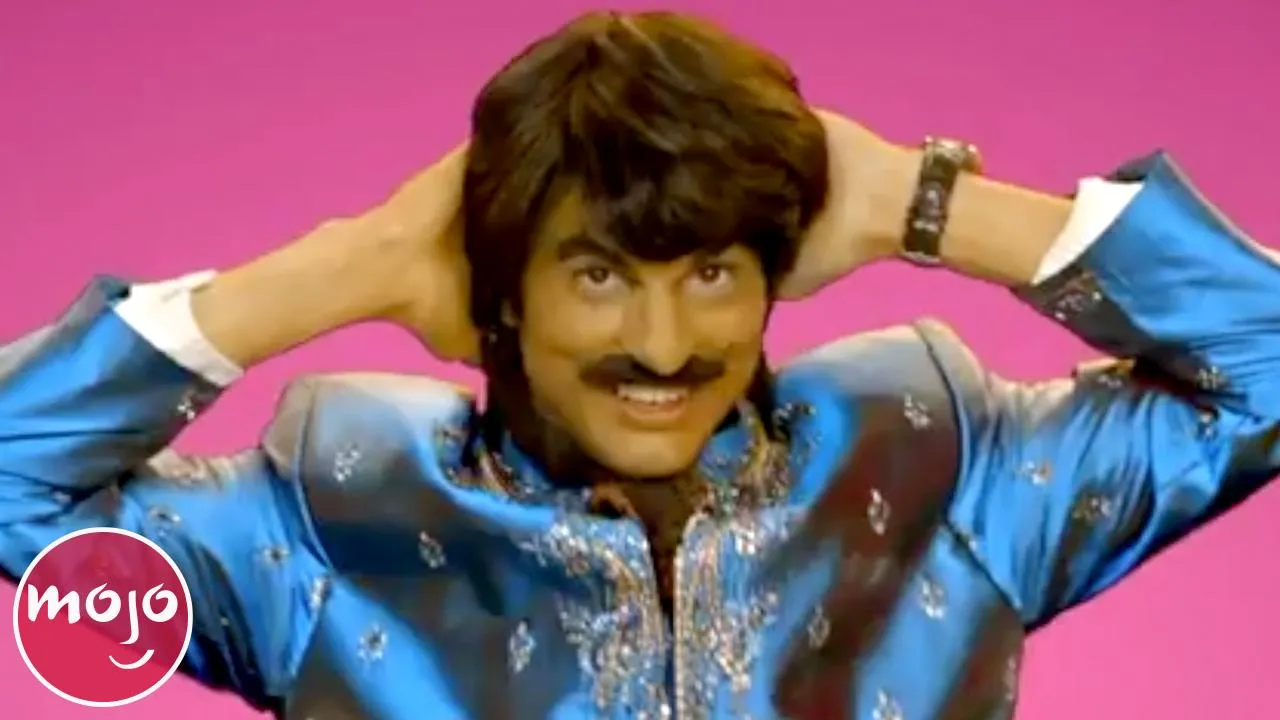
This might just be the most cringeworthy thing you’ve ever seen, not to mention deeply offensive. When the Popchips commercial aired featuring Ashton Kutcher in brownface as an Indian man named Raj, many viewers were left to wonder: What was he thinking? In addition to being the face of the brand, Kutcher was also its president of pop culture. This means he not only starred in the ad but also had a hand in its creation and development. The commercial was eventually pulled after an uproar from the Indian-American community. And we can all be thankful for that.
The New Golf
Volkswagen
If this ad only had one racist element, we might believe it was an oversight. But there’s too much going on here for it to be an accident. For some reason this German commercial is set in Argentina, which harbored Nazi officials after World War II. Volkswagen was founded by Nazis, by the way. The white woman’s hand pushes the Black man into a restaurant called “Petit Colon,” which translates to “Little Colonist.” And as the letters fade in at the end, the first ones we see spell out a racial slur in German. If the ad’s creators were going for plausible deniability, they missed the mark.
Chinese Food
Maggi Fix
From Nazi overtones to yellowface, Germany seems to be playing racism bingo with its commercials. It’s hard to imagine this ad wasn’t considered at least a little problematic, even in 1988. This family finds it hilarious that they’re turning Chinese while they eat this prepackaged food. We have a lot of questions. Are they going to stay Chinese forever? If not, how are they going to turn back? Also, what’s up with that weirdly tiny cookbook that the narrator shows off at the end? And perhaps most importantly, why did the marketers think this would make people want to buy Maggi Fix?
Pipe Job
Hyundai Motor Company
It’s difficult to believe that car manufacturing giant Hyundai couldn’t see how wildly offensive this ad campaign was as soon as they saw it. The commercial features a depressed man sitting in a car within a garage. After a few tense seconds, it becomes clear that he intends to take his own life by using the car’s exhaust. But the commercial takes another turn by revealing that he survived because the Hyundai ix35 featured “100% water emissions.” The company's decision to use such a serious subject to sell cars was seen as incredibly irresponsible. After receiving a ton of backlash, the extremely controversial commercial was quickly taken down.
Innocence is Sexier Than You Think
Love Cosmetics
One of the most infamous company campaigns of the 1970s revolved around the “Baby Soft” line of body and bath products for Love Cosmetics. The “Innocence is Sexier Than You Think” campaign often featured young models or women made to look as youthful as possible. Outside of the slogan, the images and poses were often suggestive. In one commercial, an older woman in the ad suggestively licks a prop lollipop while infantile music plays in the background. And there’s also narration that continually objectifies her. The model’s short outfit, creepy focus on youth and objectification all made us question how this cringey ad was ever greenlit.
Laundry Day
Qiaobi Detergent
Sometimes, an ad makes you wonder: Who thought this was a good idea? This Chinese ad for Qiaobi laundry detergent shows a Black man being cleaned in a washing machine until he emerges as a pale Asian man. The commercial aired for months in China, but eventually went viral. Protests about the advert’s overt racism spread quickly online until the company was forced to apologize and take the ad down. They said it was not intended to be discriminatory, and they hoped people would not read too much into its content. Well, it was definitely too late for that!
Do you think the reactions to any of these ads were overblown? Which one shocked you the most? Let us know in the comments below.