15 Craziest Things BANNED in Other Countries
Spontaneous Dancing
Sweden
Until 2023, if you planned to let people bust a move in your Swedish place of business, you needed a permit. The rule applied to all public establishments, including bars and night clubs. It was enforced, too, and business owners faced heavy fines. In 2016, the manager of a public market was put on trial for playing disco music inside a tent that police said was clearly intended for dancing. The law was passed back in the 1930s as a way to prevent disorderly behavior that could lead to rioting. People argued for years that it was outdated and should be repealed, and they finally got their wish.
Picnics
Venice, Italy
This ancient historic city has some pretty strict rules for tourists. You can’t walk around in a bathing suit, you can’t stop and stand on a bridge, and you can’t walk your bike anywhere. But perhaps the weirdest law is the prohibition on picnics. To reduce litter and crowds, picnicking is only permitted in a handful of designated public gardens on the outskirts of Venice. The cops aren’t kidding around when it comes to enforcement. In 2022, a group of German tourists were fined over €4,000 after they spread out a tablecloth and set up some chairs around a 300-year-old wellhead. On the one hand, it’s important to respect local laws and customs when traveling abroad. On the other hand, €4,000??
Certain Hairstyles
Iran
The regime has been at war against Western influence since the Islamic revolution. That includes Western fashion trends and hairstyles. Over the years, more and more styles have been banned, specifically men’s styles. Since women are required to cover their hair in public, the laws are less applicable to them, although many women have begun defying that rule in recent years. The mullet was banned in 2010, along with ponytails and excessive hair gel. Next up were spiky hairstyles – the head of Iran’s barbers’ union said only devil-worshippers wear them. Barber shops that defy the law risk being shut down.
Foreign Baby Names
Denmark
Believe it or not, there are countries where you can’t give your baby any name you want, and Denmark is one of the stricter ones. The country has a list of around 23,000 pre-approved names for boys, 28,000 for girls, and 1,500 unisex names. If you want to name your kid something not on the list, you have to apply to the government. In a given year, around three-quarters of those applications might be approved. The idea is to protect kids from weird and embarrassing names, but it does mean a lot of foreign names are banned, no matter how normal they are in other countries. We wonder if X Æ A-12 Musk wishes he’d been born in Denmark.
Yellow Clothing
Malaysia
In 2015, authorities banned this color ahead of a series of planned protests demanding fair elections and a more transparent government. The Bersih movement – which means “clean” in Malay – had adopted yellow as their signature color. In an attempt to crack down on the demonstrators, the Malaysian Home Minister declared that any yellow clothing and anything with the word Bersih was strictly prohibited. It didn’t work. Hundreds of thousands of people showed up to the rallies, many of them in bright yellow t-shirts. Surprisingly few were arrested, probably because honestly, what were the police going to do in the face of those crowds?
Ketchup in Primary Schools
France
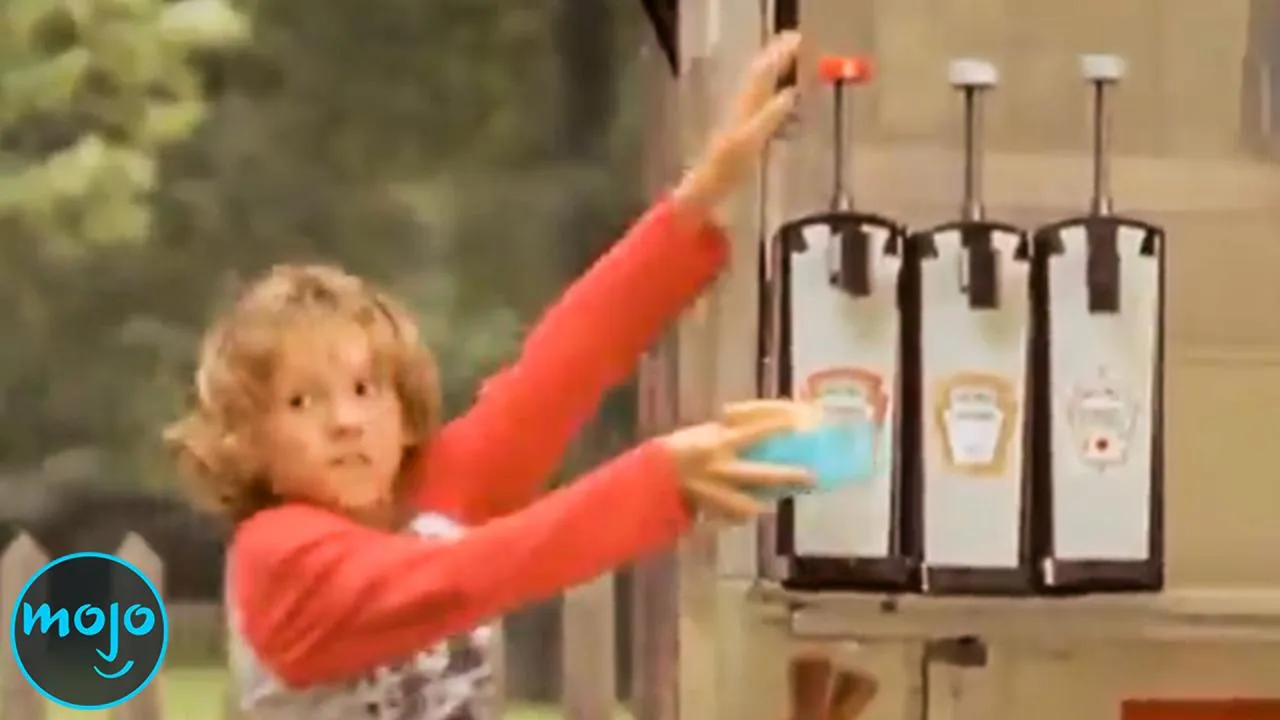
American kids would revolt. In 2011, France's Ministry of Agriculture decided that grade school kids would only be allowed to have ketchup with French fries, which are served at most once a week. The idea was to teach kids more about traditional French foods – which of course French fries and ketchup are not. The decision was also part of a broader effort to promote healthier eating habits and protect France’s culinary heritage. The French are, after all, famously proud of their food. We can’t imagine what they’d think of those square pizzas we grew up eating.
Jogging
Burundi
Group jogging held a special place in Burundi culture following the brutal civil war that began in the mid-90s. It was a way to exercise, socialize, release tension, and strengthen communities. Eventually, it even became a way to build solidarity across ethnic lines. However, President Pierre Nkurunziza changed that. When he took power in 2005, he supported physical fitness and public health. But his presidency was marked by increasing authoritarianism and crackdowns on his opponents. He banned group jogging in March 2014, claiming that his enemies were using the activity as a cover to conspire against him. Anyone who wanted to jog with a group had to register with the government, provide the names of everyone involved, and stick to approved locations.
Winnie the Pooh Memes
China
The Chinese Communist Party has a zero tolerance policy for criticism and dissent. That’s why it started censoring memes featuring Winnie the Pooh in 2017. Social media users compared President Xi Jinping to the character, and apparently he wasn’t amused. To be clear, Pooh himself isn’t banned in China. You can still buy Pooh merch, and his themed attractions are still up and running at Hong Kong Disneyland and Shanghai Disneyland. But if you try looking up Winnie the Pooh on social media in the country, you’ll be out of luck.
Pokémon Go
Iran
Remember when everyone was playing this game in 2016? Well, almost everyone. Iranians got left out of the fun after the High Council of Virtual Spaces, which governs online activity, banned it. They cited security concerns, but didn’t provide any additional details about what those concerns were. There were legitimate risks associated with the game. A Baltimore man crashed his car into a parked police cruiser while chasing Pokémon. And two men in California fell off a cliff while playing the game. Considering how fast that fad came and went, maybe Iran didn’t miss out on much after all.
Doorknobs
Vancouver, Canada
This ban might sound crazy at first, but it turned out to be one of those accessibility features that ends up helping everyone. Starting in 2014, all new buildings in Vancouver had to be built with door levers rather than round knobs. Levers are much easier to open for people with disabilities and arthritis. But the change also makes life easier if you have an injury, or if your hands are just full. Old buildings aren’t subject to the law, so anyone who’s attached to their old doorknobs is free to keep them.
Lip-syncing
Turkmenistan
Like many dictators, Saparmurat Niyazov apparently got in the habit of banning things he didn’t like on a whim. In 2005, he decided that lip-syncing would be prohibited on TV and at concerts, cultural events, and even private events like weddings. In comments to his cabinet, Niyazov complained about “old voiceless singers lip-syncing their old songs” on television, and urged Turkmen to create new culture. Turkmenistan’s current ruler, Serdar Berdimuhamedow, is just as authoritarian. In 2024, he declared that weddings would also be banned from playing foreign music. On top of that, they’re now required to play songs by Serdar’s father, the country’s former president. Take a listen and decide if you’d want this played at your wedding.
Time Travel Media
China
Speaking of things that seemed to have been banned on a whim, in 2011, China suddenly decided that TV shows and movies depicting time travel were no longer allowed. The government called them “absurd,” and said they “promote feudalism [and] superstition” and “lack positive thoughts and meaning.” The directive appeared to be in response to a few time travel-based dramas that had recently gotten ultra-popular on Chinese TV. Most of them involved modern people traveling back to ancient China and falling in love. Apparently government censors didn’t like the idea that Chinese citizens might not be so happy in modern China. Books and theater are exempt.
Claire Danes
Manila, The Philippines
In 1998, Danes traveled to Manila to film part of her movie “Brokedown Palace.” She wasn’t too impressed by the city. Later, in an interview with Premiere magazine, she described it as “ghastly” and complained about the rats, cockroaches, and lack of public sanitation. Word got back to the Manila city council, who were equally unimpressed with Danes. In a 23 to 3 vote, they declared her persona non grata and banned all her movies. The comments might have been a little rude, but to be fair to Danes, she was only 19 at the time. One of the councilors who voted against the resolution stood up for Danes, saying the vote violated her rights, and that most of what she said was true!
Reincarnation Without Government Permission
China
There’s authoritarianism, and then there’s this. Practitioners of Tibetan Buddhism believe that lamas and other spiritual leaders can consciously control their own reincarnations. Chinese officials don’t like anything that’s outside their control. In 2007, the country passed a law regulating the conditions under which Buddhist leaders are allowed to reincarnate. In reality, the law was intended to delegitimize the Dalai Lama, who’s believed to have been reincarnated many times. Scholars think China wants to decide for themselves who the next Dalai Lama will be, rather than allowing monks to determine who the Lama is, as they have for centuries. Time will tell if the gambit works.
Dying, Giving Birth, and Burials
Itsukushima, Japan
Also known as Miyajima, this island is the site of a highly sacred Shinto shrine. Followers of Shinto consider purity to be an important part of their spiritual practice, and death is believed to be impure. As a result, they work hard to keep it away from their temples. Elderly and terminally ill people who are close to death are required to leave the island of Itsukushima, and no one is allowed to be buried there. Pregnant women also have to take a hike around the time of their due date. It’s a little unclear how authorities would penalize someone for accidentally dying on the island. After all, it must happen once in a while.
Would you be able to live under these bans? Which one do you think is the craziest? Let us know in the comments.
