Top 10 Times Pop Stars Went Counterculture
10 Times Pop Stars Went Counterculture
Welcome to MsMojo, and today we’re looking at major pop musicians who successfully and meaningfully dabbled in subversive art.
“Music, Fashion, Film” (2026)
Charli XCX
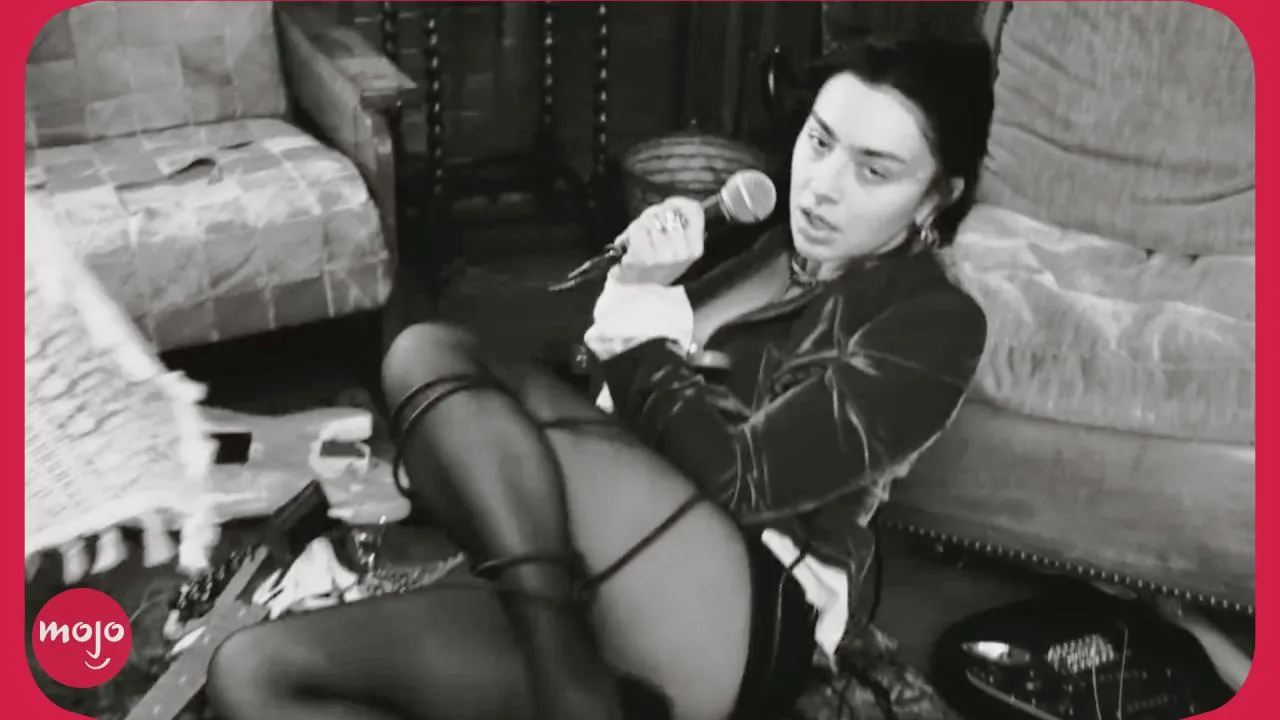
After disowning a caricature of rebellion, Charli XCX turned feminist rave revival into the mainstream with 2024’s “Brat.” The follow-up went even rawer by every commercial definition. “Music, Fashion, Film” is 30 minutes of distorted guitars, post-punk sneer and limited production, viciously taking down ideological and creative fakery. At the end of this cycle is an existentialist monologue by art horror filmmaker David Cronenberg in “No One Lasts Forever.” Charli even directed an avant-garde short film about the making of the album. It looks and sounds as if everything about “Music, Fashion, Film” is removed from the mainstream. So for it to also be a commercial hit settles that Charli XCX is a new kind of pop star.
Bad Bunny
“Debí Tirar Más Fotos” (2025)
Politics have occasionally worked their way into the party anthems and introspection by one of the biggest names in reggaeton. Then Bad Bunny surprisingly dropped “Debí Tirar Más Fotos” in January 2025 as a celebration of Puerto Rican culture against class and colonialist structures. The world has not forgotten this masterpiece since. The blend of escapist bangers and social commentary, along with modern and traditional Latin genres, brought the Spanish-language album unprecedented global attention. This was boosted by a Grammy win for Album of the Year. “Debí Tirar Más Fotos” defies Western pop uniformity by its very existence. Its success speaks to the way Bad Bunny can rally a crowd with intellectual stimulation as well as physical.
Beyoncé
“Lemonade” (2016)
Surprise-released as a visual concept album, “Lemonade” wasn’t meant to be another upbeat blockbuster rollout from Queen Bey. All the same, both it and the accompanying HBO film were an instant hit. At the center of the genre-bending odyssey is a woman grieving not only a troubled marriage, but the greater identity and experience of Black American women. The artistic and emotional complexity were beyond anything anticipated from this undoubtedly multitalented titan. And from the acclaim came some real talk in the public and contemporary American pop trends. “Lemonade” is considered a landmark in the post-2010s renaissance of conscious music in the mainstream. As far as that kind of cultural impact, of course, Beyoncé stands alone.
John Legend
“Wake Up!” (2010)
It's not unusual for the hip-hop crossover band The Roots to tackle hard-hitting issues. But R&B crooner John Legend was an unusual choice of collaborator on “Wake Up!”. Inspired by Barack Obama becoming the first Black President of the United States, the album mostly consists of covers of forgotten protest anthems from the ‘60s and ‘70s. At a time of optimism for social change, this was a reminder of timelessly relevant issues like poverty, prejudice and war. Then Legend closes with the album’s one original song, “Shine,” an ode to the power of education. The Grammy-winning “Wake Up!” isn't just gimmicky nostalgia to unite two big names in music. It’s Legend’s great call to action.
Livestream CTA:
As for a lighter call to action, scan the QR code to get more pop culture education on the 24/7 MsMojo Livestream.
For some pop culture with your counterculture, scan the QR code to get more on the 24/7 MsMojo Livestream.
Madonna
“American Life” (2003)
Pop listeners in the new millennium probably didn’t expect to hear the singer of “Material Girl” condemning materialism. Madonna has really been an iconoclast since she came from the ‘80s New York underground, but there were bigger things to be reminded of after 9/11. “American Life” uses a personal lament of celebrity to examine consumerism, authority, and a national climate underlying matters like the Iraq War. And it’s all expressed with a mix of folktronica, glitchy techno and deliberately under-produced acoustic guitars. The album would unsurprisingly become Madonna’s lowest-selling at the time, with contemporary critics being split on its preachiness. In retrospect, though, “American Life” is embraced as the epitome of Madonna’s no-nonsense message to the mainstream.
Michael Jackson
“Dangerous” (1991) / “HIStory” (1995)
After his hugely successful work with producer Quincy Jones, the King of Pop tapped new jack swing architect Teddy Riley to bring his sound into the gritty ‘90s. The sprawling “Dangerous” juxtaposes seductive hits with the antiracist “Black or White,” “Jam’s” urban resilience, and the pacifist epic “Heal the World.” Jackson goes more singularly confrontational with the new material half of the double album “HIStory: Past, Present and Future, Book I.” He speaks from the gut as much as the soul about media gossip, bigotry, environmentalism and historic suffering. Split reviews and personal scandal stifled Jackson’s more conscious rebrand from there. But in retrospect, “Dangerous” and “HIStory” represent his last masterpieces, plus the deeper importance of his commercial innovativeness.
Janet Jackson
“Rhythm Nation 1814” (1989)
Before her brother’s socially conscious turn, Janet Jackson was encouraged by A&M to soften the personal exploration that helped make 1986’s “Control” a success. They were certainly less-than-enthusiastic about her decision to expand the scope of her confessional songwriting. “Janet Jackson's Rhythm Nation 1814,” named after the year when the U.S. national anthem was written, envisions utopia against bleak contemporary news headlines. Jackson posits that class and racial division, substance use, and feminist matters were not just issues for the time. The concept album demolished the label’s fears that it wouldn’t be a commercial hit, though critics were baffled by its boldness. Now, many celebrate “Rhythm Nation 1814” as Jackson’s most ambitious and timeless triumph.
Helen Reddy
“I Am Woman” (1971)
Even during the counterculture era, a rising pop singer getting political was risky. So Helen Reddy’s 1971 debut “I Don't Know How to Love Him” mostly consists of light ballads, save for the powerhouse fourth track. The following year, a re-recording of “I Am Woman” for the namesake album turned the fan favorite into Reddy’s chart-topping breakthrough. The anthem of one woman’s hardship and womanhood's resilience didn't just ride the second wave of feminism – it led the charge. Capitol Records thought “I Am Woman” was too militant; radio programmers called it misandrist; and the Grammys named it the Best Female Pop Vocal Performance of 1972. Since then, defiance has become a central theme of female-driven pop music.
Marvin Gaye
“What’s Going On” (1971)
The chief loverman of Motown wasn't serving a pickup line in 1971. “What's Going On” was Marvin Gaye’s state of the union, motivated by his friend Tammi Terrell’s death and his brother Frankie’s service in the Vietnam War. It's the somber saga of a military vet who returns to America to find division, corruption, and the drug and environmental crises. Berry Gordy was so unsettled by the concept that Gaye went on strike to pressure him into releasing the lead single. “What's Going On” turned out to be a resounding hit and a landmark in the elevation of mainstream R&B. Gaye then largely returned to romantic escapism, having said everything that needed to be said with his magnum opus.
The Monkees
“Head” (1968)
Bob Rafelson and Bert Schneider manufactured The Monkees as America’s answer to The Beatles. This inevitably meant matching the Fab Four’s experimental era, albeit not flatteringly. The film “Head” followed the band’s sitcom as a satire of the pretentious musician rebrands that were dividing pop culture in the late ‘60s. But behind the chaotic soundtrack was a serious critique of institutions, war, and the artists’ own artifice. The commercially and critically maligned project was an act of self-sabotage that allowed The Monkees to pursue new avenues after their first breakup. “Head” now enjoys cult status as a mockery of counterculture that admits it makes some valuable points. And pop listeners have grown more open to their idols showcasing their conscious side.
What do you think are the most compelling stories of political transformation in pop history? Take a stand in the comments below.

