10 Things National Geographic Made Us Terrified of As Kids
10 Things National Geographic Made Us Terrified of As Kids
Welcome to MsMojo, and today we’re counting down our picks for the parts of nature that horrified us when watching National Geographic growing up.
Swarming Locusts
In human history, swarms of locusts are not uncommon, but to the average person, they are pretty rare. This is when huge hordes of locusts spread for miles, becoming so thick they can even obscure the sun. One of the most devastating came in 1874 in North America, which spread all the way from Texas to Canada. It contained over 12.5 trillion insects, earning it a Guinness World Record. In the past 100 years, America has never experienced a swarm like this again, mainly because the locusts responsible are now extinct. They still happen in other parts of the world, but most places will never experience the phenomenon. Not like mosquitoes, which are maybe even scarier as adults.
Tsunamis and Rogue Waves
Big waves can be great fun as a child, as long as you’re in a safe environment like a swimming pool with a wave machine. Things like tsunamis and rogue waves were instead nightmare fuel for a lot of kids. These are some of the most destructive waves in the world, most common in the Pacific, but they happen in other places like the Caribbean, the Atlantic, and even the Mediterranean. So you probably won’t encounter one if you don’t live near the Pacific. Flash floods, on the other hand, are way more common in America, and are becoming increasingly common due to climate change.
Botflies and Parasites
One of the most unsettling aspects of nature is parasitic relationships. This is when an organism or creature lives off another, often resulting in significant harm. One of the creepiest is the botfly, which has larvae that burrow into human skin. It’s rarely fatal, and they’re fairly simple to remove by covering the infested region with petroleum jelly. Human botflies also aren’t common enough to be considered a pest anywhere, and are mainly located in South America. Still, as adults, the thought of them makes our skin crawl, and as kids, a documentary on them could stop us sleeping for days.
Snakes
Snakes are a staple of National Geographic. Most snakes aren’t venomous, and the ones that are usually aren’t deadly. They don’t consider humans prey, so they only attack people when feeling threatened. Roughly 5 million people get bitten by snakes each year, but about half of them are venomous. With over 8 billion humans on Earth, this means you’ve got a less than 0.10% chance of being bitten every year. That didn’t stop species like the anaconda from haunting our dreams as children, even though we don’t have any verifiable sources for an anaconda killing someone. Black mambas were equally terrifying, but they actually live up to their reputation.
Surviving the Wilderness
Survival shows are a staple of most nature channels. They’re so common that many of us kids assumed they would become important later in life. It turns out that getting stranded in remote wilderness, like a jungle or a desert island, is an issue few people encounter in life. It’s not impossible, though; some sources claim 13 people get lost in American woods every day. These are usually hikers and wildlife enthusiasts, as opposed to regular folk who end up stranded due to unfortunate circumstances. On average, American search and rescue teams take about 10 hours to find lost people. So in such a situation, you hopefully won’t need to live off the land for long.
Volcanoes
To many children, volcanoes are easily one of the coolest topics in geography. These explosive mountains can blast tons of lava and magma, which are, of course, extremely dangerous to people nearby. This made many children terrified of them, especially when they learned how many on Earth are still active. Currently, there are roughly 1,500 volcanoes still active, with 500 million people living near them. This means theoretically they could erupt at any time, but also it’s quite rare that they erupt without warning. In the past 5 centuries, about 540 people have died due to volcanoes annually, making them about as deadly as elephants.
Tornadoes
The idea of getting swept up into a tornado and blown into the atmosphere is likely to haunt many children. They’ve been known to occur all over the world, but they’re primarily located in America, Canada, and Bangladesh. Tornado alley is where they occur most in America, which is roughly centred on Kansas. So, for everyone who doesn’t live in these regions, they’re unlikely to ever witness one with their own eyes. That doesn’t prevent children from being scared of them, especially their more terrifying variety, the exceedingly rare fire tornado. We were also equally scared of earthquakes and lightning, which are something almost all adults will experience.
Sharks
Many species of sharks are apex predators, like the great white shark, meaning they have no natural predators. This has made them one of the most feared creatures in the ocean. It feels pretty unjustified when you learn sharks don’t care for eating humans. Studies show they mainly bite humans out of curiosity or because they mistake them for something else. This is pretty similar to the equally feared piranhas, who will only chow down on a human if they’re threatened. That hasn’t stopped National Geographic from producing a ton of documentaries that present both as formidable foes to humans.
Bermuda Triangle
Also known as the Devil’s Triangle, this region of the Atlantic Ocean is one of the most mythologised places on the planet. For decades, people have claimed it’s a supernatural region where an unusually high number of people vanish. This has led to a plethora of documentaries exploring the region on channels like National Geographic. Despite all the claims, not a single reputable study has found any evidence that it should be feared. In fact, people disappear there at the same rate as they do in basically all other oceans on Earth. People still love learning about it, hence why so many documentaries are produced on the area.
Quicksand
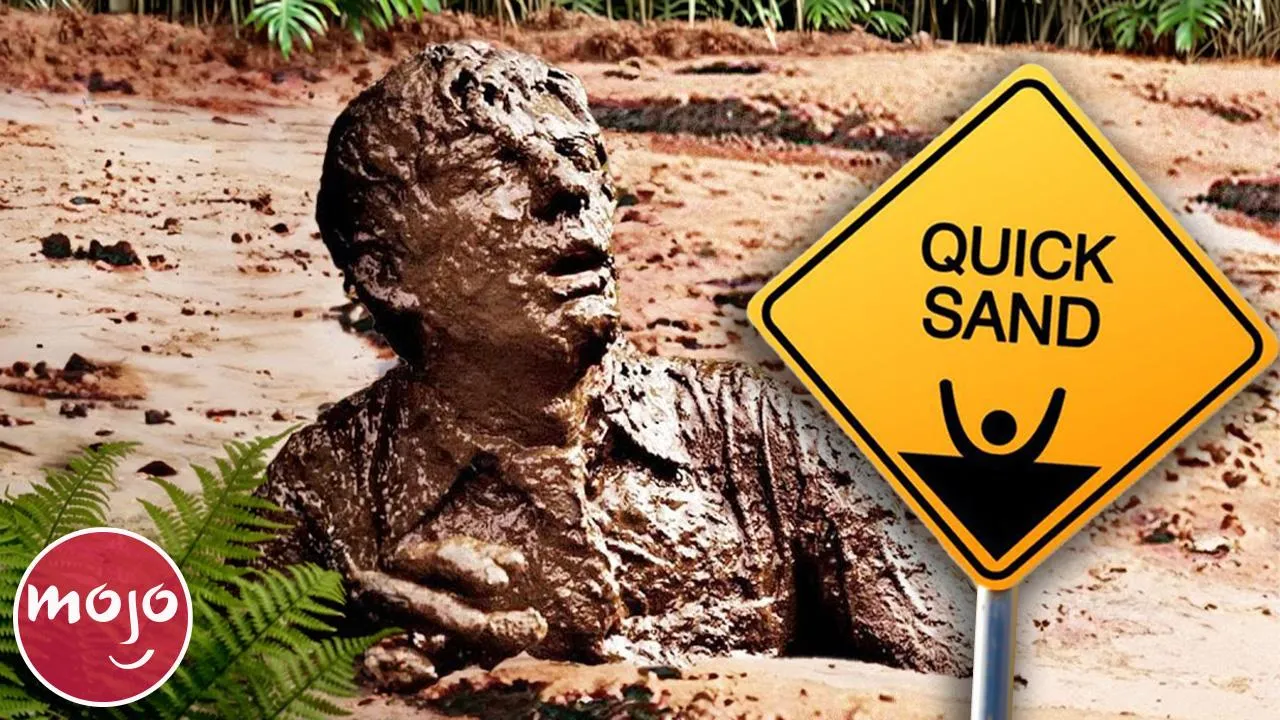
Finally, we have one of the most exaggerated natural phenomena: quicksand. It is real, and it is possible to get stuck in it, but being sucked to your death is far less likely. In reality, you’ll sink a little at first, but after a moment, it’ll bounce you back to the top. It can still be dangerous, as if a high tide approaches, you’re in a pretty poor position. You can escape by slowly moving your legs, then wiggling into the supine position. In actuality, dry quicksand is more similar to the quicksand of movies, but this has to be made in a lab, so don’t worry about stumbling into it at the beach.
What part of nature were you most scared of growing up, and did we mention it today? Let us know in the comments below!
