Netflix's Kidnapped: Elizabeth Smart | 10 Shocking Reveals (& What They Left Out)
- The Sole Witness Was Disbelieved
- A False Suspect Died In Police Custody
- Police Initially Thought It Was An Inside Job
- Elizabeth's Uncle Couldn't Pass A Polygraph
- Elizabeth Was Meant To Be The First of Seven
- Elizabeth Was Treated Like Property
- A Detective Let Brian and Wanda Go
- Investigators Dismissed The Big Break
- The Sketch Held The Final Clue
- Elizabeth's Kidnapping Was Considered "An Anomaly"
The Sole Witness Was Disbelieved
The only person present when Elizabeth was kidnapped from her bedroom in June 2002 was her younger sister, Mary Katherine. The problem was she was only 9-years-old, and she’d just endured a trauma that made accurately recalling a memory very difficult. She was isolated in order to keep her recollection of the incident intact. A number of bizarre tactics were employed as well. Ultimately, police disregarded much of the information she was able to provide. Even when she clarified that their prime suspect was innocent, investigators doubled down, presuming she was misremembering.
A False Suspect Died In Police Custody
Police zeroed in on Richard Ricci, a contractor with a lengthy rap sheet who knew the layout of the home and had a wage conflict with Elizabeth’s father, Ed. Mary Katherine correctly dismissed him. But during his processing, he died of a sudden brain haemorrhage. It’s a tragedy glossed over by the documentary that initially paints him as a villain. What’s left unreported is how he’d been complaining of a headache in holding before slipping into a coma. He died trying to defend himself from false accusations, and had no opportunity to speak to his family when he started feeling ill. Years later, his wife took her own life, and loved ones claim it was due to a broken heart.
Police Initially Thought It Was An Inside Job
In crimes involving a child’s welfare, someone close to the child is often the guilty party. This is evidenced by leading questions officers directed at Mary Katherine. Police started their investigation here, and a number of red herrings sounded alarms early on. Investigators took issue with the way the chair had been placed to cut open Elizabeth’s window screen. It became more convenient to assume her family had something to do with her disappearance, and to work backwards. All the speculation about Ed turned out to be wildly untrue. Sadly, these compounding events sent him into a spiral.
Elizabeth’s Uncle Couldn’t Pass A Polygraph
In the documentary, Tom Smart is presented as an eccentric character who operated on the outskirts of the family. We’re shown numerous interview clips where he spews a stream of consciousness that actually makes him look pretty bad. It got to the point that family members became concerned he’d draw too much negative attention. In reality, Tom was struggling to process the harrowing circumstances of his niece's kidnapping, and had begun to lose his grip on reality. He recalls hallucinating when he took his polygraph, likely the reason it came back inconclusive. Ultimately, the Smarts’ alibis all checked out, disproving the standard to point the finger at the family first.
Elizabeth Was Meant To Be The First of Seven
When Elizabeth is introduced mid-way through the documentary, she tells the true story of what happened the night of her abduction. Her bedroom had been entered by Brian David Mitchell, a religious zealot who worked on their roof months prior. He was a panhandler who lived in the woods with his wife, Wanda Barzee. Their camp was located even further up the trail than where the tracking hound lost Elizabeth’s scent. According to Brian, it had been prophesied that fourteen-year-old Elizabeth was to be one of his wives. She recalls that Brian also threatened to make her sister or cousin his next wife. Initially, a similar crime scene generated a theory that a serial kidnapper was at large. However, the filmmakers leave this thread hanging. The case in reference was the murder of Kellie Nelson. She’d been abducted by Sally Ann Krivanek, the jealous ex-girlfriend of Nelson’s new boyfriend. Ultimately, there was no connection between the two events. Nevertheless, it’s terrifying to imagine what could have happened if Brian did manage to pull off a string of kidnappings, especially considering what he’d already started doing to Elizabeth.
Elizabeth Was Treated Like Property
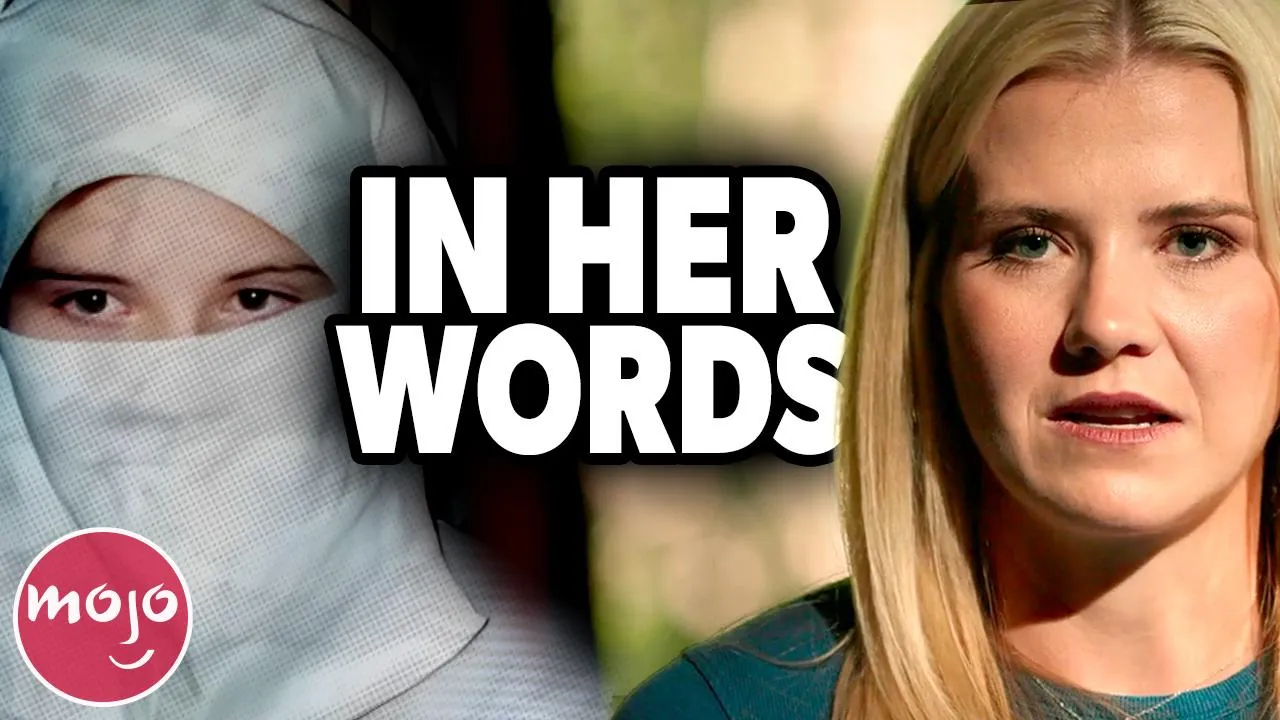
Brian, an unhoused man with little real control, used Elizabeth to get that surge of power he felt was divinely owed to him. Elizbeth was subjected to constant sexual abuse. She was even regarded as Brian’s pet. His constant threats and intense psychological manipulation, like withholding food, deterred her from attempting to break free. Even worse, Wanda encouraged Brian’s psychotic behavior. When they trekked into town to preach, Elizabeth was dressed in a bizarre garb that obscured her appearance. In fear for her safety, and the safety of her family, Elizabeth complied with Brian’s orders.
A Detective Let Brian and Wanda Go
While in Salt Lake City, a detective actually stopped Brian and the two women cloaked at his side. One was Wanda, the other was Elizabeth. The detective mentioned that a girl had been missing, and asked Brian to remove Elizabeth’s shawl to help identify her. Brian refused to comply, insisting it would be a violation of his faith. In the end, the detective was persuaded and let them all go. It’s just one of the many failures of those in charge of the case, which stalled justice and allowed Brian to hold onto his child bride for a while longer.
Investigators Dismissed The Big Break
In a sudden epiphany, Mary Katherine recognized the voice echoing in her head as Brian David Mitchell, who’d been using the alias Emmanuel. She’d only had two brief encounters with him. Once when she and her mother first saw him on the street, and again when he spent a single afternoon providing handy work at their home. But investigators were not convinced, and they withheld an eye-witness sketch dictated by Mary Katherine. It’s the second time her testimony was neglected. Police circled back to Richard Ricci, concluding he was guilty and had taken secrets of the case to his grave. But it gets worse. Police actually had Brian in custody for stealing beer while Elizabeth was being held in his tent. Without making the connection, they let him go.
The Sketch Held The Final Clue
Speaking of the composite drawing, it remained sealed in police files for months. The Smarts finally convinced detectives to go public with it. As expected, a number of tips poured in. One of those would prove to be the exact call investigators had been waiting for. Except Uncle Tom was the one who’d fielded it. A man had recognized his brother-in-law as the eerie face from the press conference. When the individual sent a real photo to Tom, Ed immediately knew it was Brian. Effectively, the case wasn’t even cracked by the jurisdiction running the investigation. Once the Smarts canvassed the town, they spoke to numerous people who’d interacted with those uncanny figures cloaked in white. Finally, the trio was stopped by officers in Salt Lake City and Elizabeth was rescued. The true heroes? Elizabeth’s sister, uncles, and parents.
Elizabeth’s Kidnapping Was Considered “An Anomaly”
Time and time again, we hear that this crime was inconceivable because of Elizabeth’s social status. Reporters and police comment on her angelic profile, and regard her neighborhood like some kind of fortress. She came from too good of a family, she lived in too nice of a community. But if we’ve learned anything from true crime documentaries, it’s that these serene places where you think crime won’t happen are actually the places it can and will happen. Being among the upper echelons of society isn’t an immunizer, and neither is living in a stunning town. Then again, perhaps this is exactly why the case was selected for a Netflix special. Our biases may lead us to only anticipate crime in low-income areas. So these shocking cases of terrible things happening to affluent, blonde-haired, blue-eyed, white women make perfect fodder for a Netflix documentary. Once again, filmmakers inadvertently beg the question: if this was never meant to happen to someone like her, then why did it?
What do you think was the most shocking takeaway from “Kidnapped?” Leave a comment below.
