10 PlayStation Sequels BETTER Than The Original
10 PlayStation Sequels BETTER Than The Original
Welcome to MojoPlays, and we’re getting reeeeeal specific today. It’s hard to release a sequel that outshines a fantastic first entry, and we’ve already looked at a lot of them, but let’s see how Sony does on its own. These are 10 PlayStation Sequels BETTER Than The Original. Some of these entries were technically ported to other platforms, but as long as they spent some time as PlayStation exclusives, they count, dammit! Let’s go.
“Resident Evil 2” (1998)
For all the credit the original Resident Evil deserves for inventing “survival horror” (and the actual name), it’s Resident Evil 2 that really locks in the series’ legendary status. Instead of following series vets Chris and Jill, RE2 introduces a fresh duo: Claire Redfield, Chris’ determined sister, and rookie Raccoon City cop Leon Kennedy—that’s right, the beloved Leo DiCaprio-looking legend from the infamous fourth entry. These two quickly became franchise icons, appearing in multiple stellar entries. Their first harrowing escape from zombie-infested Raccoon City remains one of the series’ best narratives. RE2 cranks everything up a notch: more enemies, deadlier scares, and a surprisingly deep story, proving that sequels can absolutely school the originals. And yes, it was released on more systems, but it was a PS1 exclusive for a year, and defined the console.
“Fatal Frame II: Crimson Butterfly” (2003)
Another entry that spent a year on PS2 before making its way to Xbox, and this year was the perfect amount of time for it to dominate the beloved first game, plunging players into 1980s Japan to investigate spooky supernatural events. Armed with the Camera Obscura, which captures—and pacifies—angry spirits, players got an instant crash course in classic Japanese horror. The first game was a hit, but Fatal Frame II: Crimson Butterfly kicked things up a notch, earning praise as possibly the scariest video game ever. The original had a shockingly low completion rate because, well… players were too terrified to finish. The sequel tried to lure gamers with a stronger story, and it worked. Well done Fatal Frame, you’ve made it comfortably on this list.
“Helldivers 2” (2024)
Arrowhead took the original Helldivers, a gloriously chaotic isometric co-op shooter, and turned it up to eleven with the sequel. Released in 2024, and ported to Xbox a year and a half later, Helldivers 2 keeps the soul of the first game but mixes things up: now you’re in a third-person perspective, and instead of a fixed campaign, you get an ever-evolving world. Explosions everywhere, friendly fire disasters, and those “oops, I just blew up my teammate again” moments that somehow make you laugh instead of cry. There hasn’t been a release as exciting as this for co-op gamers since, and it dominated the first entry.
“Killzone 2” (2009)
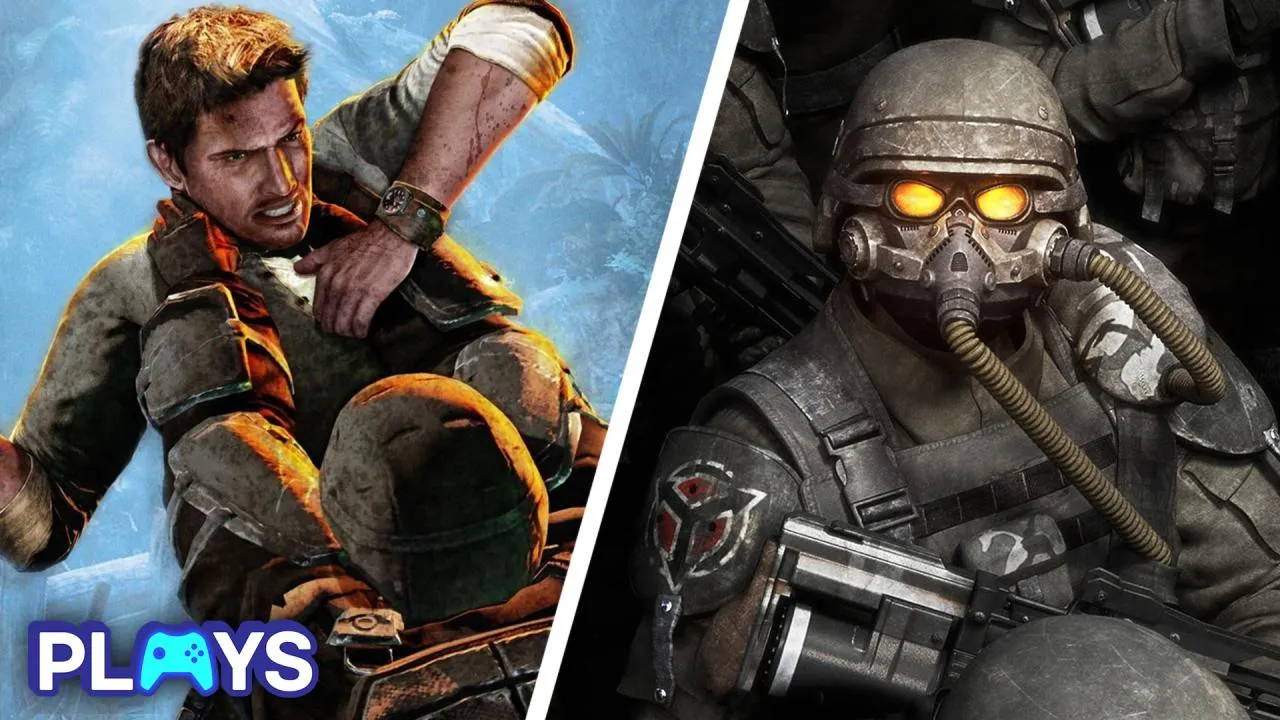
Fans had to wait five long years for Killzone 2, which finally showed what the series was truly capable of. This dark, stylish sci-fi first-person shooter dropped players into the brutal conflict between the Vektans and the fascist Helghast. Killzone 2 surpasses the first game by delivering sharper graphics, a cinematic dark sci-fi atmosphere, and refined gameplay mechanics. Its story is more engaging, the combat brutally challenging, and the level design far more dynamic. The legendary final boss fight against Radec is OOFT, SO GOOD! It cemented the series, and actually sent players back to the first entry just to get more Killzone in their bodies.
“Ratchet & Clank: Up Your Arsenal” (2004)
This was the game that brought me to the series, and when I went back to the first to catch up on the lore, I lasted an hour before I said, “Ahh I’ll just replay the second.” Ratchet & Clank: Up Your Arsenal outshines the original by cranking everything up to eleven. The weapons are crazier, the gadgets zanier, and the enemies even more (something that rhymes with crazier and zanier). A toaster that shoots grenades? Yes please! Multiplayer was introduced, letting you blow up your friends while keeping your sense of humor intact, and this defined the game in a home of siblings. The story is tighter, the humor sharper, and Ratchet and Clank’s chemistry hits peak comedy gold. Levels are bigger, more inventive, and full of secrets that actually reward exploration. Compared to the first game, it’s like upgrading from a rusty wrench to a Swiss Army laser gun.
“Infamous 2” (2011)
Who would have thought the second entry in this series would become so… infamous? (Screw you guys). Infamous 2 takes everything great about the original and cranks it up, mostly with lightning, but also with electricity, and sometimes also shocks. Cole McGrath returns, now more confident, with a bigger arsenal of powers that make city-wide chaos feel like a supercharged playground. The story is deeper, morally messier, and emotionally engaging; it’s “choose your own electro-tingling adventure.” Sure, some fans miss the first game’s map or aesthetics, but Infamous 2 proves Sucker Punch knew how to go big or go home. And go big they did, and I went home—from school—to play this all night.
“God of War” (2018)
Alright, while technically a sequel from the original trilogy, I understand I might be pushing the definition a little bit for some viewers, and unfortunately, I have no good excuse… My bad. The original God of War trilogy was a wild ride of hack-and-slash carnage and epic boss battles, but let’s be honest, Kratos wasn’t exactly nuanced; his character was mainly about gameplay. The 2018 sequel turned that one-note fury into a fully fleshed-out dad juggling grief, parenting, and world-ending monsters. The combat is more deliberate, with some of the most amazing combat gameplay the gaming world has ever seen, while the one-take cinematic camera glides through a story richer than ambrosia at a Greek banquet. It’s proof that both characters and franchises can grow up. Kratos even learned that yelling isn’t always the answer… though it still works sometimes.
“Silent Hill 2” (2001)
This is easily my number one, but I’m being objective, so it’s sitting at number 3. That being said, I’m boutta praise this game so much it’s gonna seem borderline delusional… Sorry. The horror genre actually has a knack for sequels—I mean, we’ve already seen that with a good chunk of this list. But Silent Hill 2? That’s a masterclass. Released in 2001 for PS2 (and yes, technically Xbox later on), it improved controls and camera while cranking the creep factor to eleven with jaw-dropping, nightmare-inducing visuals. Of course the gameplay and visuals improve to efficiently move it across generations, but it’s the story that will haunt you long after the credits. It’s still considered one of the best and scariest games ever made, and has a remake that is also REALLY fantastic. It’s proof that sequels can be scarier, smarter, and more disturbing than the originals… and make you check under your bed for Pyramid Head.
“Crash Bandicoot 3: Warped” (1998)
The Crash Bandicoot trilogy is a masterclass in improving on what came before. The original Crash Bandicoot put Sony’s unofficial mascot on the gaming map with crazy villains and fun levels. Crash Bandicoot 2: Cortex Strikes Back gave us more of the same, but now Crash could double jump, skid, and body slam like a pro. But Crash Bandicoot 3: Warped? Mmph. This entry introduced time travel, vehicles, and way more interactive levels; it was pure platforming brilliance. It introduced time trials, so you could stress yourself out and compete against your family members till someone cracked the sh*ts and stormed off crying, and introduced most players to their first experience with ‘rage quitting’ or biting the controller… Not that I did that. (I totally did that).
“Uncharted 2: Among Thieves” (2009)
I knew from the opening mission of the second Uncharted game that this game was going to outplay the first entry, and I wasn’t wrong. Obviously the first entry deserves its praise; Uncharted: Drake’s Fortune was one of the PlayStation 3’s first “actually worth owning” exclusives. From Nathan Drake’s pants getting soaked to cutscenes motion-captured by the voice actors themselves, it showed off what the PS3 could do, and what gaming in general could accomplish. But just two years later, Naughty Dog cranked it up to 11 with Uncharted 2: Among Thieves. Everything was bigger, flashier, and more epic, from jaw-dropping visuals to a story that made summer blockbusters look like indie shorts. It scored a whopping 96 on Metacritic, collected a bunch of Game of the Year awards, and basically told the world, “Sorry, first game, you’re cute, but I’m the main event now.”
