10 HUGE Problems That Are Inevitable Now
- Dead Internet Theory
- Depletion of the Ogallala Aquifer
- Plastic Pollution Crisis
- Mass Job Displacement via Automation
- AI Misinformation Rendering Digital Evidence Obsolete
- Increased Political Polarization
- Wealth & Income Inequality Gap Increasing
- Resurgence of Authoritarianism
- Global Freshwater Scarcity
- Climate Change Acceleration
Dead Internet Theory
The concept of communicating with a robot sounds absurd — but online, it could soon become the norm. The Dead Internet Theory was first introduced in 2021, and posited the idea that most of the content posted on the web was created by bots and pushed by an algorithm, with the goal of sowing discord amongst humans. While it sounds like something from a cheesy science fiction movie, it isn’t so far fetched. According to a recent study, roughly 35% of new websites were created by AI, along with an increase in text being written by bots. Regardless of the intent, there may soon come a day where bots completely take over the Internet … and we might not even notice when it happens.
Depletion of the Ogallala Aquifer
It’s one of the most valuable resources in the entire country, and there’s a chance you’ve never even heard of it until now. Deep beneath the Great Plains is the Ogallala Aquifer, a layer of water underground that’s utilized for human needs. Since the 1940s, there have been grand-scale operations to pump more at a time, which has led to a significant decrease. Should it dry up, it would take thousands of years to replenish and have a devastating impact on food production. One 2026 report found that it emptied by over 200 feet in some areas. Some states presiding over it have enacted conservation methods. Others haven’t, and as a result, a majority of their land could become unusable in just twenty years.
Plastic Pollution Crisis
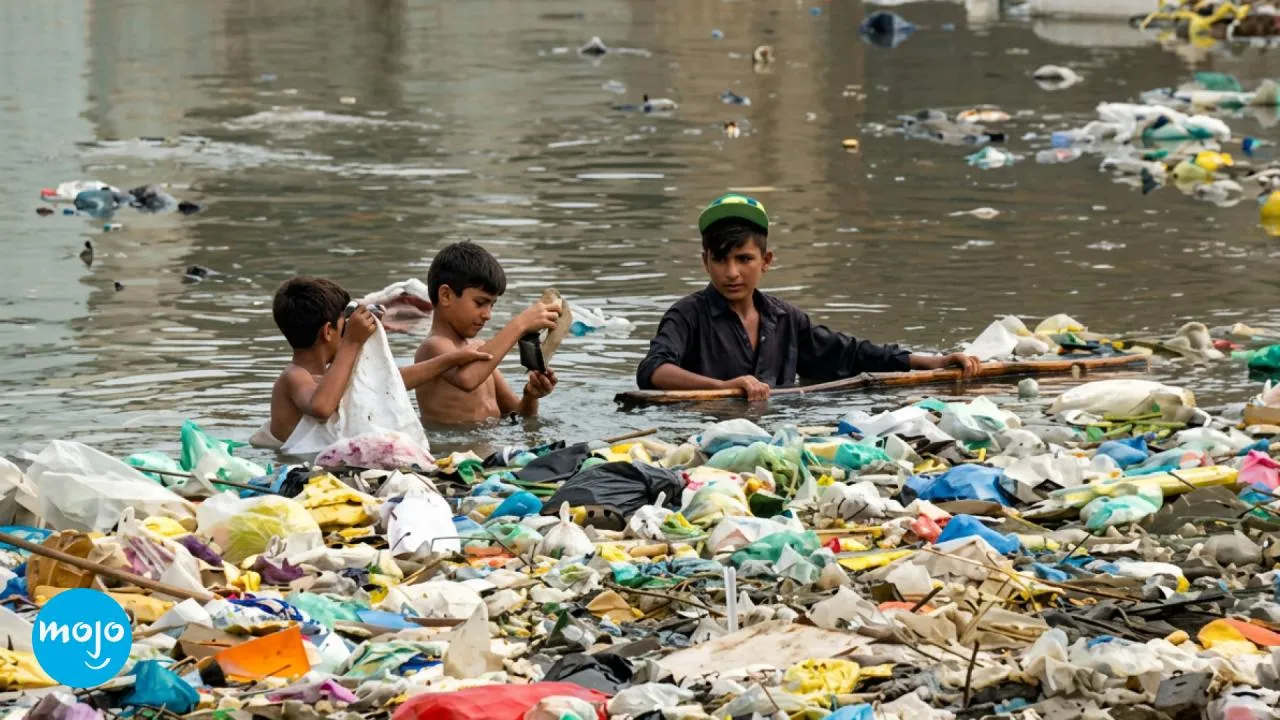
For decades, it’s been incorporated into practically every aspect of our lives. It’s widely recognized that plastic has had a disastrous effect both on our health and in the environment — and it’s likely only going to get worse from here. Since 1950, over 9.2 billion metric tons of the material have been produced. Since it degrades slowly, most of it still exists in the oceans, landfills, and even our bloodstreams. If changes aren’t implemented globally to reduce plastic production and usage, then the amount of pollution could triple by 2040. Luckily, there are organizations dedicated to removing it from our oceans. However, with so much still being produced annually, the current efforts could just be putting a band-aid on a bullet wound.
Mass Job Displacement via Automation
Throughout history, advances in technology have cost people in some fields their occupations. In the modern era, that advancement has been AI — and there’s a chance it could displace more workers than ever before. According to a recent analysis, automation has caused a net 16,000 jobs per month to be cut over the last year alone. So far, this has primarily affected white-collar industries, such as marketing and finance. It has also had a significant effect on entry level positions, with those offers having decreased by over 30% across the United States and United Kingdom. The unemployment rate has been steadily climbing. If nothing is done to curb it or automation from ramping up, then the consequences on the global economy could be severe.
AI Misinformation Rendering Digital Evidence Obsolete
For generations, humans have relied on photography, audio, and video to serve as foolproof evidence. Advancements in AI generated content have threatened this, due to it becoming so realistic that some people can no longer tell what’s real and what isn’t. Deepfakes have already had a negative impact on several aspects of society, from them being presented as proof in court to AI-generated news websites being created en masse. For the first time, people can’t automatically trust what they see with their own eyes. As the technology continues to improve, we may have to do a complete overhaul on some of our longest-standing institutions.
Increased Political Polarization
There’s a difference between disagreement and tribalism. Each day, we move closer to the latter. In recent years, more people on either side of the political spectrum have become more extreme in their ideologies. This has already had a significant effect, with one study finding that polarization has increased globally. It’s been found to fuel discontent towards democracy and resentment between individuals. It also appears to be cyclical in nature, which has created a neverending ourboros of strife. Some studies have even shown that it's created and pushed by politicians who thrive from the negative response, with the goal of causing further division. It doesn’t seem like there’s an end in sight, and if it continues to worsen, it could lead to increased violence.
Wealth & Income Inequality Gap Increasing
While there has always been an imbalance between the rich and everyone else, it has become even more evident. Around the world, the gap in finances is rivaling rates from the early 20th century. In the United States alone, the economy has rapidly turned into a system that benefits the upper class and causes the working class to fall further behind. This worsened during financial recovery following COVID-19, which caused the worst wealth inequality in a century. The gap doesn’t seem to be closing any time soon, which in the States could cause increased debt and a stagnant marketplace. With the world’s first trillionaire having been announced, there are increased fears that we may have officially crossed the line into plutocracy.
Resurgence of Authoritarianism
Those who do not learn history are doomed to repeat it. This exact adage is being played out in real time, with the resurgence of authoritarianism around the world. According to a 2026 analysis from Freedom House, dozens of countries have experienced declines in democracy in the past year. This means that a significant portion of the population lives in a country deemed “not free”. Even countries like the United States that pride themselves on personal freedoms have started to see what’s being described as a descent into authoritarian practices, with plans like Project 2025 looking to permanently enforce Conservative policies. With totalitarianism increasing around the world, there could come a day where we see an erosion of freedom entirely.
Global Freshwater Scarcity
It’s well known that it’s one of the most crucial resources, both for the environment and our health. Yet, freshwater is rapidly becoming more and more limited. Data has shown that since 2002, at least 75% of the world’s population live in countries with a steadily decreasing amount. That’s become worse in recent years, with the shortage becoming so severe that some aquatic systems may never fully replenish. The development of data centers across the United States has also exacerbated the issue, as they use millions of gallons per day and contaminate the current supply. With over a million people perishing per year from a lack of safe water so far, there’s no telling how high that number will skyrocket as the problem worsens.
Climate Change Acceleration
While some of the other entries on this list are issues that may arise, this one has been apparent for some time. Since the 1960s, scientists have known that human activity has an impact on climate change, and have spent decades warning about it. Things have only gotten worse, and it seems that may continue indefinitely. One 2026 investigation found that global temperatures have been rising at a more rapid rate than they were a decade ago, leading experts to fear that the threshold set by the Paris Agreement will be crossed. If — or when — that occurs, the effects will be irreversible. Sea levels will rise, species around the globe will be wiped out, and society as we know it will be permanently altered.
Which of these problems do you think is going to be the most consequential? Let us know in the comments below!