10 Historical Disasters Caused by One Person
10 Historical Disasters Caused by One Person
Welcome to WatchMojo, and today we’re looking at catastrophes with lasting consequences that were caused by one person’s actions, decisions and policies.
Henry Ford
Fordlândia & the Amazon’s Deforestation
A rubber plantation the size of Tennessee dropped into the Amazon to prove one man's stubbornness could beat a jungle. In 1927, Henry Ford struck a deal for 2.5 million acres along Brazil's Tapajós River, breaking Britain's grip on rubber. He never consulted anyone who understood tropical agriculture. Trees were planted in tight rows instead of the scattered pattern that protects wild rubber from blight, guaranteeing infestation. Ford also imposed American customs and strict workplace rules on Brazilian workers, fueling resentment. In 1930, tensions erupted into a violent revolt. Despite everything, the plantation never turned a profit and was abandoned in 1945. Historians trace the region's later industrial-scale deforestation, including today's soy expansion, back to the "plantation logic" Ford introduced.
Mengistu Haile Mariam
Ethiopia's Red Terror
After Ethiopia's 1974 revolution, the Derg military junta seized power, with Mengistu Haile Mariam among its officers. Promising a socialist future, he maneuvered to eliminate his rivals, and by 1977 stood as the Derg's undisputed leader. Modeling his campaign on Lenin's Russian Civil War tactics, Mengistu believed violence was necessary to crush counterrevolutionaries and secure Marxist-Leninist rule. That ideology unleashed one of Africa's deadliest purges. Security forces and armed militias arrested, tortured, and executed thousands without trial, leaving bodies in public streets as warnings. Families were sometimes forced to pay for the bullets before reclaiming relatives' remains. Combined with forced resettlement and collectivization, his rule devastated Ethiopia. Tens of thousands died before Mengistu fled in 1991. In 2006, he was convicted of genocide in absentia.
Qin Shi Huang
Burning of Books & Burying of Scholars
Not every historical disaster is measured by bodies alone. Some erase knowledge itself. Around 213 BC, China's first emperor, Qin Shi Huang, ordered the burning of books that openly challenged his rule, sparing mainly works on agriculture, medicine, and divination. The policy, proposed by his chancellor Li Si, sought to eliminate rival ideas and enforce ideological conformity across the newly unified empire. The following year, according to traditional accounts, after being deceived by two alchemists, the emperor had hundreds of scholars executed or buried alive. Modern historians dispute the traditional portrayal of the victims as primarily Confucian scholars, though the executions themselves are widely accepted as historical fact. The result? Countless classical texts disappeared, leaving irreversible gaps in China's intellectual heritage.
Napoleon Bonaparte
Invasion of Russia
To force Tsar Alexander I back into compliance with a blockade meant to strangle Britain's trade, Napoleon Bonaparte invaded Russia. That single decision destroyed the greatest army Europe had ever assembled. In June 1812, roughly 600,000 soldiers crossed into Russia expecting a swift victory. Rather than fight decisive battles, Russian forces retreated while burning crops, villages, and supplies behind them. Napoleon eventually captured Moscow, only to find the city abandoned and engulfed in flames. With winter approaching and no peace agreement, he ordered a retreat through freezing temperatures, starvation, disease, and relentless attacks. Fewer than 100,000 troops returned. The catastrophe shattered France's military dominance, encouraged European powers to unite against Napoleon, and marked the beginning of his spectacular downfall.
With European powers marching against him, surely Napoleon stands no chance. Want to find out more? Head to WatchMojo’s 24/7 livestream for things history! Scan the QR code on screen to join us live for nonstop learning!
Mao Zedong
Great Leap Forward
Between 15 and 55 million people died all thanks to Mao Zedong's Great Leap Forward, one of history's deadliest man-made disasters. Launched in 1958, the campaign aimed to transform China into an industrial powerhouse through rapid collectivization and unrealistic production targets. Farmers were forced into giant communes, while millions abandoned fields to produce low-quality steel in backyard furnaces. Fearing punishment, local officials exaggerated harvests, convincing Beijing that grain was abundant. The government continued collecting food from starving communities, leaving entire villages with nothing to eat. Even as famine swept across the country, Mao resisted abandoning his policies and silenced critics. By the campaign's end in 1962, millions had perished in a catastrophe driven largely by political ideology over reality.
Joseph Stalin
The Great Purge & the Gulags
Paranoia became government policy under Joseph Stalin. Determined to eliminate his rivals, Stalin launched the Great Purge. Between 1936 and 1938, the Soviet leader accused military commanders, Communist Party officials, intellectuals, writers, and ordinary citizens of imagined conspiracies against the state. Secret police arrested millions, extracting confessions through intimidation and torture before carrying out executions or sending prisoners to the Gulag system of forced labor camps. At least 750,000 people were executed during the purge alone, including three of the Red Army's five marshals. The consequences reached far beyond the purge itself. By decimating the Soviet military's experienced leadership, Stalin left the Red Army dangerously weakened on the eve of World War II. The fear and repression he created scarred Soviet society for generations.
Pol Pot
The Cambodian Genocide
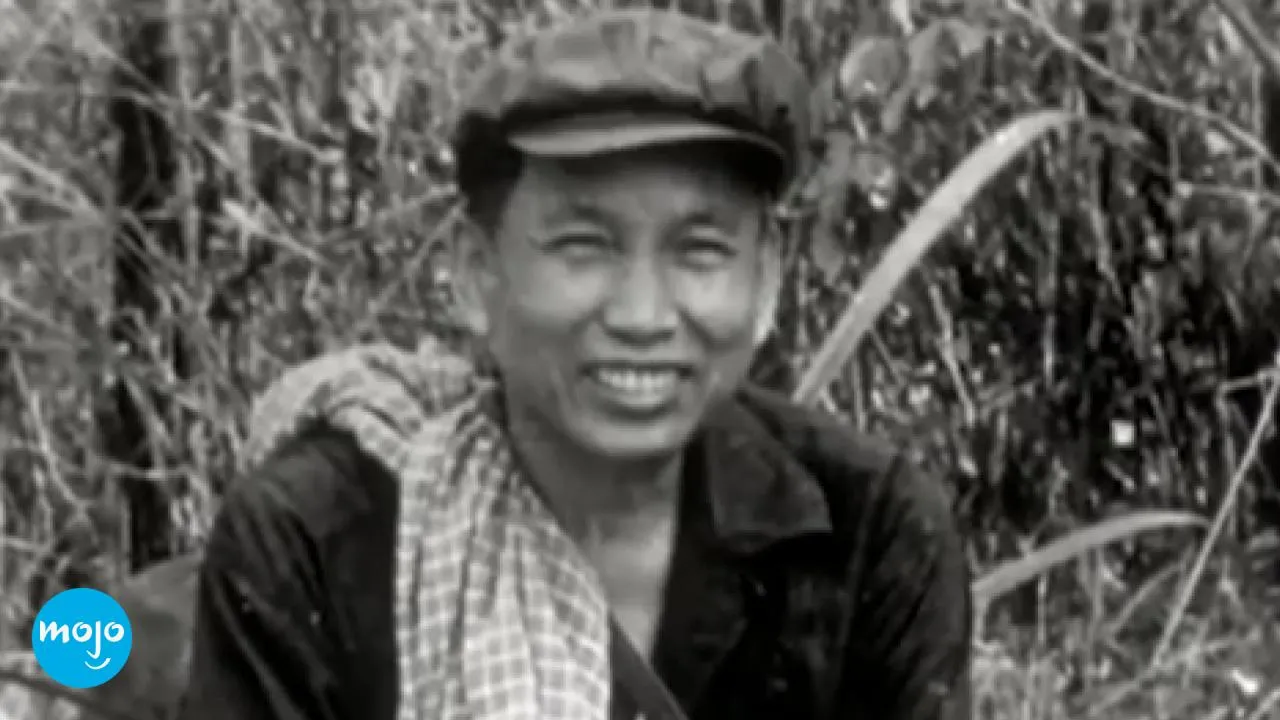
When the Khmer Rouge captured Phnom Penh in 1975, Pol Pot declared that Cambodia would begin at "Year Zero." Determined to create a classless agrarian society, he emptied cities at gunpoint and forced millions into rural labor camps. Intellectuals, religious leaders, ethnic minorities, and even people suspected of disloyalty were imprisoned, tortured, or executed. Exhaustion, starvation, disease, and mass killings became daily realities as the regime dismantled schools, hospitals, and basic institutions. By the time Vietnamese forces overthrew the Khmer Rouge in 1979, an estimated 1.5 to 2 million Cambodians, roughly a quarter of the country's population, had died. Although the regime later collapsed, its legacy of trauma continues to shape Cambodia through the lives of survivors and the generations that followed.
Leopold II
Congo Free State Atrocities
King Leopold II of Belgium never ruled the Congo as a normal colony. He owned it as his personal possession. Under the Congo Free State, established in 1885, officials and private companies extracted rubber and ivory through a regime of forced labor, hostage-taking, mutilation, and executions. Villages that failed to meet impossible quotas were often burned, while families were terrorized into compliance. Millions suffered from violence, starvation, disease, and population collapse as the system devastated entire communities. Although historians debate the exact death toll, many estimate that around ten million people died under Leopold's rule. International outrage eventually forced Belgium to seize control of the territory in 1908. Some historians believe the country's ongoing instability can be traced back to its brutal colonial past.
Andrew Jackson
The Trail of Tears
One signature on a law changed the lives of tens of thousands of Native Americans forever. In 1830, President Andrew Jackson championed the Indian Removal Act, allowing the federal government to negotiate the relocation of Native tribes living east of the Mississippi River. Although some removals involved treaties signed under intense pressure, many Indigenous communities fiercely resisted. Despite a Supreme Court ruling recognizing Cherokee sovereignty, Jackson continued pursuing removal. Between 1830 and 1850, about 60,000 Cherokee, Chickasaw, Choctaw, Muscogee Creek, and Seminole people were displaced from their ancestral homelands. Disease, hunger, and exposure claimed thousands of lives during the forced marches collectively remembered as the Trail of Tears. Today, many historians regard the policy as an act of ethnic cleansing.
Adolf Hitler World War II & the Holocaust
After taking power in Germany in 1933, Adolf Hitler pursued an aggressive expansionist agenda, violating international treaties and rearming the nation for war. His invasion of Poland on September 1, 1939, triggered World War II as Britain and France declared war two days later. The conflict eventually spread across Europe, Africa, Asia, and the Pacific, claiming an estimated 70 to 85 million lives. Even as the war consumed much of the world, Hitler also pursued the Holocaust, driven by his belief that the so-called Aryan race was superior. Jews, Roma, disabled people, political prisoners, Soviet POWs, and others he deemed inferior were systematically persecuted and murdered. All thanks to one man’s actions and ideology, millions lost their lives in one of history's greatest genocides.
Which of these individuals is the worst of them all? Let us know in the comment section.

