10 Games That Were NOT Worth the Long Wait
10 Games That Were NOT Worth the Long Wait
Welcome to MojoPlays, and today we’re looking at games that took too long to be released, and left a lot of players disappointed when they eventually did. To be clear, we’re not saying all of these games are bad. But with how long their development periods were, it’s only natural that we were all expecting higher quality.
“The Last Guardian” (2016)
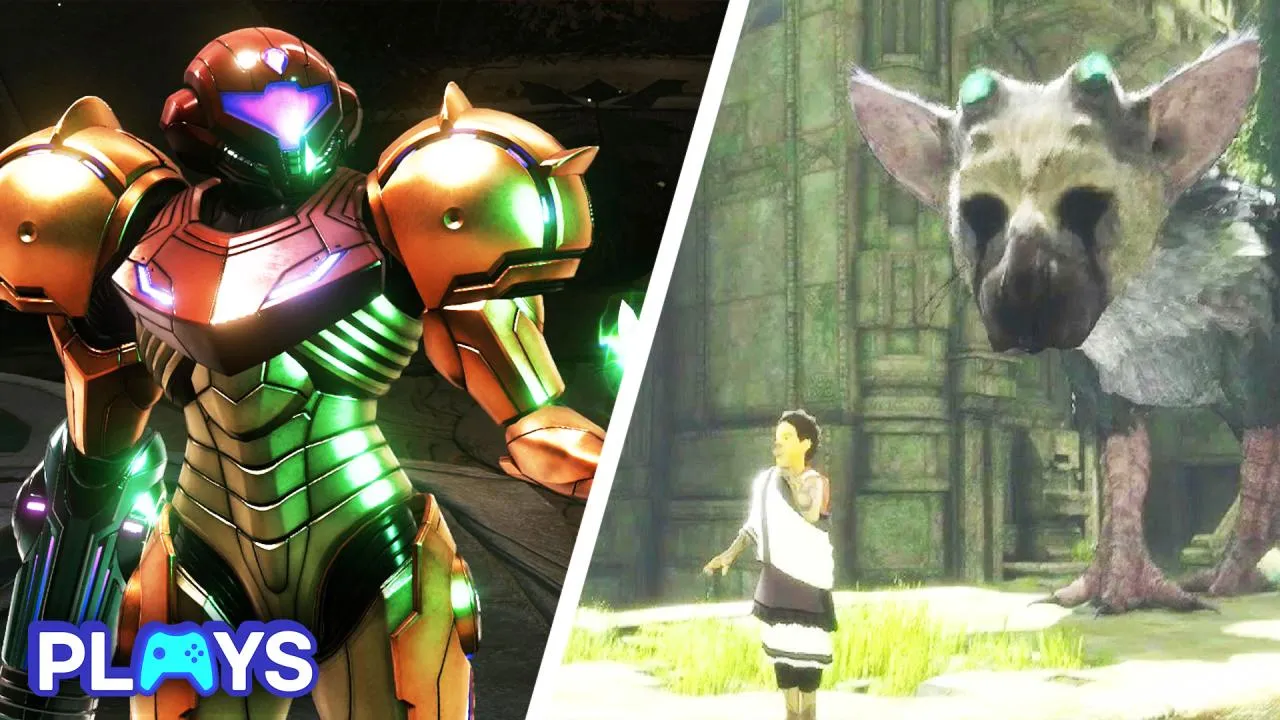
Coming from the same team behind “Ico” and “Shadow of the Colossus,” there was a significant amount of hype behind “The Last Guardian.” Development began in 2007, with its official reveal coming at E3 2009. Unfortunately, work was slow. The team had a clear vision, but the technology of the PS3 couldn’t match it. And so, development eventually switched over to the PS4. Sony stayed quiet about the game for several years, leading many to believe it had become vaporware. But it reappeared at E3 2015 before finally releasing the following year, nearly a decade after development began. Most agreed that it was visually beautiful, but the thing that it’s most remembered for now is the horrendous AI of your giant animal companion, Trico. We get that forming a new bond between boy and beast should take time and effort. But when your game’s legacy is defined by players actively fighting against its most fundamental design concept, you might have messed up.
“Metroid Prime 4: Beyond” (2025)
In 2017, “Metroid” wasn’t in a great place. The reviled “Federation Force” released the previous year. And before that, the series had been dormant following 2010’s “Other M.” So, when Nintendo announced a new “Metroid Prime” game that year, fans were understandably ecstatic. But in early 2019, Nintendo revealed that development had restarted, and that Bandai Namco had been replaced by the developer of the original “Prime” trilogy, Retro Studios. After that came a few long, silent years with scarcely any updates. Although “Metroid” did get some love with the release of “Dread” and a remastered version of the first “Prime,” nothing compared to the level of excitement for “Beyond.” Then the game was released, and it was…okay. There were elements of greatness in its mechanics, visuals, and level design. But there were also glaring flaws, like the dull, empty Sol Valley desert, or some of the chattier NPCs. For as long as the wait was, a lot of players weren’t content with simply “okay.”
“Too Human” (2008)
Developer Silicon Knights began working on “Too Human” in 1999 for the PlayStation, and announced it at that year’s E3. But the game wouldn’t actually see release until nearly a decade later. This was because the studio entered an exclusive partnership with Nintendo, and so it was reimagined for the GameCube. But with more time and resources spent on other games for the platform, “Too Human” would switch consoles and publishers again when Silicon Knights entered a partnership with Microsoft in 2005. It still didn’t make its planned 2006 release window. It came out in 2008 to some truly lukewarm reviews. Muddy visuals and a clunky control scheme made it hard to enjoy the world it was trying to set up; a blend of sci-fi and Norse mythology. It’s mostly forgotten now, if not for the factoid that it was used in a lawsuit that eventually led to the studio’s bankruptcy, as it was found they had stolen code from Epic's Unreal Engine 3.
“Daikatana” (2000)
John Romero is responsible for some of the most important games of all time, having been a key figure behind the creation of id Software’s “Doom” and “Quake.” In 1996, he left to co-form his own studio, Ion Storm, and announced its first game, “Daikatana.” If you’re a shooter fan, and have played the games Romero worked on, you can understand how excited people were to get something new from him. While the game’s development period is shorter than others on the list, as it was released in 2000, four years was an awfully long time back then. A lot of issues stemmed from high employee change over; not just of general staff members, but of several of the studio’s co-founders. Other technical issues caused delays, and an overly macho marketing campaign about Romero making us his bitch overshadowed the actual game. When it did release, it was heavily criticized for dated visuals, poor AI, and repetitive gameplay. And it was a financial bomb to boot; a far cry from Romero’s past titles.
“Ultima IX: Ascension” (1999)
The RPG genre owes a lot to the “Ultima” series, which was extremely popular with PC players throughout the 80s and early 90s. But after the release of “Ultima VIII” in 1994, fans had to wait five whole years for another. The team planned to address criticisms of the previous game while also going back to basics. Coupled with the release of “Ultima Online” and multiple staff exits over the years, work was slow and arduous. By the time it was released, the game had reportedly gone through four separate versions. And even then, developer Origin Systems objected to its release date as the game wasn’t finished, but EA rushed it out the door. Needless to say, it didn’t perform well due to the many bugs and a lack of narrative clarity, even ignoring the history of the other games. The series essentially died here; EA canceled future projects, and forced Origin to only continue work on “Ultima Online,” until they closed the studio in 2004.
“Spore” (2008)
Will Wright, creator of “SimCity,” has built his career and reputation on designing incredible God sims. Not each one has landed, though. And 2008’s “Spore” is one that fell flat. Wright began working on the game in 2000, when it was known as “SimEverything.” Over the years, it grew into the more creature-creation title that players are familiar with. Although work on the game wasn’t secret, the public didn’t get their first look at “Spore” until GDC 2005. While there wasn’t much drama behind its development, just a team taking their time, diehard “Sim” fans still had to wait eight years to play it. What they got was much more simplistic, at least in terms of gameplay and mechanics, than what they were expecting. “Spore” was criticized for being shallow and dull. More importantly, players took issue with EA’s egregious DRM practices. Most felt it wasn’t worth the long wait, especially given Wright’s caliber.
“Crackdown 3” (2019)
“Crackdown” was never incredible, but the first two games still offered a lot of enjoyment. The second game came out in 2010. And a third entry was announced at E3 2014. Unfortunately, “Crackdown 3” would suffer numerous setbacks that would be hard for any game to bounce back from. When it was revealed, Microsoft hyped it up, boasting about how it would feature destructible environments the likes of which players had never seen before thanks to the Xbox One’s cloud software. It was originally meant to release in 2016, but was hit by numerous delays. This was from a mixture of the new tech, as well as a lot of staff changeovers, including the exit of Cloudgine, the company behind said new tech, in 2018. When anyone who still cared got to play it in 2019, they found it to be fairly generic, with that hyped-up level of destructibility not even helping that much.
“Aliens: Colonial Marines” (2013)
Even today, a video game sequel to “Aliens” focusing on the marines sounds pretty damn cool. Unfortunately, we know for a fact that it wasn’t. Sega enlisted Gearbox to develop the game in 2007. But as we know, it didn’t release until 2013, and is still considered one of the most disappointing games of the last 15 years. Gearbox is mostly to blame; the studio worked on other projects instead, reportedly using resources meant for “Colonial Marines,” and finding success with 2009’s “Borderlands.” Development was outsourced in 2010 to another studio, TimeGate, which only caused more issues as Gearbox wasn’t thrilled about the studio’s work when it came back in 2012. With no option to ask for another extension, since they had been “developing” it since 2007, Gearbox opted to create a flattering trailer to generate hype and try to fix as many issues as possible in the nine months before its release. Of course, that meant a ton of bugs, laughably bad enemy AI, and dated visuals that retroactively caused a lawsuit due to the misleading trailer.
“Duke Nukem Forever” (2011)
You can, and probably do, consider “Duke Nukem Forever” to be the poster child of development hell. And it is arguably the worst case scenario for a game making it out alive. It was announced in 1997, a year after “Duke Nukem 3D” became a huge hit. But just about everything that could go wrong did. Developer 3D Realms ran into every issue, from a lack of direction to understaffing and mistreatment of employees, to struggles with new engines and changing fads in the gaming industry. By 2009, the studio had run out of money. And publisher 2K went through a few other developers, the final being Gearbox, before the game was released in 2011. Between the multitude of dated jokes, the stiff controls and mechanics, and repetitive missions, the general consensus was that it was far too little, far too late.
“Skull and Bones” (2024)
It’s hard to say if anyone was actually anticipating the release of Ubisoft’s “Skull and Bones.” But the facts remain that it did take forever to come out, and it certainly wasn’t worth the wait. It was originally envisioned as an expansion to “Assassin’s Creed IV: Black Flag,” and entered development in 2013. However, it then became a standalone project, and was officially revealed at E3 2017. It would still be years until anyone got their hands on it, though. It went through multiple other changes, and caused Ubisoft nothing but headaches. Not only did the game’s development lack direction, it also couldn’t be canceled, as Ubisoft’s Singapore studio had received government funding. It reportedly cost the company $200 million. And from critics to players, not many seemed to care when it finally launched in 2024.
What game left you disappointed after a long wait? Be sure to share your thoughts in the comments!
