10 Eerie Dead American Malls (& What Went Wrong)
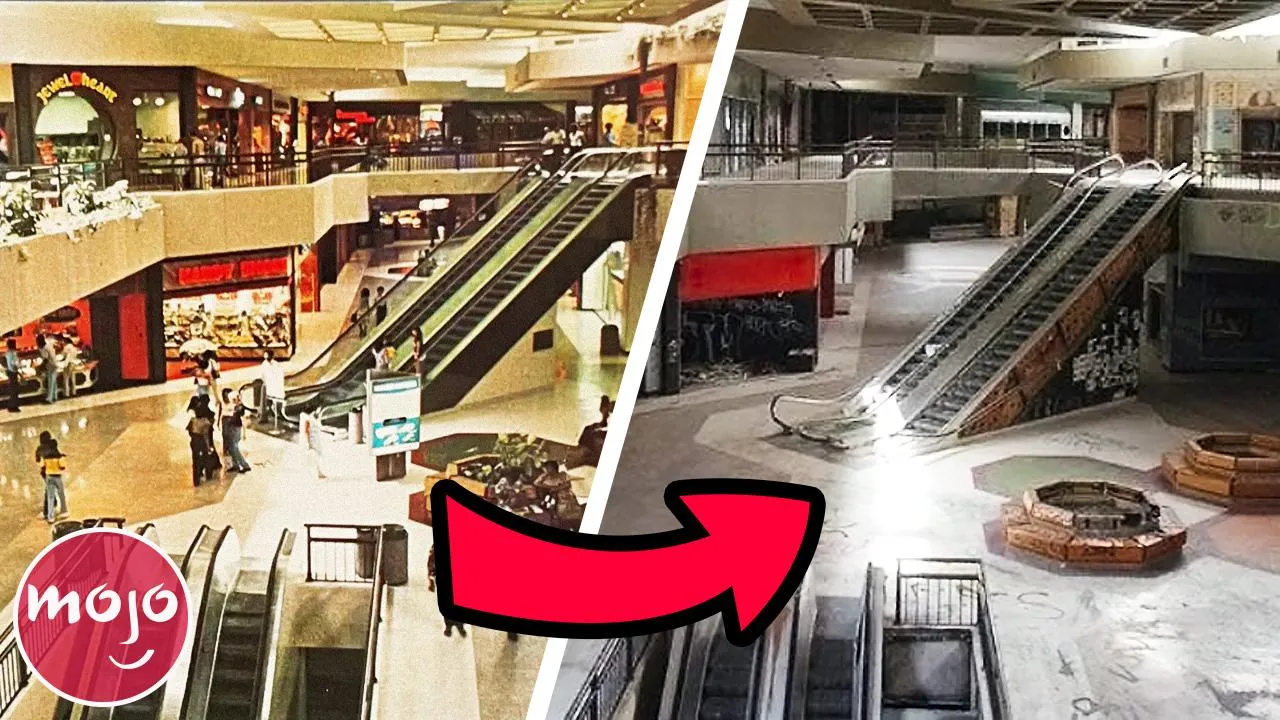
10 Eerie Dead American Malls and What Went Wrong
Welcome to MsMojo, and today we’re looking at infamous stories behind U.S. malls that were tragically left to ruin.
Forest Fair Mall
Forest Park, Ohio
Almost immediately after opening in 1988, the Forest Park Mall seemed doomed. And yet, it survived decades of store closures, competition, redevelopments, and regular changes of ownership and name. A series of code violations in 2020 prompted county officials to actually request investors in the mall’s demolition. Two years later, the “Forest Fair Village” officially shut down as part of the Ohio Building Demolition and Site Revitalization Program. And the building still had stores open to the public up until seven months before demolition began in 2025! The establishment endured just about everything that can go wrong with a mall. While its longevity was impressive, 37 years of decline was a bleak spectacle for Forest Park locals.
Carousel Mall
San Bernardino, California
The Central City Mall opened in 1972 to revitalize San Bernardino through competition with the Inland Center. It in fact became a favorite hangout for gangs and a pawn in business schemes. Things only got worse after a family-focused renovation brought a new name and a carousel installation in 1991. The area continued to get more dangerous, while the Inland Center continued to dominate the competition. Years of store closures and vandalism ultimately led to the Carousel Mall shutting down in 2017, and becoming a sort of monument to the follies of California’s urban renewal efforts. After six years of yet more red tape and financial disputes, the building was demolished in 2023.
Metro North Mall
Kansas City, Missouri
From 1974 to the early 2000s, the Metro North Mall was the place to be in Kansas City, Missouri. And then another place opened in 2004. The open air shopping center Zona Rosa split shoppers and poached many of Metro’s tenants, including anchor store Dillard’s. This heated competition coincided with shifting consumer trends, the Great Recession, and the death of Metro’s founding co-owner. The historically ambitious mall thus went under in 2014. In the three years before it was demolished, the infamously rapid urban decay seemed to represent the tragic decline of a consumer institution. While working on projects about dead malls, photojournalist Seph Lawless said the Metro was “by far the creepiest place [he’d] ever step foot in.”
Century III Mall
West Mifflin, Pennsylvania
From the ruins of a slag dump rose one of the largest malls in the world in 1979. The Century III Mall was a triumph until its mass became more of a burden. Throughout the 2000s, stiff competition and shopping habits devastated the institution, whose size made it difficult to maintain. The mall’s resale value plummeted until it was bought by Moonbeam Capital Investments in 2014, then scheduled for renovation after it was declared uninhabitable five years later. But at the last minute, Moonbeam decided to declare bankruptcy. True to its name, the Century III Mall was a quintessential retail advancement that died a quintessential death for modern shopping. Demolition on the once-again-decaying property began in 2025.
Lincoln Mall
Matteson, Illinois
It's hard enough for a mall to make it these days without misguided ownership. The Lincoln Mall was a Chicagoland hotspot after it opened in 1973, only to be devastated by the arrival of major standalone business in Matteson in the ‘90s. The outdated leviathan gradually declined, but didn't go down easy. Freehold Management launched a massive redevelopment effort just before the market crisis of 2008. The project continued to drag after Michael Kohan took over in 2012, with millions in outstanding fines and back taxes. The city then sued the mall over safety concerns, took ownership, and shut it down in 2015. The Lincoln Mall was promptly razed, after years of de facto condemnation under basic economics and dangerous mismanagement.
Northridge Mall
Milwaukee, Wisconsin
Not long after Milwaukee welcomed the Northridge Mall in 1972, protests killed a planned freeway that would have eased access to it. Customers were further driven away by the infamous murder of Barbara Anderson in ‘92. Rising crime, competition and economic uncertainty finished off the mall in 2003, but ownership and legal disputes delayed demotion for over 20 years. The mall was so severely neglected that it famously filled up with snow. YouTuber Casey Neistat did find some joy in this tragedy when he hosted a winter wonderland for children in 2017. But in ‘25, after Milwaukee was given a grant for demolition, the Northridge Mall was put out of its misery.
Rolling Acres Mall
Akron, Ohio
Few malls exemplify the collapse of the consumer phenomenon as popularly as the Rolling Acres Mall. It opened in 1975 to massive popularity in Greater Cleveland, ultimately boasting 150 operational stores. Following a slump in the ‘90s, a series of new owners chased modernization, but literally couldn’t even keep the lights on by 2008. At least the decay of the property brought some novelty to stores that stayed open until 2013. Mostly, it made the once-thriving Rolling Acres a national curiosity that perfectly represented the death of the American mall. And that was before the final insult. Shortly after the mall’s demolition, the online retail leader Amazon bought the lot for a distribution center.
Hawthorne Plaza
Hawthorne, California
Los Angeles County initially embraced the Hawthorne Plaza as a staple after it opened in 1977. But growing crime rates and shifting demographics bred prejudice in the middle-class consumer base, especially after the L.A. riots of ‘92. Competition sealed the Plaza’s fate in 1999, but it survived demolition through repurposing. The defunct mall has long been a popular filming location for movies, TV shows and music videos that occasionally bring the place back to life. In truth, it is so dilapidated and vandalized that a number of redevelopment plans have fallen through over the years. The state of the Hawthorne Plaza off-camera may say more about its demise than the movies.
Dixie Square Mall
Harvey, Illinois
Some malls might be more valuable dead than alive. The Dixie Square Mall was a staple of Chicagoland shopping after opening in 1966, only to become overrun with crime during Harvey’s economic downturn the following decade. Three people were killed within a year! This led to a rapid loss of stores, until the mall closed in ‘78 after a desperate renovation project. Some interest was renewed after Dixie was used as the filming location for the destructive car chase in “The Blues Brothers.” Even more popular was its association with urban decay, which inspired tourism along with vandalism. Delinquency at Dixie Mall was suddenly good for business in Harvey. Nonetheless, it was demolished in 2012, 34 years after shutting down.
Randall Park Mall
Cleveland, Ohio
Developer Edward J. DeBartolo envisioned “a city within a city” with the Randall Park Mall. It opened in 1976 as the self-proclaimed largest shopping center in the world, and was a powerhouse for Cleveland’s economy before DeBartolo’s passing in ‘94. Tenants then rapidly fled as his pride passed through and was broken up by several owners. The mall thus became a drain on the city’s economy, until it was finally shut down in 2009 and demolished six years later. The downfall of an establishment that massive was a historical marker for American consumer trends. The irony in Amazon building a distribution center on the site of the Randall Park Mall doesn’t exactly bode well for the industry at large.
What are some other bittersweet memories and cautionary tales in the world of dead malls? Open up in the comments below.

