Top 10 Creepiest Documentaries That Were Filmed in Secret
#10: “Life of Crime” trilogy (1989-2020)
Even the boldest exposés in HBO’s “America Undercover” series were typically made through the proper channels. “One Year in a Life of Crime” was one notable exception. Jon Alpert used hidden cameras to follow the lives of two young criminals throughout 1984. This unique intimacy with the mean streets of Newark, New Jersey exposed the journalist to tremendous danger. It also graphically exposed audiences in 1989 to street crime, violence and even substance use. 1998’s “Life of Crime 2” catches up with Alpert’s tragic associates while adding a third. By the end of “Life of Crime, 1984-2020,” they are all dead. The trilogy pushes legal and ethical boundaries further than most true crime profiles, but is considered worth the discomfort.
#9: “The Look of Silence” (2014)
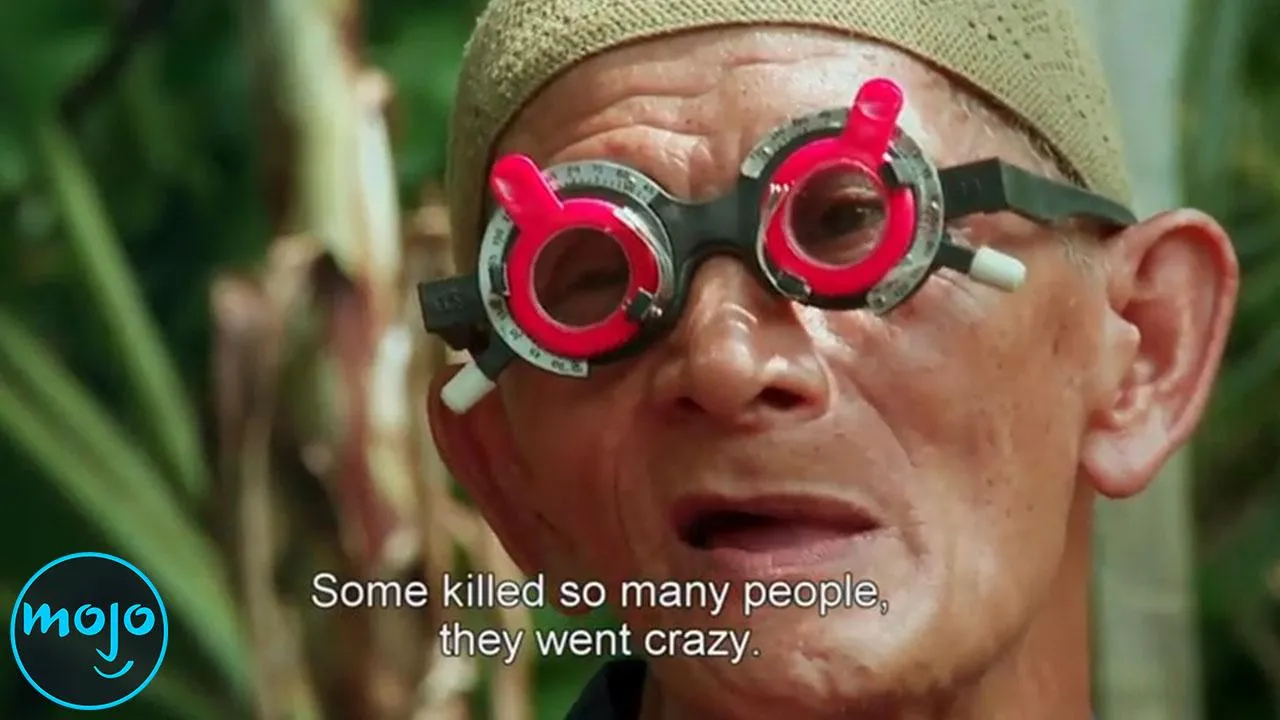
Joshua Oppenheimer extracted harrowing accounts from perpetrators of Indonesia’s anti-communist purge for 2012’s “The Act of Killing.” This inspired an optometrist identified as Adi Rukun to pursue more information. “The Look of Silence” secretly follows him as he prepares to interrogate his brother’s killers during routine eye exams. He and most of the crew are kept anonymous to protect them from these dangerous people. This security also allowed Oppenheimer to further examine a culture of covering up, if not justifying atrocities. If “The Act of Killing” was thought-provoking in its humanization of monsters, “The Look of Silence” is more eerie in its approach to their victims. Either way, it's hard to look away from Oppenheimer’s duplet.
#8: Kumaré (2011)
Vikram Gandhi came out of his Hindu upbringing with a skepticism about religion and how Western culture appropriates Eastern. Thus, the Punjabi American adopted a stereotypical persona and started his own New Age religion to expose an industry in “Kumaré.” It’s wild what he’s able to get his followers to do with promises of spiritual fulfillment and the assumption that they’re not being filmed for public viewing. Oftentimes, however, Gandhi’s hoax exposes very serious exploitation of people’s desperation for answers in life. Made easily available for free viewing, “Kumaré” depicts fraudulent religious awakenings with the noble intention of deconstructing that deception. It’s still irreverent enough to acknowledge that the process gets pretty awkward.
#7: “Of Fathers and Sons” (2017)
Covert Syrian journalists risked their lives to smuggle out the horrors of civil war for films like “City of Ghosts.” With “Of Fathers and Sons,” Berlin-based Talal Derki risked his life to infiltrate that horror. He posed as a Salafi sympathizer in order to intimately profile the family of a jihadist. It’s surreal to see a man be such a kind father and host in one moment, then wage war in the name of terrorism and hatred in the next. Derki never truly sympathizes with this cause, but shows how ingrained it is in ideologues and their family tradition. The Western viewers for whom “Of Fathers and Son” was made was praised its radical empathy, no matter how distressing the cognitive dissonance.
#6: “Willowbrook: The Last Great Disgrace” (1972)
Journalist Geraldo Rivera’s big break went inside the Willowbrook State School on Staten Island. The staff at this institute for the intellectually handicapped didn't want the world to know about its conditions, save for a whistleblower who snuck Rivera through the halls. “Willowbrook: The Last Great Disgrace” found patients subjected to squalor and direct abuse, including experiments with deliberate hepatitis outbreaks. These deeply disturbing images earned Rivera a Peabody Award and led to Willowbrook’s eventual closure. The school has since faded into urban legends around New York, including the bogeyman figure Cropsey. The 2009 documentary of the same name incorporates Rivera’s exposé to contextualize how it traumatized the community. Never mind the horror it leaked to the whole world.
#5: “Dark Days” (2000)
British immigrant Marc Singer was periodically living in Manhattan’s Freedom Tunnel when he decided to document its homeless community. This was done without permits and by illegal means, which became more serious when a train rerouting project prompted forced evictions. “Dark Days’” vision of an empathetic portrait of homelessness often went beyond the pale in its frank depiction of plight. It was even shot in eerie monochrome, not because of an artistic choice, but because of the inexperienced filmmaker’s limited means. Despite the controversial creep factor in all of this, the success of “Dark Days” did more than launch Singer’s career as an activist documentarian. He succeeded in his mission to afford his friends a better life and public sympathy.
#4: “Dominion” (2018)
Animal rights activist Chris Delforce used hidden cameras to observe the Australian pig farming industry in 2014’s “Lucent.” He then incorporated drones to expand his exposé on animal agriculture around the world. “Dominion” is two hours of graphic footage of abuse, with dramatic style, celebrity narrations, and the presentation of this horror as businesses as usual for farmers. It wasn't just that community which deemed this approach emotionally manipulative, with little consideration for practical solutions to an overburdened industry. Even those sympathetic to Delforce’s cause say that “Dominion” is simply too much for most viewers to handle. It's certainly way more than the animal agriculture industry would want them to see.
#3: “Tickled” (2016)
Journalist and humorist David Farrier favors stories that tickle the audience. But even his 2016 exposé “Tickle” is bound to give them goosebumps. Farrier and Dylan Reeve got into legal hot water for looking into an industry of “competitive endurance tickling” videos dominated by Jane O’Brien Media. Thus, the New Zealanders went undercover in the U.S. to unearth the shady mindsets and practices that drive this culture. An already quirky subject ends up revealing the darkness in catering to certain niche markets. Farrier would revisit this through the macabre sightseeing industry in the 2020 docuseries “Dark Tourist.” “Tickled” just twists the nerves more than even the filmmakers expected.
#2: “Holy Hell” (2016)
Will Allen was a documentarian for West Hollywood’s Buddhafield community, until he escaped in 2007 over their growing cult tendencies. Nine years later, “Holy Hell” exposed them with three decades’ worth of footage captured. This included new material that Polly Morgan shot from a distance while hiding. Audiences saw things that Buddhafield guru Michel Rostand didn’t want Allen to shoot, as the supposed cult grew more bizarre and aggressive under his god complex. “Holy Hell” is now considered one of the most vivid studies of New Age religion at its most surreal and controlling. As bizarre as the documentary itself is the fact that Rostand’s community is continuing to thrive in hiding in Hawaii.
#1: “Under the Sun” (2015)
There’s a whole industry of undercover investigations into the highly secretive society of North Korea. Perhaps the boldest is “Under the Sun,” which wasn’t officially produced as critical propaganda. Russian filmmaker Vitaly Mansky gained approval to document a family in Pyongyang as their daughter joins the Korean Children’s Union. The citizens’ devotion and mechanical collectivism are uncomfortable enough for an outsider to watch. But Mansky kept cameras rolling in between takes to show how meticulously staged the “documentary” was, and the personality cult surrounding Kim Jong-il’s birthday celebrations. “Under the Sun” is the definitive demonstration of this society’s rigid personal fantasy versus harsh reality. It also demonstrates the importance of documentaries sharing the creepiest realities of our world.
What are some other documentaries that were too bizarre to be filmed through formal routes? Expose this exposé in the comments.

