The Downfall of Married At First Sight
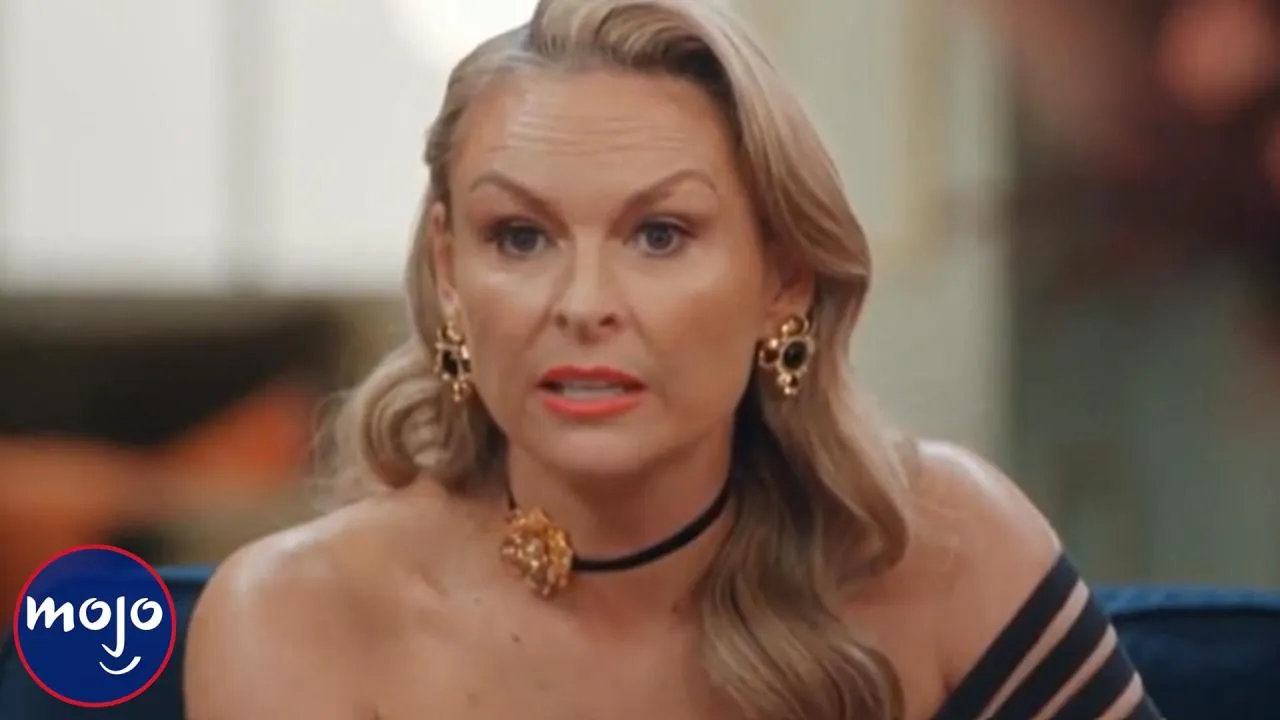
The Downfall of Married at First Sight
Caitlin Johnson
Welcome to WatchMojoUK, and in this video, we’re taking a deep dive into the long, dark history of “Married at First Sight”, Channel 4’s most controversial dating show.
Beginning life as a Danish television show in 2013, “Married at First Sight” debuted on Channel 4 as its more well-known, British iteration two years later. At the start, it was called a “social experiment”, with a panel of experts looking at the pictures and profiles the prospective participants had sent in. It was pitched as the answer to the perilous world of online dating, as the internet pushes us all further apart, despite the lofty ambitions of social media to bring us together when it first emerged. But can a team of experts really tell which couples will last and which won’t?
It isn’t just psychology, either. People were scientifically studied, sending in their DNA and having their genes examined to see whether modern medicine had an answer to matchmaking. It really WAS an experiment at the beginning, something apart from other dating shows – something more reflective that wanted to examine what seemed to be going wrong with modern love. The experts sat around a dinky table and chatted about the matches they were going to make, with the show functioning much like other dating agencies, with the added benefit of genetic sequencing. Singletons were then informed by phone and small weddings were set up at the local registry office between brides and grooms who’d never laid eyes on each other. It’s since been revealed that, much like “Don’t Tell the Bride”, the “Married at First Sight UK” weddings were NOT legally binding – despite the registry office trappings.
After the wedding, they were sent off on a honeymoon. Holidaying together can be a stressful experience for anybody, let alone two people who have only just met, and the cracks often begin to show during what – in a conventional relationship – is one of the happiest times of someone’s life. Upon arriving back at home, they’re forced to live together in a home set up by the production crew, seeing whether they can make their marriage work. The vast majority of the “Married at First Sight” relationships fail, and they fail quickly, though there are exceptions. It wasn’t until the fifth series in 2020 when Owen and Michelle managed to go the distance; the pair are now married with children. But they’re one of only four successful couples as of 2026. At a certain point, you have to wonder whether the “social experiment” has run its course given its alarmingly low success rate.
In the sixth series, however, it lost all pretences of being a real experiment. It still claims to be one, but has lost its documentary stylings to become another big-budget, dramatic dating show, with couples made to live in tiny flats alongside one another while attending regular therapy sessions with the experts. They’re also subjected to intense, group dinner parties, where allegations of infidelity and bad behaviour abound.
But in 2026, after its tenth series, the shine came off. BBC journalists at “Panorama” spent eighteen months working on an exposé after three former participants made allegations that they were sexually assaulted. Two remained anonymous and had their testimonies read by actors, but the third, Shona, talked candidly about her experiences with her husband Bradley. After the experts pointed out that some of his behaviour and language were controlling, the pair were eventually removed after four weeks of the programme. It is, ultimately, not surprising that these issues have arisen, and is arguably more surprising that it took over a decade for anything to come out. Putting two people into an intense, isolated living situation and pressuring them to make a marriage work to a person they met days ago is, clearly, a recipe for disaster. Even in the older series, the experts often blamed the participants for not trying hard enough to make their marriage work, even if the pair decide that they’re ultimately incompatible.
The women did complain to the show about how their husbands were treating them, with one showing physical injuries and explaining that he’d threatened to have acid thrown over her if she tried to end things. But despite speaking extensively to the welfare team, all of the women still felt let down.
Ahead of “Panorama”, the BBC released an article detailing its investigations on the eighteenth of May, giving Channel 4 a chance to respond publicly. This was after journalists had already tried to talk to Channel 4 ahead of the documentary, with Channel 4 claiming that the allegations were “uncorroborated”. However, the situation changed after the programme aired. Channel 4’s boss Priya Dogra immediately apologised to the public, while every episode of “Married at First Sight” was removed from its on-demand service. The accused men, meanwhile, don’t deny that sexual contact happened, but are maintaining that they believed it was consensual. When CPL, the production company behind the show, provided “Panorama” with evidence that proved it had acted appropriately, the evidence actually showed the full details of the complaints the women made. Behind-the-scenes, there was ultimately little denial from CPL or Channel 4 that the incidents had happened, but what CPL wanted to defend was that it dealt with them appropriately.
It was claimed that “Married at First Sight” candidates undergo intense vetting before being allowed onto the show, but if someone has never had any criminal charges or officially-recorded allegations levied against them before, it’s easy to see how vetting would miss that someone might be liable to mistreat someone else. Programme makers were accused of creating “televised abuse”, a show that put women in immediate harm’s way by expecting them to cohabit with a man they hardly knew. The show’s structure also left them isolated, struggling to get any real support. Isolation is a widely known abuse tactic, with abusers often separating their victims from support networks like family and friends so that they can control them; in “Married at First Sight”, this isolation is baked into the entire format, whether there’s any abuse between the couples or not.
Even the healthiest “Married at First Sight” couples will spend the first few weeks of their marriage in a high-octane, emotional environment, surrounded by other people’s dysfunction. Worse, the therapy sessions with the show’s panel of experts are conducted in front of the other couples, giving everybody the opportunity to observe. In any other therapeutic setting, allowing observers would be at best unorthodox, and at worst, malicious, and a clear breach of the patient confidentiality that underlies any real-world therapy relationship.
Major sponsors have pulled out of “Married at First Sight” now, with Channel 4 launching a full investigation into how the show has really been operating. And elsewhere, the Metropolitan Police is encouraging any victims to come forward and make reports of criminal behaviour, so that they can be properly looked into. With the exception of Bradley Skelly, who couldn’t be kept anonymous as his ex-partner, Shona, was the only woman who waived anonymity when talking to the BBC, the other alleged perpetrators are unknown. This is how it should stay in case any of the allegations are taken further and one day end up in a court room.
The scandal has led to renewed calls to review the welfare and aftercare on big reality shows, particularly dating shows. Where previously it was ITV in the firing line over this, due to the deaths of numerous people connected to “Love Island”, now Channel 4 is taking some heat, too. CPL’s own staff have also talked to the BBC in the aftermath, saying that “Married at First Sight” has a, quote, “unhealthy focus on sex”, with members of the crew sometimes taking bets on whether a couple would consummate their marriage on the wedding night. One even went on the record after refusing the offer of more work from CPL to say she hoped the scandal meant the show would finally be cancelled.
Some journalists have now begun to question whether dating shows do more harm than good, and whether gamifying the process of finding love for our entertainment is even ethical. It sometimes seems that the more reality TV tries to grow beyond the exploitative, careless shows of the 2000s, new ways of mistreating and disregarding people are invented.
Only time will tell what Channel 4’s own investigation unearths, whether anybody will press formal charges, and whether “Married at First Sight” will ever return to screens, but we think the results of this self-described “social experiment” are finally in, and show that science-based matchmaking is a fruitless endeavour.
Let us know in the comments what video you want us to do next, and whether you think “Married at First Sight” should be cancelled.
