30 Scariest Moments in Recent World History
- cariest Moments in Recent World History
- eirut Port Explosion
- Assassination of U.S. President John F. Kennedy (1963)
- Munich Massacre (1972)
- Challenger Disaster (1986)
- What Happened At Tiananmen Square (1989)
- Hurricane Katrina (2005)
- Mumbai Attacks (2008)
- Manila Hostage Crisis (2010)
- Tōhoku Earthquake & Tsunami (2011)
- Israel-Iran War (2025)
- Chernobyl Disaster (1986)
- Malaysia Airlines Flight 370 (2014)
- Paris Attacks (2015)
- Great Recession (2007-09)
- Rwandan Genocide (1994)
- Russian Invasion of Ukraine (2022-)
- Year 2000 Problem (2000)
- COVID-19 Pandemic (2020-)
- Cuban Missile Crisis (1962)
- The Events of September 11, 2001 (2001)
- CTA:
30 Scariest Moments in Recent World History
Welcome to WatchMojo, and today we’re looking at moments that didn’t just shock the world, but made people question what might happen next. We are focusing on terrifying events from the mid-20th century onward where sudden disasters to escalating global tensions unleashed fear through uncertainty and destruction.
Camp Fire — 2018
What started as a spark, within hours, became a nightmare. In November 2018, California’s Camp Fire tore through the town of Paradise with terrifying speed. Fueled by dry vegetation and strong winds, the fire spread faster than evacuation orders could keep up. As entire neighborhoods vanished among smoke-choked roads, residents fled the town in a flight for survival. Communication systems failed, adding confusion to an already chaotic escape. The scale of destruction was staggering, with thousands of structures lost to the fiery blaze. More than just the fire itself, the overwhelming speed with which the flames engulfed everything in their path, made Camp Fire an encounter that exposed the vulnerabilities of modern communities when caught completely unprepared.
Operation Desert Storm — 1991
In a moment when the world watched as war unfolded, Operation Desert Storm began in January 1991 with an overwhelming aerial assault on Iraq. Diplomacy deteriorated in real time as advanced military technology lit up the night sky over Iraq. The assault was broadcast globally as the Gulf War escalated and the central conflict began to take shape. Uncertainty surrounded the escalation and fears of chemical weapons and broader regional conflict loomed large. For many, it felt like the beginning of something far bigger. Operation Desert Storm demonstrated the devastating capabilities of modern warfare and how quickly geopolitical tensions can spiral in a historical episode where the future felt dangerously uncertain for the entire world.
Hunga Tonga–Hunga Haʻapai Eruption — 2022
On January 15, 2022, the ocean exploded. With a blast that sent shockwaves around the world, the Hunga Tonga-Hunga Haʻapai volcano unleashed one of the most powerful eruptions witnessed in decades. Atmospheric pressure waves from the explosion were detected thousands of miles away. A towering ash plume from the volcanic eruption disrupted flights and darkened skies, while a tsunami spread across the Pacific. More than just a local disaster, the Hunga Tonga eruption was a planetary scale disturbance. What made it even more unsettling was that despite modern monitoring systems, the eruption struck with little warning in what was a chilling reminder that Earth’s most powerful forces can still wreak havoc beyond our ability to fully predict or control.
2020 Beirut Port Explosion
It was just another day, until it wasn’t. In a single instant, the city of Beirut was shattered when a massive explosion ripped through its port. The blast generated a shockwave so powerful it leveled buildings and shattered windows miles away. Streets turned into scenes of devastation within seconds, overwhelming emergency responders. Hospitals struggled to cope as thousands were injured. The culprit behind the explosion was later determined to be improperly stored ammonium nitrate. This wasn’t a natural disaster. It was the result of human oversight, resulting in a disaster that could have been entirely preventable. The aftermath of the explosion was a portrait of how negligence can unleash catastrophic consequences, turning everyday environments into sites of unimaginable destruction without warning.
North Korea Nuclear Missile Tests
With every launch, the stakes went up, and North Korea had no intentions to slow down. Throughout the 2010s, the country’s consecutive nuclear and missile tests sent shockwaves through the international community. With every successful test, the potential reach of their weapons grew, fueling fears of nuclear escalation. Global leaders issued warnings, while citizens watched anxiously as tensions fluctuated between diplomacy and confrontation. The threat of nuclear proliferation mixed with uncertainty of conflict was a volatile mixture. A single misstep or misunderstanding had the potential to upend a greater crisis, with constant updates amplifying global anxiety. It was a stark reminder that nuclear threats remain a very real and immediate concern.
Myanmar Rohingya Crisis
Sometimes, the scariest moments unfold slowly but no less devastatingly. This was the Rohingya crisis. In the late 2010s, hundreds of thousands and up to nearly a million Rohingya were forced to flee Myanmar amid widespread violence. As families crossed borders in search of safety, communities became displaced. There were too many in too short a time. Refugee camps quickly became overcrowded, creating a daunting humanitarian challenge in the process. The rapid escalation of the refugee crisis and an elusive resolution, to this day, make the Rohingya crisis a moment that has persisted through the years. The crisis highlighted the vulnerability of displaced populations and the challenges of responding to large-scale humanitarian emergencies, showing how instability can spread and deepen with time.
Fukushima Daiichi Nuclear Disaster
When disaster strikes twice, the consequences can be unimaginable. March 2011 is a sobering memory for the Japanese populace. A massive earthquake and tsunami hit Japan, triggering a nuclear crisis at the Fukushima Daiichi plant. As reactors failed and meltdowns began, radioactive material was released into the environment. Uncertainty traveled faster than information across all forms of media and thousands were evacuated. The potent combo of natural and technological disasters simultaneously left the Japanese government reeling. Systems designed for safety at the reactors were pushed beyond their limits and the event exposed vulnerabilities in even the most advanced infrastructure. The Fukushima disaster was a reminder for the world that when multiple crises collide, the results can be far more dangerous than anyone anticipates.
Ebola Outbreak in West Africa
An invisible threat can be the most terrifying of all and between 2014 and 2016, West Africa was witness to this. The Ebola outbreak spread rapidly, overwhelming healthcare systems in various countries including Guinea, Liberia, and Sierra Leone. With a high fatality rate and limited treatment options at the time, fear spread quickly within local communities. Frontline medical workers faced extreme risks while rampant misinformation complicated containment efforts. As sporadic cases began to emerge outside the immediate region of the spread, concerns heightened on the possibility of a global pandemic. The unpredictability of the virus’ spread accompanied by its lethality revealed how unprepared the world can be against fast-moving health crises.
The Boxing Day Tsunami, 2004
The Indian Ocean gave no warning about what was to come on December 26, 2004. A powerful undersea earthquake triggered a massive tsunami that rushed towards the shorelines. Towering waves struck coasts without warning, sweeping away entire communities in minutes. The scale of devastation was almost unimaginable, affecting multiple countries from Thailand to Somalia and from Indonesia to the coast of India. There was very little time for people to react. With no early warning systems in place, many in the public, especially tourists, were caught completely off guard. The tragedy exposed critical gaps in global preparedness against tsunamis while demonstrating the sheer power of nature in a disaster that has left a lasting impact worldwide.
The Bhopal Gas Tragedy
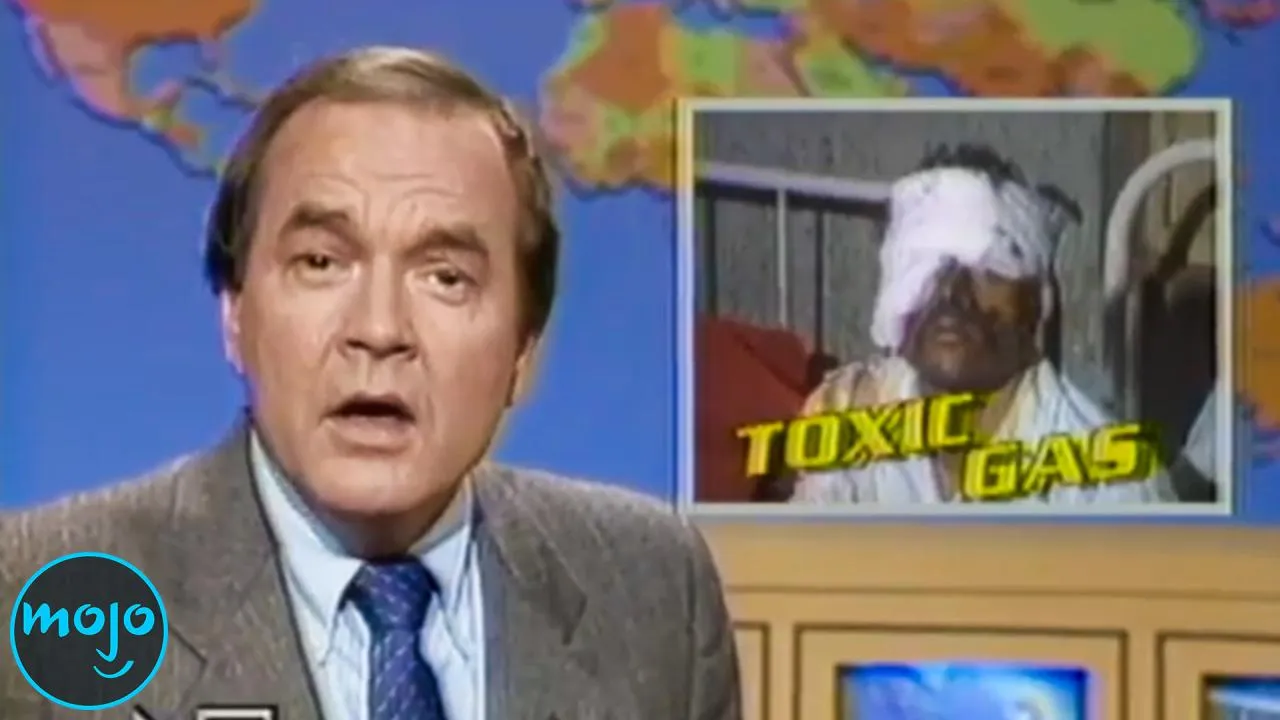
While the city slept, the invisible poison crept about. By the stroke of dawn, Bhopal, India, was changed. In December 1984, a toxic gas leak at the Union Carbide pesticide plant exposed hundreds of thousands to deadly chemicals. The gas caught residents completely off guard as they woke to find themselves struggling to breathe. Everything that followed afterward was nightmare fuel. Panic spread as the fumes began to overwhelm the communities near the plant. Hospitals and emergency services struggled to quell the masses. There was no explosion, there was no warning, just a silent, deadly cloud. The Bhopal gas disaster exposed the dangers of industrial negligence. Survivors today continue to deal with long-term health consequences that also remain persistent in newer generations.
Assassination of U.S. President John F. Kennedy (1963)
November 22, 1963 stands as one of the most infamous dates in American history. On that day, President Kennedy, widely regarded as a youthful and inspiring symbol of national renewal, was shot and killed while riding in a motorcade through downtown Dallas, Texas. It was the first assassination of a sitting U.S. president in over 60 years, the last being William McKinley in 1901, and sent shockwaves across not only the country, but the world at large. Lee Harvey Oswald, a disgruntled former Marine, was arrested shortly after the shooting, but any hope of a full reckoning was dashed when Oswald was himself fatally shot by nightclub owner Jack Ruby just two days later.
Munich Massacre (1972)
The Olympic Games are traditionally seen as a celebration of global unity, where nations compete in friendly but fiercely contested events. But that spirit was shattered during the 1972 Munich Olympics, when members of the Palestinian militant group Black September stormed the Olympic Village. The group killed two members of the Israeli team and took nine more hostage, demanding the release of who they deemed political prisoners held by Israel. What followed were two botched rescue attempts by West German authorities. Though five of the eight attackers were killed, the operation ended in tragedy: all nine remaining hostages were killed, turning a global sporting event into an international nightmare.
Challenger Disaster (1986)
It’s hard to deny that President Ronald Reagan’s “Teacher in Space Project” was driven by good intentions. Designed to promote science education, the initiative aimed to send educators into space to inspire their students and the general public. 11,000 applicants later, Christa McAuliffe, a social studies teacher from New Hampshire, was selected as the first civilian to participate. Her involvement piqued national interest, and the launch of the Space Shuttle Challenger on January 28, 1986, was broadcast live to millions of viewers. Just 73 seconds after liftoff, the shuttle broke apart due to catastrophic mechanical failure, killing all seven crew members aboard.
What Happened At Tiananmen Square (1989)
Widely regarded as one of the most consequential moments in modern Chinese history, the 1989 Tiananmen Square protests, and the violent crackdown that followed, cast a long, ominous shadow over the nation's future. What began as a student-led call for political reform, including demands for democratic governance and greater freedom of expression, quickly snowballed into a massive pro-democracy movement. At its peak, the crowd in Beijing’s Tiananmen Square is estimated to have numbered over a million. Alarmed by the scale and persistence of the demonstrations, the Chinese Communist Party declared martial law. In the early hours of June 4, government troops and tanks moved in, resulting in violent confrontations and the deaths of hundreds, possibly thousands, of unarmed civilians.
Invasion of Iraq (2003)
In the aftermath of the September 11 attacks, which claimed nearly 3,000 lives, the administration of President George W. Bush launched a sweeping global campaign known as the “War on Terror.” While the initial focus was on dismantling al-Qaeda, attention soon shifted to Iraq. In 2003, the United States invaded the country, asserting that Saddam Hussein’s regime was developing weapons of mass destruction and posed a threat to global security. As explained by General Tommy Franks, the objective was to “identify, isolate, and eliminate” these weapons. However, the evidence supporting such claims was later discredited, and the invasion drew widespread international condemnation. The conflict remains a deeply controversial chapter in American history, often described as a resounding failure.
Hurricane Katrina (2005)
The images left behind by Hurricane Katrina remain permanently etched in the American consciousness. Striking in August 2005, the storm caused an estimated $125 billion in damage and claimed nearly 1,400 lives. Approximately 80% of New Orleans was submerged after catastrophic levee failures, many of which were later deemed preventable. The disaster displaced over a million people, making it one of the largest of its kind in U.S. history. In the aftermath, the federal government faced intense criticism for what many viewed as a slow, disorganized, and inadequate response. The storm exposed deep vulnerabilities in American infrastructure, emergency planning, and social inequality, and exposed the sizable cracks in systems people had come to trust implicitly.
Mumbai Attacks (2008)
In November 2008, India’s financial and cultural capital of Mumbai was brought to a standstill by one of the deadliest coordinated terrorist attacks in the country’s history. Over the course of four days, ten armed militants from the Pakistan-based militant organization Lashkar-e-Taiba executed a series of brutal assaults, including at a major train station, two luxury hotels, a Jewish Chabad house, and a popular café. The attacks left 175 people dead, including their perpetrators, and over 300 more injured. Heavily armed and tactically trained, the assailants deliberately targeted civilians. The Indian government’s response, while ultimately effective in neutralizing the attackers, drew criticism for its speed and coordination — or lack thereof.
Manila Hostage Crisis (2010)
On August 23, 2010, a routine sightseeing trip in Manila turned into a televised international tragedy. Former police officer, Rolando Mendoza, hijacked a tourist bus carrying 25 people (mostly Hong Kong nationals) in an attempt to force his reinstatement after being dismissed for extortion. What began as a standoff quickly devolved into chaos. After hours of negotiations failed, Mendoza opened fire, killing eight hostages and injuring several others before being fatally wounded by police. The crisis was broadcast live across Asia, drawing outrage not only for the act itself but for the Manila Police District’s widely castigated response, described as disorganized and poorly executed.
Tōhoku Earthquake & Tsunami (2011)
A 9.0-magnitude undersea earthquake off the coast of Japan’s northeastern Tōhoku region triggered a massive tsunami that reached heights of over 40 meters in some areas, and traveled as far as 10 kilometers inland. Occasionally referred to as the “Great East Japan Earthquake”, entire towns were swept away in minutes, and more than 19,000 people died, with thousands more injured or missing. The devastation directly led to a nuclear emergency at the Fukushima Daiichi power plant, where reactor meltdowns released radioactive material into the environment. The events of March 2011 stand as the costliest natural disaster in history and, not unlike the aforementioned Hurricane Katrina, left traumatic images of destruction in its wake.
Israel-Iran War (2025)
Amid the broader Gaza war that has destabilized the Middle East in the 2020s, tensions between mortal enemies Israel and Iran escalated to a dangerous fever pitch. In a brief but quite literally explosive conflict, Israel launched targeted strikes against key Iranian intelligence sites, reportedly killing high-ranking military officials and damaging nuclear enrichment infrastructure. The situation intensified when U.S. President Donald Trump authorized direct military action in support of Israel, marking a rare direct intervention for him. Although the hostilities lasted less than two weeks and concluded with a precarious ceasefire, the sudden involvement of the United States sent shockwaves through the international community, raising fears (however briefly) of a much larger, potentially global confrontation.
Chernobyl Disaster (1986)
The explosion of the Chernobyl Nuclear Power Plant’s No. 4 reactor remains, 40 years after it happened, the most devastating nuclear disaster of all time, as well as the costliest of any kind. Brought on by an ill-advised reactor cooling test, at least 30 deaths have been attributed to the events at Chernobyl, whether directly or by acute radiation sickness after the fact. Beyond its tragic significance, which led to the abandonment of the town of Pripyat, the disaster led to widespread distrust of the Soviet government, amid backlash for its efforts to cover it up. Chernobyl still looms large in the public imagination for the destruction it wrought — and as a reminder of the fearsome power of nuclear energy.
Malaysia Airlines Flight 370 (2014)
38 minutes after takeoff from Kuala Lumpur International Airport, the crew of this 777-200ER made what they didn’t yet know would be their final transmission to the outside world. Flight 370 never arrived at its destination in Beijing, and the scariest part is that literally no one knows for sure where it ended up. Described as the greatest aviation mystery of all time, the disappearance of Flight 370 is not only terrifying as a result of the unanswered questions it raises, but also heartbreaking for the families of those who were never seen again. Even more chilling? No one is even quite sure as to why it happened.
Paris Attacks (2015)
In 2015, France as a nation had maintained a heightened focus on security after a series of coordinated terrorist attacks on the Île-de-France administrative region in January. However, they were woefully underprepared for what was next to come. On Friday, November 13, three separate groups of militants associated with the Brussels Islamic State terror cell carried out a series of attacks. One such attack, which took place at an Eagles of Death Metal concert at the Bataclan, received massive international media coverage. That was for the fact that it resulted in the most casualties of any of the three attacks, with 90 deaths. Altogether, 130 people were killed, and 416 injured.
Great Recession (2007-09)
While some countries around the world were spared the worst of it, the late-2000s economic crisis wreaked significant havoc on nations thought to be untouchable. Ostensibly the result of the bursting of the United States housing bubble and the devaluation of mortgage-backed securities, the Great Recession was described as the biggest financial nightmare since the Great Depression, nearly 100 years earlier. Although the crisis was brought to a close in 2009, its ripple effects, including on employment, health, and politics, can still be felt today. These ripples remind us of the volatility and relative instability of the systems and institutions we trust implicitly.
Rwandan Genocide (1994)
Over the course of just three months, from April to July of 1994, a coalition of extremist Hutu militia groups in the East African nation of Rwanda, killed as many as an estimated 800,000 Tutsis. This was in addition to 10,000 members of the Twa peoples, and up to 500,000 Tutsi women who were sexually assaulted by Hutu militants. The most infamous moment of the larger Rwandan Civil War, which began in 1990 before ending in July 1994, the deadly chaos was spurred on by the assassination of Rwandan president Juvénal Habyarimana. The genocide didn’t end, per se; while the mass killings ceased, the conflict instead morphed into the First Congo War in 1996.
Russian Invasion of Ukraine (2022-)
To be totally clear, it’s worth noting that 2022 didn’t mark the beginning of Russia’s attempt to annex neighboring Ukraine. That began in 2014, kicking off an ongoing war effort. Having said that, 2022 marked a significant escalation in the conflict. On February 24, Russian president Vladimir Putin announced the beginning of a “special military operation”, which was largely interpreted by the international community as a euphemism for an all-out invasion. Amidst hundreds of thousands of civilian and military deaths, the Russo-Ukraine War has stoked global fears of what could happen if Putin achieves his goals.
Year 2000 Problem (2000)
Looking back, it’s easy to dismiss fears of the so-called “Y2K panic” as nothing more than the ravings of a few fear-mongering conspiracy theorists. However, it should be pointed out that there was a very real potential for disaster looking ahead to the year 2000. The public was warned that inadequately prepared computers could lead to massive system failures, leading some especially fearful believers’ full-on apocalypse prep. Any potential crisis was ultimately prevented by the tireless work of programmers and engineers worldwide, which resulted in the “laissez-faire” attitude about Y2K that we often hear about today.
COVID-19 Pandemic (2020-)
Regardless of whether you thought COVID was a legitimate global health emergency or a deep-state conspiracy to control the population, it’s inarguable that it was a frightening, uncertain, and deeply challenging time. Even if you weren’t personally affected by the coronavirus itself, you were undoubtedly hit by one of its side effects. Those included a disruption of the global economy, supply chain shortages, and a moratorium on in-person encounters. Most of the fear stemmed from the confusion around the virus, as well as the heavy volume of social media disinformation about it. The World Health Organization still considers COVID to be an active pandemic, and it’s likely that we’ll be feeling its effects for years, possibly even generations, to come.
Cuban Missile Crisis (1962)
Perhaps the most notorious “nuclear close call” of all time, the Cuban Missile Crisis was not only the closest the Cold War ever came to full-on conflict, but an embarrassing misfire for the Soviet Union. In October 1962, the administration of American president John F. Kennedy deployed nuclear missiles in Italy and Turkey, and the Soviets responded by deploying missiles in Cuba (hence the name). The conflict deescalated following President Kennedy’s naval blockade around Cuba, which was followed by an agreement with Soviet premier Nikita Krushchev. That agreement stipulated that the Soviet Union would dismantle its Cuban nukes in exchange for assurance that the U.S. would not try to invade Cuba again.
The Events of September 11, 2001 (2001)
We don’t think we need to get into the specifics of what remains the deadliest terror attack in not only American history, but the entire world’s. With nearly 3000 dead and as many as 25,000 wounded, 9/11 was an unmitigated disaster that changed history in an instant. Al-Qaeda terrorists, under the command of militant leader Osama bin Laden, took down the World Trade Center; additional attacks on the same day failed to do the same amount of damage. The attacks in New York City forever changed the way that the United States looked at national security, and spurred President George W. Bush’s Iraq War.
CTA:
Which of these moments sent chills down your spine? Let us know in the comments below! And if there’s another terrifying event you think deserves a spot, tell us what it is.
