30 Rock Songs That Offended the Most People
30 Rock Songs That Offended the Most People
Welcome to WatchMojo, and today we’re looking at thirty rock songs that caused some major controversy upon their release.
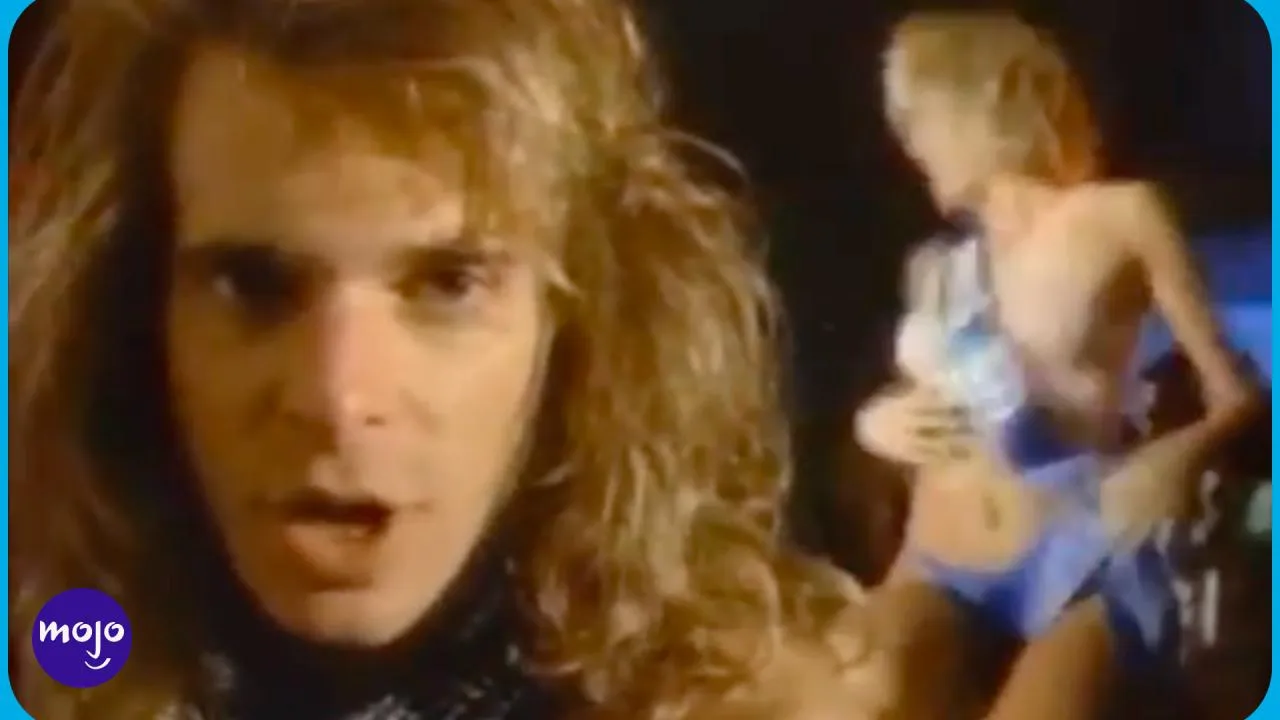
#30: “Hot for Teacher” (1984)
Van Halen
There is absolutely no mystery behind why Van Halen’s “Hot for Teacher” had such a major impact upon its release. The band used the track and its music video to really push the envelope as far as provocative subject matter is involved. Its critics were plentiful, and there were quite a few concerned parents in that number. However, all this attention ended up making the track even more popular. While some still consider it to be highly inappropriate, those who love it are quick to cite it as one of the greatest hard rock songs of the 1980s.
#29: “So What?” (1981)
The Anti Nowhere League
Emerging from the early 1980s punk scene, “So What” by The Anti Nowhere League was frequently banned or heavily edited by broadcasters, including restrictions from the BBC. The British police even seized all copies from the band’s distributors due to its notoriety. The song’s lyrics certainly tick quite a few boxes when it comes to offensiveness. In other words, there was a little something for everyone in there to take offense to, if they were so inclined. The song gained renewed attention when it was covered by Metallica, which brought it to a wider international audience and reignited debates about obscenity in music. They even performed it live with the band’s lead singer, Animal.
#28: “I Want Your Sex” (1987)
George Michael
Having a song title as blatant and unapologetic as “I Want Your Sex” was always going to bring George Michael’s intentions under the spotlight. The BBC famously restricted the track’s airplay due to fears that its message could prove to be counter-productive to broadcasting campaigns about AIDS awareness. The song was released in 1987, at the height of the AIDS crisis, and was accused of promoting promiscuity. Michael himself argued the exact opposite, that the song was in favour of committed relationships. Many countered by claiming that whatever message he had intended was lost within the highly provocative and suggestive framing. Those who defend it call it a major step in challenging broadcast norms and cultural attitudes.
#27: “Smack My Bitch Up” (1997)
The Prodigy
Only eight lyrics exist within The Prodigy’s legendary 1997 hit “Smack My Bitch Up”, and four of them were not the issue. The track was edgy as soon as it was released, and its similarly memorable music video truly sent it over the edge. The video depicts a particularly wild night out on the town, all culminating in an ending that we won’t spoil. Although the song itself is revered as one of the best of its era, it still triggered more than a few people. Even the band themselves have altered the lyrics in recent live performances to remove the title of the song, instead repeating the line ‘change my pitch up’.
#26 :“Hot Blooded” (1978)
Foreigner
Whether you consider “Hot Blooded” to be as tongue-in-cheek as Foreigner themselves do is up to you. However, for many of its critics, few songs sum up the macho attitudes of the 1970s rockstar quite as well… and not necessarily in a good way. Though successful at the time, many modern listeners find its lyrical approach to be quite sleazy and predatory. Lead singer Lou Gramm and co-writer Mick Jones have stated the song was meant to be something of a joke. Whichever side of the fence you fall on, there are quite a few people who couldn’t bear listening to all four minutes and twenty-eight seconds of this one.
#25: “Hey Joe” (1966)
The Jimi Hendrix Experience
To the modern listener, there might not appear to be anything too intense or unsettling in the lyrics to the legendary track “Hey Joe”. Although best-known due to the powerful rendition delivered by The Jimi Hendrix Experience, the song was recorded dozens of times prior to that. What makes it worthy of a spot on this list, is how explicitly it talks about the main character wanting to murder his unfaithful girlfriend. Again, this wouldn’t be as out of the ordinary in the 2020s, but in 1966, this was a pretty hefty subject to build a rock song around. Did it glorify violence? Most would argue it didn’t. However that didn’t stop its many critics from saying it did.
#24: “Black Licorice” (1973)
Grand Funk Railroad
While not overly controversial upon its release, Grand Funk Railroad’s hit single “Black Licorice” has since come under a later critical framework. Just as The Rolling Stones promptly cut “Brown Sugar” out of their set after coming under fire for its message, it didn’t take long for other 70s tracks to be reexamined. By today’s standards, songs like “Black Licorice” read more as a crude attempt at exoticising and objectifying an African American woman. While there are still many who love the song regardless, there are an ever-growing number who find the song practically unlistenable.
#23: “Walk on the Wild Side” (1972)
Lou Reed
When it came to the 1960s, few songwriters did as much as Lou Reed to expand the vocabulary of rock lyricism. He built songs around themes and characters that bordered on taboo, writing lyrics that are still edgy by today’s standards. So when The Velvet Underground ended, and he went solo, it was only natural that he continued in the same vein. His breakout solo single “Walk on the Wild Side” was controversial for its candid portrayal of transgender women, drag culture, and drug use in 1970s New York. The track became a hit, but audiences and critics were split on whether to consider it a subversive masterpiece or a dangerous work of counter-culturalism.
#22: “Puff, the Magic Dragon” (1963)
Peter, Paul and Mary
Although Peter Yarrow spent his lifetime claiming that “Puff the Magic Dragon” was not, in fact, about drugs, the general public was far from convinced. Some say it was the song’s proximity to The Beatles’ similarly ambiguous “Lucy in the Sky with Diamonds” and its supposed double-meaning. Peter, Paul, and Mary would not budge in their stance, however. Even its original songwriter, Leonard Lipton, was adamant that the lyrics were about childhood imagination and the loss of innocence. Either way, it ended up generating quite a lot of controversy from those who believed that the group were simply trying to run damage control.
#21: “Dear God” (1986)
XTC
The famously reclusive Andy Partridge of XTC was not afraid to make his feelings on religion well-known with the release of the band’s seminal hit “Dear God”. What he probably didn’t anticipate was that the track would go on to become a big seller in the US, receiving major radio play. Some stations received legitimate death threats from listeners who were angered by its blatant critique of God and religion, more generally. Controversy is, of course, usually going to help your visibility, and for XTC, it resulted in “Dear God” becoming one of their biggest hits. These days, the song remains a popular one, building off of the band’s reputation as one of the most underrated groups in music history.
#20: “Island Girl” (1975) Elton John
The music industry possesses a laundry list of songs where white lyrical protagonists have placed themselves as de facto narrators for fictional people of color within their songs. This may be why “Island Girl” by Elton John hasn’t been performed by the rock legend since 1990. We can pinpoint historically why a song like “Island Girl” might have been a good idea for Elton back in the mid-70s, since the ska and reggae movements were bringing these genres of music to wider audiences. Yet, the influence of these rhythms and melodies to Elton John’s songwriting was one thing, the salacious lyrical content about a Jamaican sex worker is another. This has made “Island Girl” something of an obscure eyebrow raiser within Elton John’s discography.
#19: “If You Wanna Be Happy” (1963) Jimmy Soul
A bad idea is a bad idea, no matter how many times that idea gets laundered through the cover song washing machine. “If You Wanna Be Happy” by Jimmy Soul was just one of the multiple covers of a traditional Trinidadian calypso song by Roaring Lion. All of these covers possess one thing in common, however, and that’s the overall pitfalls of choosing to marry an “ugly woman.” Jimmy Soul’s doo-wop/rock version from 1963 got him in trouble with radio stations, some of which refused to play the tune. This hasn’t stopped other versions of “If You Wanna Be Happy” from raising their heads on other sources, however, including on the soundtrack to the 1990 comedy, “Mermaids.”
#18: “Brown Sugar” (1971) The Rolling Stones
What do you do when one of your most popular songs, one that’s endured for decades within your devoted fanbase, becomes problematic over time? Some bands shy away from their sordid history, but The Rolling Stones are at a point where their public profile assists in escaping from the controversies associated with songs like “Brown Sugar.” Mick Jagger HAS admitted in the press that he feels differently about “Brown Sugar” now in the modern day, telling Rolling Stone magazine’s Jann Wenner back in 2009 that he’d, “...never would write that song now.” Still, its subject matters of sex and race got it pulled from some radio stations back in the day, and the conversations continue today with regards to its complicated legacy.
#17: “Killing in the Name” (1992) Rage Against the Machine
The usage of profanity has always been a sure fire way for just about any band to get into some hot water. Yet, “Killing in the Name” by Rage Against the Machine remains one of the band’s most popular and well-known songs, in spite of (or due TO) the overabundance of Zack de la Rocha’s F-bombs. Radio stations work differently across the world, however, with many European channels playing the unedited “Killing in the Name” without too much incident. The United States was largely a different matter, however, with many local and national affiliates refusing to play the song at all.
#16: “Bobby Brown (Goes Down)” (1979) Frank Zappa
The legacy of Frank Zappa as a provocateur has been well documented over the years, but 1979’s “Bobby Brown (Goes Down)” proved that this Mother of Invention still had plenty of controversial gas in the tank. The tune exemplified a lot of Zappa’s penchant for weird storytelling and a satirical, often transgressive sense of humor. Fans and detractors alike of Zappa have taken turns either defending or admonishing “Bobby Brown (Goes Down)” since the song first dropped. The sexual politics at play could either come across as liberally freeing or darkly extreme, depending upon the side of one’s argument. The one constant only being how “Bobby Brown (Goes Down)” didn’t receive the same radio play in the U.S. as it did in Europe.
#15: “Relax” (1983) Frankie Goes to Hollywood
All of us as kids probably had at least one movie, song or television show that we gravitated towards, simply for the fact that our parents told us “no.” But, what if they said “Relax?” Frankie Goes to Hollywood certainly said “Relax,” yet the BBC soundly declined their offer, preferring instead to briefly ban the song. There was no stopping Frankie Goes to Hollywood’s question for chart domination, however, and the news headlines only helped “Relax” take over the world. The song and resulting video clip became anthems for unrepentantly explicit behavior, while the tune’s pulsing synth and big, booming chorus had just about everybody bothered and hot.
#14: “Christine Sixteen” (1977) KISS
We’d be here all day if we were to rattle all of the historical examples of pop songs that retained a lurid sexual fantasy about a young woman. “Christine Sixteen” just happened to be one of them at the tail end of the seventies that was recorded by “the hottest band in the world,” KISS. Gene Simmons sings this ode to the titular teenager, and some radio stations, even during the permissive seventies, were not amused. The song didn’t receive airplay in every market, while others preferred to saddle “Christine Sixteen” with an “after dark” slot away from younger listeners.
#13: “Lucy in the Sky with Diamonds” (1967) The Beatles
There are…well, a LOT of reddit threads out there with just as many conflicting opinions about the legacy of John Lennon. This member of The Fab 4 was known for writing songs like “Run For Your Life” that played into Lennon’s reputation for being violent against women. Meanwhile, a less provocative but perhaps more popular lyrical misinterpretation has to do with “Lucy in the Sky with Diamonds.” The song is actually not about tuning in and dropping out, but rather a reference to a drawing by John Lennon’s son, Julian. This didn’t stop radio stations and fans alike from discussing “Lucy’s “ psychedelic implications, however, a discussion that still rages to this day.
#12: “Jesus Christ Pose” (1991) Soundgarden
All it takes is one look at the CD single art for Soundgarden’s “Jesus Christ Pose” to understand how some people were going to be upset. The “skeleton on a cross” look felt more in-line with a metal band than Soundgarden’s grungy Seattle sound, but the fires of controversy were TRULY lit once the accompanying video hit MTV. The clip was almost immediately banned after a backlash from those who felt “Jesus Christ Pose” attacked Christianity. The song may have instead been directed at those with persecution complexes, but the legacy of “Jesus Christ Pose” is more closely tethered to the intense reactions fans had to it back in the day.
#11: “Lola” (1970) The Kinks
The spectrum of what offends the average listener is wide, and often differs wildly to that of our corporate overlords. “Lola” was banned by the BBC back in the day, not for its lyrical content, but for its product placement of the Coca-Cola brand. This isn’t to say that “Lola” hasn’t also gotten The Kinks into the public conversation over the years, however, since the song is still largely debated today. Some claim that the tune is a prescient tale of gender inclusivity, while others feel that its execution has aged extremely poorly.
#10: “Closer” (1994) Nine Inch Nails
Maybe the world wasn’t ready back in 1994 for a music video video experience celebrating dominance, submission and deviancy. This hypothesis could go a little ways in explaining why “Closer” by Nine Inch Nails received so much media coverage back in the day. The song is actually more of an internal narrative, rather than an outward projection of sexual desire. Never underestimate the power of a memorable chorus, however, because most criticisms of “Closer” focused solely on the song’s visual aesthetic and profanity. The clip was initially relegated to late night slots on MTV, but the power of “Closer” soon became strong enough that it helped Trent Reznor and Nine Inch Nails become household names for industrial rock.
#9: “Angel of Death” (1986) Slayer
The realms of fantasy were always a fertile playing ground for early heavy metal bands, but the thrash scene that rose to prominence during the 1980s had some other ideas about lyrical content. Politics and real-life historical events began to creep their way into thrash anthems like “Angel of Death” by Slayer. This latter tune from the group’s landmark “Reign in Blood” LP was even more extreme, however, thanks to its subject matter of Nazi Germany. “Angel of Death” specifically references the horrific medical procedures and war crimes of Josef Mengele, whose work at the Auschwitz concentration camp would draft him into the most infamous annals of history. It was a grim choice of subject matter that raised the eyebrows of just about everyone.
#8: “Illegal Alien” (1984) Genesis
It’s honestly kind of baffling that the progressive rock pioneers in Genesis even recorded this one, never mind releasing it as a single. “Illegal Alien” possesses good intentions, at least, with regards to its lyrical content. After all, the song is actually written about the real-life struggles many face when attempting to source out visas and immigration paperwork for countries like the United States. The controversy, then, unfolds with Phil Collins’ decision to place an affectation on his voice that almost sounds parodic. Additionally, the music video for “Illegal Alien” indulges in stereotypical imagery that honestly hurts the message at play. It may not have been intentional, but this otherwise innocuous song has aged like milk in the modern day.
#7: “Get Your Gunn” (1994) Marilyn Manson
We could honestly populate this entire list with all of the various Marilyn Manson moments that got the singer/songwriter in hot water over the years. We prefer, however, to focus on the world that, at the time anyway, was still awaiting Manson’s cultural impact. It’s difficult for those that weren’t there to appreciate just how much songs like “Get Your Gunn” freaked out parents during the early nineties. The song was also blamed, years later, for posthumously influencing the 1999 massacre at Columbine High School in Colorado. This was despite “Get Your Gunn” actually being about the murder of an abortion provider, David Gunn, back in 1993.
#6: “He Hit Me (And It Felt Like a Kiss)” (1962) The Crystals
We often fall back on the phrase “it was a different time” when attempting to defend cultural divides. Make no mistake, however, folks were PO’d and offended about “He Hit Me (And It Felt Like a Kiss)” by The Crystals even back in ‘62. Everyone involved with the song has an opinion about why it does or doesn’t work, from the shame of songwriter Carole King to the spacious and malevolent production job of Phil Spector. This latter point is important, because the atmosphere of “He Hit Me” feels dark, and in line with the song’s subject matters of gaslighting, abuse, and even Stockholm syndrome. As a pop song, it remains one of the music industry’s darkest curiosities.
#5: “Sex Type Thing” (1993) Stone Temple Pilots
Composing a song from the perspective of a dark or deviant character can sometimes come back to bite the performer in the butt. Scott Weiland found this out first hand when backlash to “Sex Type Thing” by Stone Temple Pilots began to make the rounds back in 1993. It’s perhaps easier to understand today how this song is clearly written outside of Weiland’s personal views on sex, dating, and assault. Yet that didn’t stop many journalists and fans from taking umbrage against a song that they felt glorified and glamorized indecent assault. Weiland even told Rolling Stone during an 1993 interview that he “never thought” that people would connect him to the protagonist of “Sex Type Thing.”
#4: “Money For Nothing” [Uncensored] (1985)
Dire Straits
You never hear this version of Dire Straits’ “Money For Nothing” on the radio, nor is it performed live. The album version of this smash hit is a different story, however, containing an extra verse that got Dire Straits in some seriously hot water. This situation is one that’s similar to Stone Temple Pilots and “Sex Type Thing,” in that Mark Knopfler is singing “Money For Nothing” from an outside perspective. Specifically, it doesn’t really feel out of character for the working class protagonist of “Money For Nothing” to utilize the slurs he does during this verse. Knopfler semi-defended his decision during a 1985 Rolling Stone interview, but continued to sing the verse on tour substituting the word “queenie” for one that we can’t repeat.
#3: “One in a Million” (1988) Guns N’ Roses
These legends courted controversy basically from jump street, not only with the banned cover art for their debut, “Appetite For Destruction,” but again for LP number two. “One in a Million” was taken from the group’s “Lies” album, a track that earned Axl Rose and company a whole lot of grief, thanks to the content of its lyrics. “One in a Million” was accused of basically every -ism and -phobia in the book, from the racial and social variety to Rose’s inflammatory words against the LGBTQIA+ community. The end results aren’t any prettier in hindsight, either and the tune rightfully earned Guns N’ Roses some heavy criticism. Even today, “One in a Million” is still seen as one of the band’s most confusing creative decisions.
#2: “God Save the Queen” (1977)
Sex Pistols
Don’t mess with the monarchy. Or at least don’t release a scathing and satirical single titled “God Save the Queen” unless you’re prepared to deal with the fallout. The Sex Pistols and their manager Malcolm McLaren seemed pleased when they released this two-fingered salute to their home nation. This was a knowing riff on the United Kingdom’s national anthem, a defining anthem of the ‘70s punk era that didn’t really care who it offended. “God Save the Queen” was banned from radio, and many British retail shops wouldn’t carry physical copies of the single, despite its popularity. Basically, “God Save the Queen” pioneered that punk spirit of pissing people off, and it did so in absolutely fabulous style.
#1: “Cop Killer” (1992) Body Count
We’re seriously impressed that one of hip-hop’s elder statesmen, Ice-T, even considered branching off into heavy metal when he formed Body Count back in 1990. This lyrical provocateur continued to stir the societal pot with the band’s debut album, containing the infamous track titled “Cop Killer.” Just about everybody had an opinion on “Cop Killer” back in the early nineties, from U.S. President George H. W. Bush to conservative-leaning actor Charlton Heston. The latter famously pontificated in anger about the song’s anti-cop content, and it was Heston’s words, alongside pressure from various police that got “Body Count” pulled from store shelves. A newly censored version arrived in its place, now with a replacement song that was knowingly titled “Freedom of Speech.”
But what do you consider to be the most offensive song of all-time? Let us know in the comments section below.

