20 Amusement Park Rides That Were BANNED After People Died
20 Amusement Park Rides That Were Banned After People Died
Welcome to WatchMojo, and today we’re looking at some of the most shocking and catastrophic ride failures in amusement park attractions that led crowd-pleasing thrills to permanent shut down.
FreeFall
ICON Park
Opening as the tallest freestanding drop tower in the world, the ICON Park Freefall tower featured a 430-foot plunge designed to give riders a breathtaking view before sending them toward the ground. But in March 2022, that plunge turned into a disaster. The ride became the center of a national tragedy when teenager Tyre Sampson fell from his seat. Subsequent investigations discovered that the ride’s restraint was manually adjusted to accommodate larger riders. When the drop initiated, Tyre slipped from the restraint and fell to his death. With a jury ruling in favor of the family, the ride was permanently closed and dismantled, with the incident prompting widespread changes to restraint standards for drop towers nationwide.
The Haunted Mine Drop
Glenwood Caverns
Imagine plunging into a pitch-black cavern beneath the Colorado mountains. This was exactly what the Haunted Mine Drop promised. Marketed as the world’s first underground drop tower, it plunged riders down to a depth of 96-feet. The thrills transformed into a deep tragedy in 2021 when young Wongel Estifanos fell from her seat. Investigators later determined that she was not properly secured and that multiple safety protocols were skipped or misread by the staff. While the child was unrestrained, the drop continued its cycle, leading to her fatal fall. After the accident, the ride was closed indefinitely as investigators examined procedures, emergency training, and restraint design. Following greater public furor and legal action, the Haunted Mine Drop was permanently retired.
Fire Ball
Ohio State Fair
Tower drops are one thing but the KMG Fire Ball offered a variant of the same: a towering pendulum-style ride. The additional rotation meant that its riders experienced a greater g-force than would an ordinary tower drop. In 2017, a high-profile tragedy struck the Ohio State Fair when a KMG Fire Ball suffered a catastrophic mechanical failure. As the ride swung outward with full force, an entire row of seats detached mid-air and were flung across the midway, killing 18-year-old Tyler Jarrell and injuring seven others. The accident occurred due to widespread rust and metal fatigue on the ride’s support beam that had gone unnoticed for years. Ohio permanently removed the ride and enacted new safety legislation that remains in force today.
The Wild Wonder Roller Coaster
Wonderland Pier
In 1999, Gillian’s Wonderland Pier became the scene of a devastating accident that shocked the New Jersey boardwalk. During a morning run, the Wild Wonder roller coaster failed to make it over a hill. Instead, it unexpectedly rolled backward. Things took a turn for the worse when the ride’s anti-rollback safety locks failed to engage properly. The car gained speed in reverse and slammed into another train waiting behind it. Kimberly Bailey and her young daughter, Jessica, were killed instantly. The tragedy was a combination of operator error, mechanical malfunction, and insufficient safety redundancy. Gillian’s Wonderland Pier permanently removed the ride. The aftermath of the tragedy helped inspire broader state-level reforms for small-scale coasters.
Kayak Experience
Action Park
Action Park is infamous for pushing the boundaries of what an amusement park could get away with, and its so-called Kayak Experience was one of the clearest examples. This ride simulated the thrill of whitewater rapids. In 1982, the attraction became the site of a tragic accident when 27-year-old Jeffrey Nathan stepped onto a metal grate near the ride while exiting his kayak and was suddenly electrocuted. Faulty wiring connected to the underwater fan system allowed an electrical current to travel through the wet surface. Nathan suffered cardiac arrest and later died, while two of his relatives were also injured during the incident. Although a state investigation ultimately cleared the park of legal fault, the ride was permanently shut down out of caution.
Texas Giant
Six Flags Over Texas
The Six Flags Over Texas welcomes both families and thrill-seekers by the droves. On July 19, 2013, that invitation ended in tragedy. Rosy Esparza, a 52-year-old woman visiting the park died while riding the Texas Giant roller coaster. Esparza voiced concerns about her restraint after being seated, but a ride operator assured her that she was properly secured. Shortly after the coaster was dispatched, the train rounded a high-speed turn, and Esparza’s restraint came undone. She fell 75 feet onto a metal roof below and later died from her injuries. The Texas Giant was promptly closed for a few months, during which new coaster restraint designs, safety checks, and operator protocols were implemented, and following which the ride was rebranded and opened anew.
The Big Dipper
Krug Park
The Big Dipper was a wooden coaster that had thrilled regulars at Omaha’s Krug Park. But on July 24, 1930 a single faulty bolt started a chain reaction that turned the ride into one of the deadliest coaster accidents in American history. While a car barreled down the track, the bolt holding a brake shoe slipped out of place and jammed the rear wheels of the car. This led to a deadly domino effect causing the lead car to derail. It would then smash through a fragile guardrail before proceeding to drag three more cars with it. Passengers were crushed beneath the pileup, leaving four dead and 17 critically injured. The city immediately banned all roller coasters, and Krug Park shut down permanently soon after.
Space Journey Ride
OCT East
Space Journey had groundbreaking written all over in its launch. Here was a high-intensity attraction at the OCT East amusement park in Shenzhen, China that combined rapid acceleration and violent spinning. But on June 29, 2010, it became one of China’s most infamous amusement-park tragedies. A sudden power failure followed by an explosion inside the ride chamber led one of the 11 cabins to tear loose from its support structure. The cabin plunged roughly 50 feet to the floor, ejecting passengers. Six people were killed and 10 others were severely injured. The disaster was even more alarming as the ride had officially passed inspection just days earlier. This connection led to deep scrutiny of testing standards and maintenance protocols across the industry.
The Mindbender
Galaxyland
The Mindbender at West Edmonton Mall was once its crown jewel of indoor roller coasters. The ride was the largest of its kind and the main attraction in the mall’s sprawling Galaxyland park. But on June 14, 1986, the ride became the site of a fatal ride failure. Moments into a run, a wheel assembly failed. The fourth car of the train derailed before entering the final loop. The lap bar restraints unlocked and released, ejecting its four passengers, three of whom died. It was later determined that four cap screws holding the wheel assembly had failed. This was likely the result of design flaws and unsatisfactory maintenance. Afterward, the ride underwent major redesigns, and continued until its permanent decommissioning in 2023.
Superman: Tower of Power
Kentucky Kingdom
Drop tower rides are all about that brief, controlled terror and in 2007 that control was lost at Kentucky Kingdom. The park’s Superman: Tower of Power offered a dramatic 177-foot plunge meant to simulate free fall. On one routine ride cycle, a suspension cable snapped, whipping violently through the passenger area and striking teenager Kaitlyn Lassiter. The cable became entangled around Lassiter’s feet during the drop, resulting in catastrophic injuries for the teenager. The ride was closed indefinitely with other drop tower rides following suit for inspection. The accident stands as one of the most haunting examples of how a single worn component can turn a controlled thrill into a life-altering emergency in seconds.
Fujin Raijin II
Expoland
Once one of Japan’s premier amusement parks, Osaka’s Expoland entertained visitors for decades until a tragic accident in 2007. Part of Fujin Raijin II, a standing coaster, derailed, and a 19-year-old college student lost her life. As well as the death, dozens more were injured and many required hospital treatment. The cause for the crash? The ride had been neglected by the park for fifteen years, and the axles eventually couldn’t handle the load anymore since they had never been replaced. Expoland was never able to recover from the accident since nobody wanted to go anymore, and less than two years later, in 2009, the entire park had shut for good.
Verrückt
Schlitterbahn Kansas City
This water slide was once the main attraction at Schlitterbahn water park in Kansas City, even receiving awards and briefly being the world’s tallest water slide, but that changed after a horrific accident in 2016. A weight discrepancy on the raft led to Caleb Schwab losing his life after the raft went airborne. Schwab was also the son of Scott Schwab, a Republican politician in Kansas. The ride’s designers had criminal charges brought against them for second-degree murder, though the case was thrown out of court. Nobody rode Verrückt again after the accident, and it has since been destroyed.
Perilous Plunge
Knott’s Berry Farm
In 2001, the Perilous Plunge flume ride at Knott’s Berry Farm in California caused a fatal accident just one year after it had opened in 2000. A woman somehow slipped from her restraints and fell to her death, in an accident that tarred the ride’s reputation for years afterward. The ride didn’t immediately close, though it continued to be plagued with various technical issues for the next eleven years until it was finally shut down and dismantled in 2012. The park’s attempts to make the ride safer just caused other problems in different areas; luckily though, after the 2001 incident, nobody else lost their life.
Mind Scrambler
Playland
The Mind Scrambler in Playland, New York claimed two lives during its tenure in the park, with the latter being that of a Playland employee who was working and had attended the park for her whole life. Gabriela Garin was thrown off the ride when it was started by another employee who didn’t follow the proper safety guidelines; Garin was trying to help riders with their restraints at the time. Just three years earlier, someone else died in the same way, and those safety guidelines were put in place to stop anything like it from happening again. It’s not entirely clear why the rules weren’t strictly followed, but the two deaths led to the Scrambler being shut for good.
Derby Racer
Revere Beach
Wooden roller coasters technically aren’t more dangerous than modern, steel ones – that is, so long as they’re properly looked after. Many of them aren’t and this has led to lots of nasty accidents over the years, including two horrific wooden roller coaster crashes at Revere Beach in Boston. Possibly the most famous dangerous coaster was Derby Racer, which caused no less than five deaths in separate incidents over the years where people were thrown from the trains; it was ultimately demolished in 1936. Revere Beach also hosted Lightning, which was only in operation for six years and didn’t even make it two days before killing a parkgoer. It was shut in 1933.
Thunder River Rapids Ride
Dreamworld
As one of the most common theme park rides in the world, river rapids rides are widely regarded as safe and good fun for people of all ages. However, their reputation was tarnished in 2016 after a gruesome accident at Dreamworld in Australia. Carrying a total of 6, the raft crashed into another and flipped over; four died in all. The tragedy shook the entire country and many of the park’s guests, with Dreamworld closing for a few weeks. Shockingly, the attraction was found to have myriad mechanical failures and design flaws that had already caused numerous, dangerous breakdowns, landing the park a hefty fine - and the eventual permanent closure of the ride itself.
Sydney Ghost Train
Luna Park Sydney
Luna Park in Sydney, Australia became the home of Australia’s deadliest theme park attraction in 1979, when the park’s Ghost Train burned to the ground late one evening. The fire left people trapped inside the ride and seven people lost their lives. As the ride was totally destroyed there was no risk of it reopening, but the disaster horrified Australia and to this day survivors and witnesses are campaigning for a full investigation into the fire. It’s still not known how the fire started, though some have speculated arson, and many have claimed that the cops did not do their due diligence at the time and might have even been corrupt.
The Tidal Wave Pool [aka The Grave Pool]
Action Park
The most infamous theme park in American history is, of course, Action Park, which operated in New Jersey for most of the 1980s. It was famous for its non-existent health and safety rules and the high danger of its attractions. Though the Cannonball Loop is Action Park’s most notorious ride, it wasn’t operational long enough to cause any deaths. The Tidal Wave Pool, on the other hand, caused at least two – but was also so dangerous that twelve lifeguards needed to be there at all times to rescue people non-stop. Shockingly, the wave pool is still functional as part of Action Park’s replacement, Mountain Creek – but it’s been so heavily modified to make it safer it’s not the same.
Big Dipper
Battersea Park
Not to be confused with the similarly-titled coaster-crash in Omaha, this is the worst theme park accident to ever occur in the U.K.. Five individuals lost their lives in a grisly crash on this roller ride back in 1972. The Big Dipper was a wooden roller coaster and had already suffered a fire in 1970, though the ride survived and nobody was harmed. While the roller coaster train was making its way up the first incline, the chain malfunctioned and the train went backward, where it derailed. As well as the five deaths there were dozens of injuries, not to mention the trauma of the survivors and families of the victims. The tragedy, which may be the worst roller coaster accident in history, led to the ride being immediately shut down and quickly dismantled.
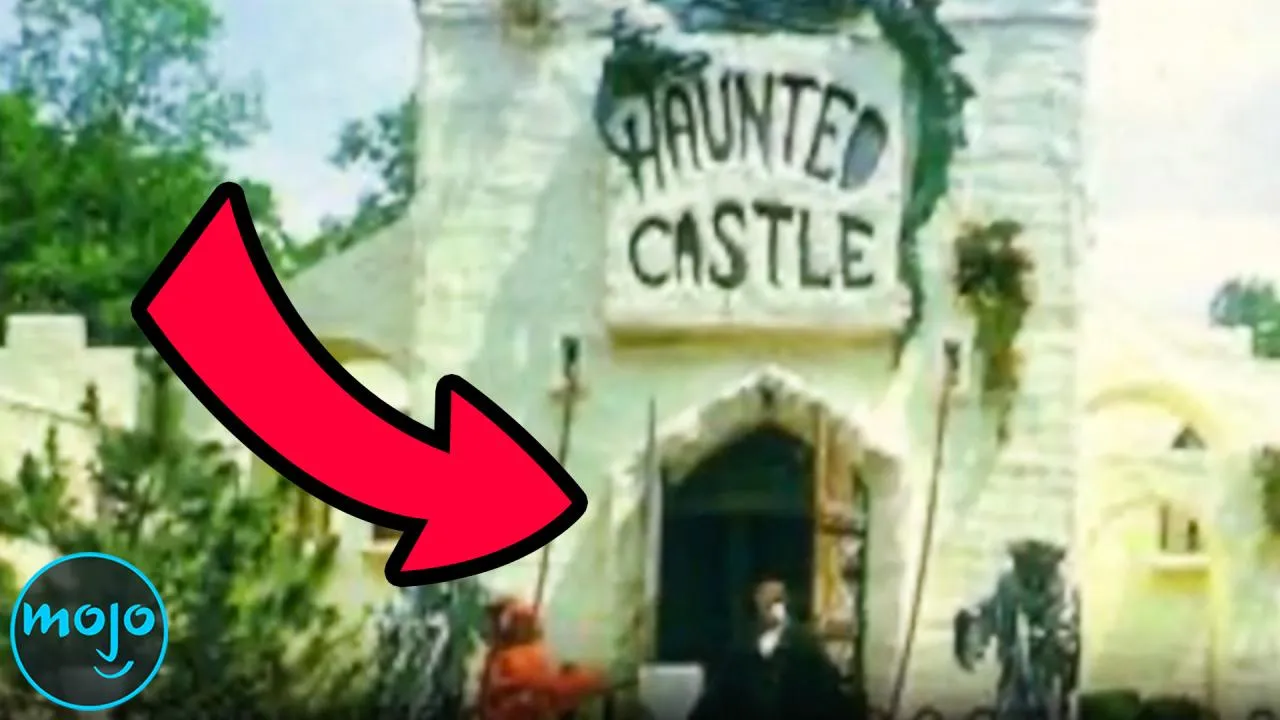
Haunted Castle
Six Flags Great Adventure
Eight teens lost their lives one evening in May 1984, after becoming trapped in Six Flags’ Haunted Castle when a fire broke out. An additional seven people were injured in the blaze, in what remains the deadliest theme park accident on record. The fire had many contributing factors, perhaps the most significant being that it did not have a sprinkler system. This meant the fire spiraled out of control and completely destroyed the structure. Six Flags was taken to court for manslaughter but was found not guilty on the basis that the fire was arson and not a result of negligence from the park or employees – despite the fact the attraction wasn’t up to code.
Which of these accidents shocked you the most and rethinking your ride choices? Let us know in the comments below and don’t forget to hit that subscribe button.

