The 10 HARDEST Metroidvania Games
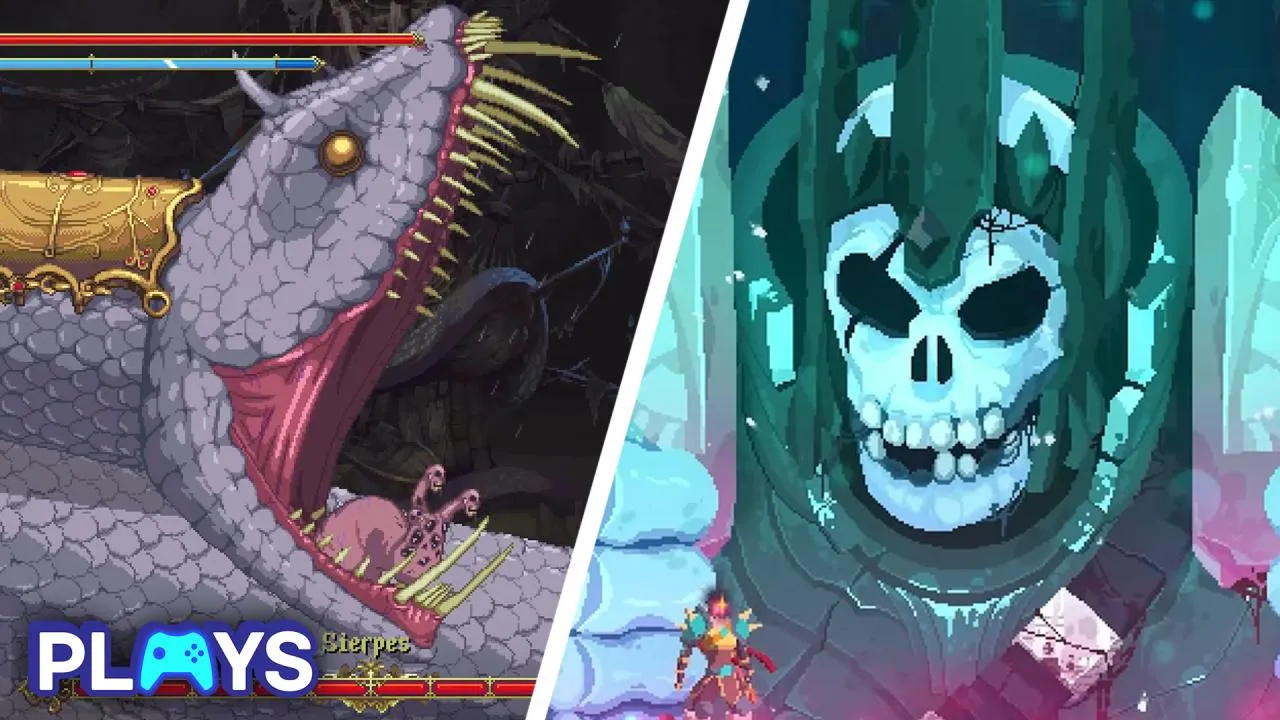
10 Hardest Metroidvania Games
Welcome to MojoPlays and not only are we struggling to find our way out of here, but just minute to minute survival is becoming almost impossible as we navigate the hardest Metroidvania titles that challenge not only our reaction times, but also our patience.
“Axiom Verge” (2015)
Inspired by the OG Metroid games, Axiom Verge plays to its strengths and wears its influences in its pixels. With visuals lifted almost directly from the NES era, sole developer Thomas Happ crafted a sci-fi world full of unique enemies, settings, power-ups and weapons that make the game consistently engaging with frequent unlocks that lead to new unexplored areas and encounters. However, the visuals aren’t all that Thomas Happ was inspired by and the game doesn’t pull any punches much like the console games of old. Axiom Verge does an admirable job at gradually ramping up the game’s difficulty, acclimating the player to new challenges, but it doesn’t hold their hand, instead teaching them through trial and error like any good Metroidvania should. You’re still going to die a lot though so get used to that game over screen.
“Nine Sols” (2024)
When your game takes heavy inspiration from the likes of Sekiro and Hollow Knight, you know you’re going to be in for an uphill battle. Alongside your standard Metroidvania exploration, the game’s combat is where the challenge truly begins to frustrate only the most dedicated of players. With a focus on melee combat, players need to quickly learn the game’s mechanics, particularly the defensive options. Players can deflect and even parry incoming attacks, allowing them to build up their Qi and store it for more devastating attacks. The platforming is tough but fair with a myriad of options such as wall running and grappling, giving players just enough tools in their arsenal to make them feel extremely overpowered but one slip up to completely humble them.
“Salt and Sanctuary” (2016)
2D Souls-likes have become their own sub-genre but few have managed to perfectly translate the “tough but fair” gameplay of the Souls series like one of the first to adapt the formula “Salt and Sanctuary”. The severe difficulty of the Souls genre isn’t the only thing that makes the leap to 2D however. Players are given a wealth of customization options to make their playthrough a tad easier, simply because every little bit helps. These builds are almost a necessity to survive the game’s many boss encounters as focusing on a build that is ill equipped to deal with the challenge ahead will severely impact your progress. The game is challenging no doubt, but thanks to the myriad of options available, you can make the journey just a tad bit more manageable, even if it’s only a little bit.
“Bloodstained: Ritual of the Night” (2019)
Fans of the Castlevania half of the Metroidvania formula had been longing for a worthy follow-up to that long dormant and influential series and thankfully with Bloodstained, their hopes were finally realized. Designed as a spiritual successor to Symphony of the Night, Bloodstained perfectly recaptures everything that made Symphony of the Night the definitive Castlevania title, while also mercilessly punishing players for every indiscretion. Even longtime fans of the Castlevania series might be surprised by the game’s difficulty curve, particularly when it comes to the game’s many bosses who hold absolutely nothing back when decimating both die hard and newcomers equally for entering the arena unprepared. The title of the game ends up being an allegory for all the times you’re going to die and the bloodstains you leave behind.
“Blasphemous” (2019)
Salt and Sanctuary isn’t the only Metroidvania to adapt the Souls formula for their game, but Blasphemous not only takes the tough as nails gameplay but also uses its distinct art style to perfectly encapsulates the hopelessness of the game’s world and their chances of survival. Just as death is an unescapeable part of Blasphemous’ world, not only can the basic enemies send you to an early grave, but the many bosses revel in the privilege. Make no mistake, Blasphemous won’t hold your hand and will repeatedly kill you with little to no mercy just to teach you the lesson of learning enemy patterns through patience rather than speedrunning your adventure. The fact that the entire game world is also open to the player from the start also means it's all too easy to wander into an area you’re underequipped for and will see the game over screen in the blink of an eye.
“Metroid Dread” (2021)
As the pioneer of the Metroid half of the Metroidvania title, the Metroid series has consistently demonstrated what makes the series so iconic, with each entry offering new game mechanics to influence future titles in the genre. However, with Metroid Dread, Samus’ latest adventure ramps up not only the speed of combat and the importance of diligent exploration, but also the difficulty. Anyone coming into Metroid Dread expecting the same level of challenge as previous entries will most certainly struggle with the new more aggressive enemies, bosses and especially the E.M.M.I robots who relentlessly hunt Samus throughout most of her adventure. Not only do jumps need to be precise, but your combat reflexes are also put to the test with the new counter mechanics and unlike previous entries, if you don’t fully explore the world for hidden upgrades and unlocks, you’re only making the journey to end harder on yourself.
“Cave Story+” (2004)
Cave Story is not only one of the earliest indie games ever, but also one of the best adaptations of the Metroidvania formula with inventive innovations and creative upgrades pushing players deeper into the cave system. The use of a cave system for a Metroidvania was inspired and the game has a deep narrative tying all the events and NPC characters you meet along the way together nicely, but the deeper you go, the greater the more demanding the cave. Featuring some of the genres most difficult bosses, oftentimes paired with equally challenging platforming sections, not to mention the dreaded Bloodstained Sanctuary which might be one of the most gruelingly unforgiving gauntlets in the genre, Cave Story forces players to thoroughly explore to make the most of their resources or suffer the consequences.
“Dead Cells” (2018)
What’s harder than a difficult Metroidvania? Combining those game mechanics with a roguelike. What initially sounds like a nightmare combination for fans of either genre, Dead Cells manages the delicate balance between the risk reward of roguelikes and the exploration heavy Metroidvania. With the roguelike level design, you’re never quite sure what type of enemies or layout you might encounter on each run, making the necessity to explore every branching path for new powerups just as important as surviving each run itself. Dead Cells offers players a myriad of weapons scattered throughout the levels as well as dodge mechanics to hold off that dreaded game over screen for just a few more precious moments. As each run requires different strategies and loadouts, Dead Cells’ amalgamation of game design represents the most hardcore and rewarding Metroidvania experience in years, successfully blending genres into something refreshingly challenging. Live, die, and repeat for just one more blessed run.
“Rain World” (2017)
Metroidvanias are a naturally challenging genre, but few games embody this mentality in which the entire world is designed to kill you and kill you quickly. Featuring one of the most impeccably detailed ecosystems in any video game, nature truly is survival of the fittest and the slugcat is smack dab at the bottom of the food chain. Simple enemies are life or death encounters and the act of simply exploring the world can be equal parts frustrating and awe-inspiring, driving players forward to uncover the mystery of the game’s world, no matter how terrifying it may be. The game can be truly cruel sometimes, with its unfair checkpoint system, frustrating controls and unclear objectives, but it is also one of the most rewarding experiences the genre has to offer and has developed a dedicated community that are still analyzing the game’s world and impressively realistic ecosystem.
“Hollow Knight: Silksong” (2025)
You thought Hollow Knight was hard? Silksong told her half-brother to hold her spear. With Silksong, Team Cherry raised the bar of not only what a Metroidvania could be, but also a significant bump in the game’s challenge. Demanding pitch perfect platforming precision, Hornet moves faster than the Knight and the enemies she faces are far more aggressive and demanding than anything in the original Hollow Knight. These new movement mechanics take some getting used to for series veterans, but even then, the numerous gauntlets and challenges are controller shatteringly frustrating, full of oftentimes cheap tricks or surprises forcing players to constantly stay on edge. Boss encounters remain the best in the genre, but you’re going to be sending poor Hornet back to those benches more times than you can count from not only those big spectacle moments, but even just a simple misstep or poorly timed jump. It’s worth it, but you’re going to suffer.
Which Metroidvania game gave you the fight of your life? Share your struggles in the comments.

