10 Controversial Movie Scenes That Triggered an NC-17 Rating
Double Deuce Standards
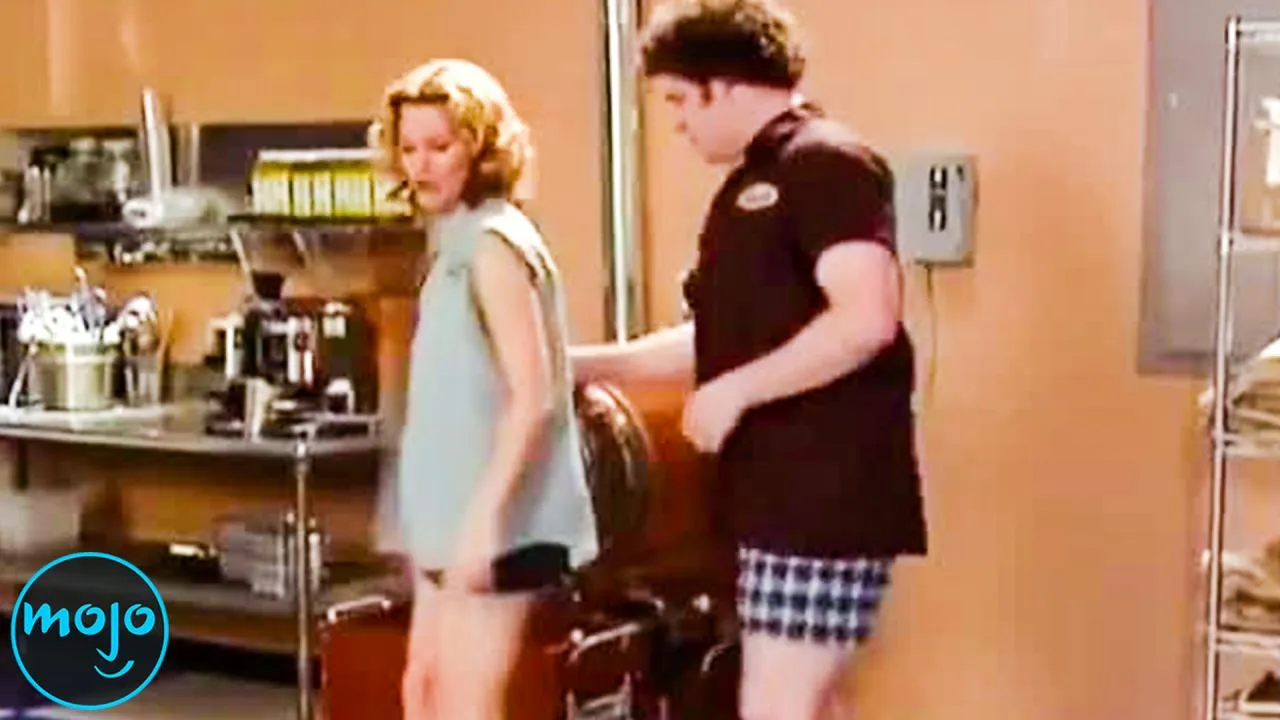
“Zack and Miri Make a Porno” (2008)
Fair play to director Kevin Smith, who took his grievances right to the Motion Picture Association of America when they threatened to saddle his film with an NC-17 rating. The scene in question was one involving bodily expulsions (not the kind you think) within Smith’s 2008 movie, “Zack and Miri Make a Porno.” Smith specifically referenced R-rated movies like “Taking Lives” and the “Jackass” franchise that contained similar content, yet which avoided an NC-17. The MPAA, to their credit, ruled in favor of Smith, and the “Zack and Miri” scene remained in the picture.
Going Down
“Blue Valentine” (2010)
The inclusion of explicit sexual content within a movie always runs the risk of the MPAA requesting edits, or even worse, rating a film NC-17. This rating, though not illegal, severely limits the audience a movie can receive upon release, as well as impacting where it can be seen. “Blue Valentine” Director Derek Cianfrance included a scene of oral sex performed by Ryan Goslin’s character upon the character performed by Michelle Williams, which initially led the MPAA to firmly label the film as NC-17. It wasn’t until producer Harvey Weinstein challenged the decision that Cianfrance’s film was allowed to be released with an R rating.
Full Frontal
“Shame” (2011)
There probably wasn’t a world where director Steve McQueen was going to be able to release his 2011 film “Shame” with anything less than an NC-17 rating. This wasn’t only due to the film’s intensely explicit subject matter regarding sex addiction, but also the inclusion of full frontal male nudity from its star, Michael Fassbender. It’s important to note here that the NC-17 rating (or the X rating, for that matter) shouldn’t be stigmatized. “Shame” was a movie made by adults, dealing with adult content in an adult manner. That said, the NC-17 rating here frankly feels earned, and this is no insult. Instead, it just makes sense.
Shotgun Decapitation
“Wild at Heart” (1990) Movies don’t always receive an NC-17 rating due to their sexual content. Sometimes it’s certain depictions of extreme violence that get filmmakers in hot water with the MPAA, even directors as respected as David Lynch. The NC-17 rating actually didn’t exist back in 1990, when the “Eraserhead” and “Dune” director’s film “Wild at Heart” hit theaters, but that wouldn’t have stopped the MPAA from giving it an X, had Lynch not done some careful editing. A scene of violence involving a shotgun was given some extra smoke effects to hide some of the details, which allowed for “Wild at Heart” to receive an R rating. A X rating would have arrived armed with social stigma.
Public Shame
“Requiem For a Dream” (2000)
There’s little in the way of hope or light to be found within director Darren Aronofsky’s bleak 2000 film, “Requiem For a Dream.” The depiction of substance use disorder here is harrowing, and full of fatalistic, grim imagery. One scene in particular that involved co-star Jennifer Connolly was initially going to have Aronofsky’s film labeled as NC-17. Aronofsky argued that the scene, which saw Connolly’s character performing a sex act for money and illegal substances, was integral to the plot and message, and he refused to cut it from the film. The MPAA also didn’t budge, and “Requiem For a Dream” ended up being released unrated, as opposed to compromising on Aronofsky’s creative vision.
A Brief Shot
“Bad Education” (2004)
Spanish director Pedro Almodóvar is no stranger to controversy, and his filmography is one that’s continually been the subject of discussion and criticism. His “Bad Education” effort from 2004 only included a brief, blink-and-you-miss it shot of actor Gael Garcia Bernal receiving oral sex. However, the inclusion of this scene meant that “Bad Education” was going to receive an NC-17 rating. This might not necessarily occur in the modern day, yet at the same time it’s almost important to remember that 2004 wasn’t all that long ago. It’s remarkable how cultural mores have shifted over the years with regards to depictions of sexuality on screen.
The Butter Scene
“Last Tango in Paris” (1972)
It speaks volumes that many film critics are still discussing the merits and sexual politics behind Bernardo Bertolucci’s super-successful erotic drama from 1972, “Last Tango in Paris.” The film was retroactively rated NC-17 in 1997, while the original X cut courted controversy right from the get-go, thanks to an infamous scene involving butter. There are some who say that “Last Tango in Paris” is an example of filmed non-consent, a sexual snuff film hiding behind the pretense of erotic art. There are still others who hold fast to Bertolucci’s legacy within the New Wave and post-neo-realist movements, despite comments from actress Maria Schneider regarding her humiliation while performing the simulated act.
Getting Around the Censors
“Kids” (1995)
It took the formation of a shell company, titled Shining Excalibur Films, for Miramax to please its Disney overlords regarding the release of “Kids” in 1995. This was how the distributors were able to get around the House of Mouse’s ban on releasing NC-17 material, which was the initial rating levied against “Kids” by the MPAA. The formation of Shining Excalibur essentially meant that this frank and shocking depiction of teenage behavior could be released unrated, thus circumventing the ratings board. “Kids” would go on to achieve a cult fandom, primarily thanks to thriving on the home video market.
Humiliation
“Killer Joe” (2012)
Director William Friedkin proved that he still had plenty of controversial gas left in his creative tank, decades after shocking audiences with “The Exorcist.” Friedkin definitely earned his NC-17 rating with “Killer Joe,” a movie that not only featured some brutal bits of violence, but also some disturbing scenes of sexuality. Elsewhere, the scene where Matthew McConaughey’s character humiliates Gina Gershon’s character in a scene involving a chicken bone was essentially the straw that broke the MPAA’s back. “Killer Joe” was hit with an NC-17, yet William Friedkin didn’t seem to care, because he made the movie he wanted to make.
Assault
“Blonde” (2022)
It isn’t only the studios that have to face down ratings boards. Streaming giants such as Netflix still have to contend with content labeling when they decide to release films to the multiplex. Director Andrew Dominik took some liberties with regards to his 2022 adaptation of Joyce Carol Oates’ 2000 novel, “Blonde,” which itself was a fictionalized reimagining of the life of Marilyn Monroe. The film was given its NC-17 rating thanks to its sexual content, with one particularly disturbing scene involving former president John F. Kennedy and a motel room assault. It’s dark and troubling material that’s difficult to watch, which led the MPAA to give “Blonde” the restrictive rating.
What are your thoughts upon the more boundary-pushing aspects of cinema? Let us know in the comments!

