10 Controversial Death Penalty Cases
10 Controversial Death Penalty Cases
Welcome to WatchMojoUK, and today we’re discussing times British executions led to mass outrage.
Lady Jane Grey
Her nickname, the “Nine Days Queen,” provides a strong hint at how successful her reign was. After the death of Henry VIII, his will stated Lady Grey would inherit the throne after her cousins. Henry’s son, Edward VI, decided to move Grey further up in the succession, making her queen after his death. Unfortunately for Jane, Edward’s half-sister Mary didn’t approve of the change. Mary became Queen, and at first spared her opponent’s life. Sadly, Grey’s father then got involved in a rebellion, and Mary became fearful. So, Jane was convicted of treason and tragically beheaded in February 1554, still just a teenage girl.
William Wallace
In Scotland, William Wallace is a national treasure, famous for his heroic fight against the English in the First War of Scottish Independence. His reputation is completely different down south, as contemporary English records claim he committed atrocities against civilians. Now, those actions would be considered war crimes. It’s unclear whether he truly did these horrific deeds or if it was simply English propaganda, making it a contentious execution. Wallace was hanged, drawn, and quartered for treason in the end. He denied both charges, with the treason one being most questionable, since he’d never sworn fealty to the English crown.
James Pratt & John Smith
Sadly, sodomy was punishable by death in England for centuries. The last two people executed for this were James Pratt and John Smith, who lost their lives in 1835. The landlord of an elderly man named William Bonill became concerned after noticing he had a lot of men visit. After Smith and Pratt appeared at his home one night, the landlord went snooping with his wife, then supposedly saw them making love with one another. Police were quickly called, and all 3 were arrested. Bonill avoided a death sentence, as he was away when the landlord burst in, but was still sent to Australia. The landlord gave a highly questionable testimony, leading the pair to be executed, despite describing some literally impossible acts.
Anne Boleyn
Almost any child educated in the UK knows the fate of Henry VIII’s six wives. One of the most famous was Anne Boleyn, his second wife, who was executed for treason in 1536. Well, it was mainly because she hadn’t given Henry a male heir, so he decided he wanted to marry Jane Seymour instead. Killing her was simpler than a divorce; also, it would have been embarrassing after spending 7 years trying to divorce Catherine, only to leave Boleyn after 3. Historians generally believe the crimes she was accused of were fabricated, implying she died mainly so the king could save face.
Gwynne Evans & Peter Allen
In 1964, John Alan West was horrifically murdered in his home after Gwynne Evans and Peter Allen broke in to burgle him. In the following trial, both blamed each other, leading the judge to give them both the death penalty. They had botched defenses, like Evans randomly talking about not having a knife before any mention of West being stabbed. While they were probably guilty of the crime, it was scandalous as the death penalty was suspended in 1965, 15 months later. This makes the pair pretty unlucky, but not as unlucky as John West, making it hard to feel that sorry for them.
Mahmood Hussein Mattan
Another pivotal case leading to the abolishment of the death penalty was that of Mahmood Mattan. In 1952, he was incorrectly found guilty of murder, which disturbingly led to his hanging. He was originally from Somaliland, present-day Somalia, and worked as a seaman, which led him to Wales. The trial was a shambles, to put it mildly, with him losing his life primarily because of a single witness. Since his death, it’s become clear that he was innocent, leading his family to be awarded £725,000 in compensation, and eventually South Wales Police apologised for the catastrophic failure.
Derek Bentley
In 1953, Bentley became a victim of a horrific injustice after becoming an accomplice to murder. He was only 19 years old when he and Christopher Craig broke into a Croydon warehouse. Police were tipped off about the robbery, so they arrived and tried to detain the pair. Craig then pulled out a gun, and according to some witnesses, they asked him to hand it over. Then, Bentley shouted, “Let him have it.” According to the defence, he was telling him to give the gun, but the prosecution said he was encouraging him to open fire, which is what Craig did. An officer died, and the pair were found guilty. Craig was too young to get the death penalty, but Bentley sadly wasn’t.
Ruth Ellis
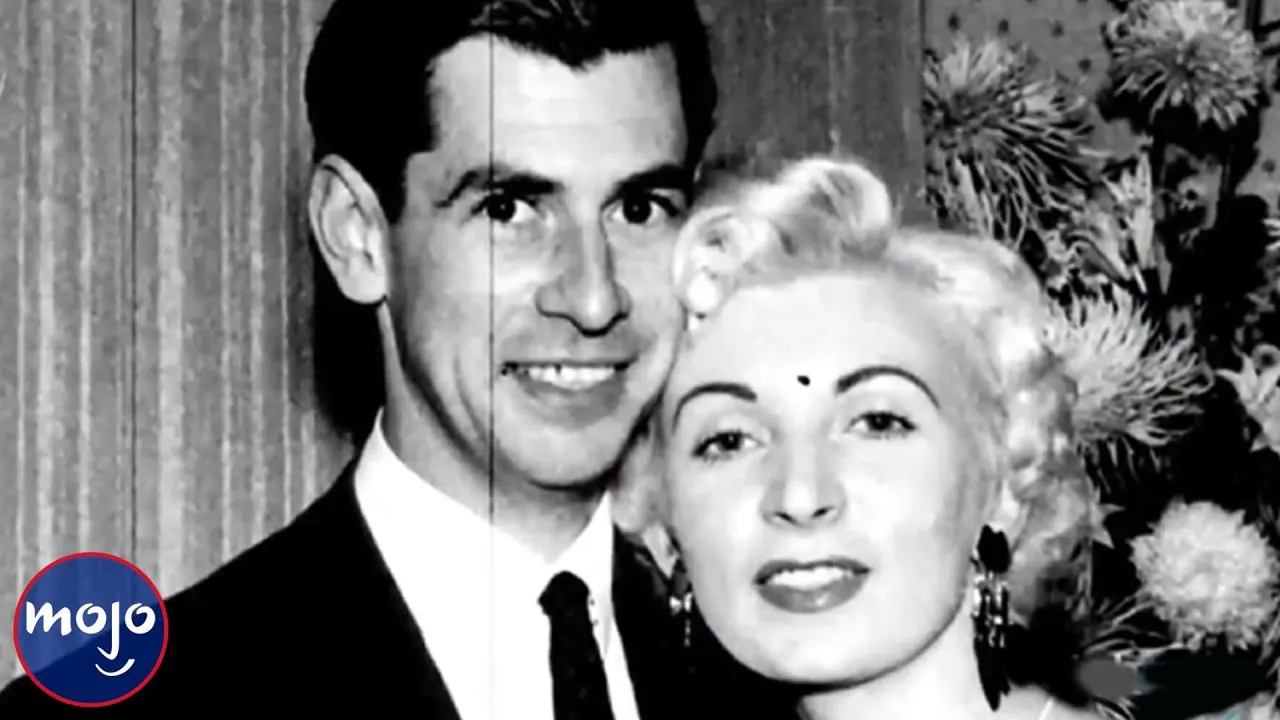
The last woman in Britain to be executed was Ruth Ellis in 1955. She lived a pretty sad life, getting treated terribly by countless unpleasant men. Ellis eventually snapped and shot David Blakely, a lover of hers who was engaged to someone else. It only took the jury twenty minutes to convict her after the prosecutor asked her only one question. It was scandalous because it ignored her decades of history being severely victimised by men, reflective of attitudes towards women in the 50s. For example, she was once punched in the stomach by Blakely, which led to her miscarrying.
Charles I of England
King Charles is most famous for the huge part he played in kickstarting the English Civil War. He didn’t like parliament limiting his power, so he dissolved parliament not once, but four times in total. These decisions led to a civil war between the Royalists and Parliamentarians, which Charles famously lost. Then, a second kicked off in 1648, which he also lost, leading him to be found guilty of treason and executed in 1649. You could easily argue that it was the most historically significant trial in English history, which led to the dissolution of the monarchy. Well, in name at least, Oliver Cromwell became Lord Protector of the Commonwealth, then went on to dissolve parliament 3 times himself.
Timothy Evans
The murders of John Christie are so famous that they’ve been dramatised multiple times in the decades since his capture. He killed at least 8 individuals at his home in Rillington Place, London, then hid their bodies in and around the property. Christie nearly got away with it after framing his neighbour, Timothy Evans, for two of these murders, which were Evans’ wife and daughter. Christie was a massive factor in finding Evans guilty, leading to his hanging in 1950. After people learned Christie had orchestrated the ordeal, a campaign to overturn his conviction began, and it eventually played a major role in ending capital punishment.
Were there any more noteworthy cases we didn’t mention today? Let us know in the comments below!
