5 Brilliant Agatha Christie Adaptations & 5 That Misunderstood the Books
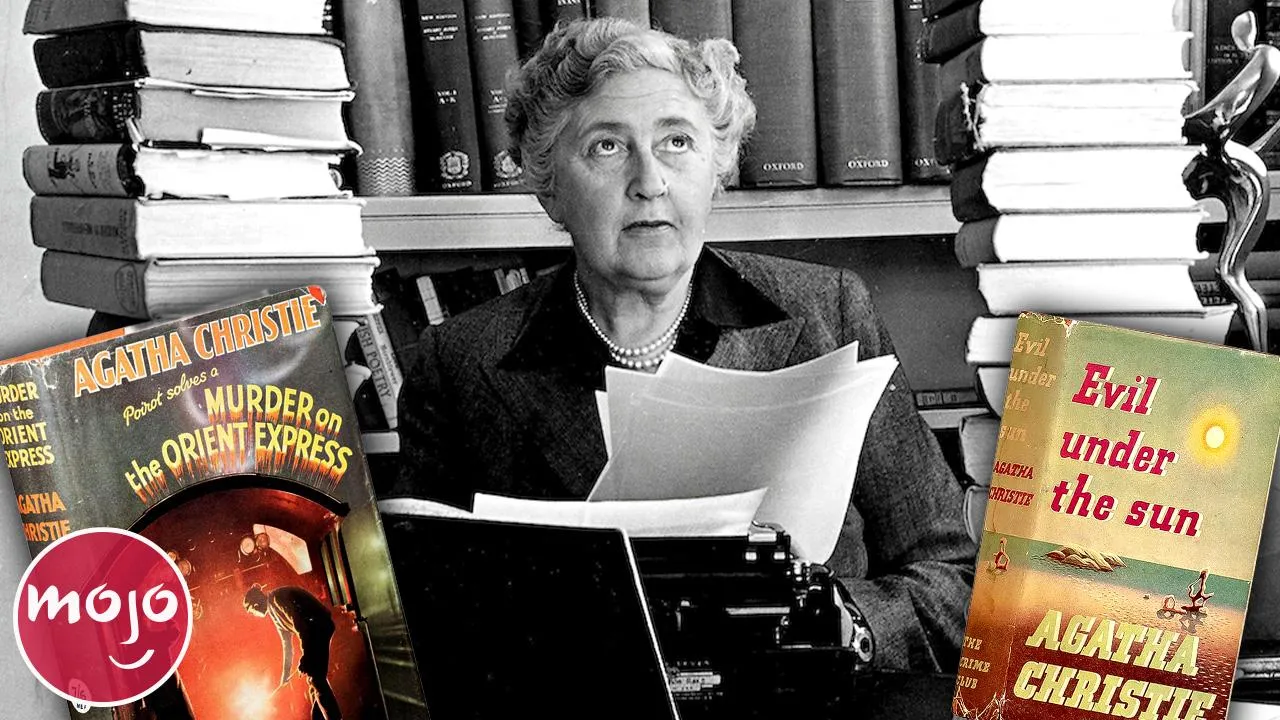
5 Agatha Christie-Adaptations That Understood the Assignment & 5 That Butchered It
Welcome to MsMojo, and today we’re counting down Agatha Christie movie and TV adaptations, from the screen versions that honored her legendary mysteries to the ones that completely lost the plot. If you want to keep the mystery in murder mystery alive, this is your spoiler warning.
#5: Understood the Assignment: “Agatha Christie's Seven Dials” (2026)
This series has become a major talking point thanks to its fizzier, high-energy spin on Agatha Christie’s classic murder mystery. While some longtime fans are split on the creative liberties, the show is earning plenty of praise for its standout lead performance, bold visual style, and for being exactly the kind of comfort-watch TV that makes gloomy January feel a little less bleak. Even if it’s not one of Christie’s most iconic stories, writer Chris Chibnall brings out its full spectrum, occasionally even heightening the original material. The tight three-episode structure cranks up the tension, gives the story room to breathe, and makes stopping before the finale feel physically impossible.
#5: Butchered It: “Appointment with Death” (1988)
As far as Peter Ustinov’s Poirot pictures go, this one’s often regarded as the weakest link. For many, it felt like it was just following a checklist of tropes but never really built up to much. The story wanders away from Christie’s novel in ways that don’t add anything interesting, stripping out a lot of what made the original so unsettling. The mystery itself feels basic, the characters are kinda meh, and the tension never really tightens, so there isn’t really much to hold an audience. Instead of a sharp psychological puzzle, it plays like a routine TV mystery stretched to feature length, which makes the whole thing feel forgettable rather than gripping.
#4: Understood the Assignment: “Murder on the Orient Express” (1974)
Sidney Lumet’s star-studded 1974 rendition of this classic Poirot caper is nothing short of a cinematic triumph. The cast is star-studded, the production is lush, and the snowbound train is the perfect, glamorous yet uncomfortably tight location to tell this story. Lumet handles Christie’s maze of suspects with a steady hand, keeping the mystery clear without sanding down its complexity. Most importantly, the film trusts the novel’s unconventional solution and rolls toward it boldly. The period details, from the costumes to the richly detailed interiors, add texture without distracting from the plot. It’s deeply respectful of its source, even Christie herself reportedly cited it as one of her favorite adaptations.
#4: Butchered It: “Death on the Nile” (2022)
Kenneth Branagh’s second outing as the iconic Hercule Poirot, following his more favorable “Murder on the Orient Express,” unfortunately sailed into rough waters. While the film offers ample visual spectacle and striking landscapes, the frequent use of special effects can make the world feel overly polished, occasionally breaking the sense of immersion. The cast is stacked, yet the characters don’t always click, which is a problem for a story built on jealousy and simmering resentment. The pacing has a tendency to drag, and the mystery never feels as juicy as it should. Compared to Branagh’s other Christie adaptations, this one feels oddly distant and overproduced. It felt very style over substance.
#3: Understood the Assignment: “And Then There Were None” (1945)
Even though René Clair’s 1945 adaptation significantly changes the novel’s famously bleak ending, it still captures the core psychological horror and claustrophobic tension that define Christie’s chilling masterpiece. It creates an intensely suspenseful atmosphere, trapping both the characters and the audience in a nightmare where trust evaporates by the minute. And that tension is cranked up high and almost never lets up. It also leans into a noir sensibility, adding an extra layer of unease and fatalism. Sure, purists may prefer later versions that preserve Christie’s original ending. However, even they can’t deny that this one remains a landmark adaptation that understands how fear, suspicion, and guilt can be just as terrifying as the murders themselves.
#3: Butchered It: “The Pale Horse” (2020)
This adaptation looks great at first glance, dripping in atmosphere and eerie style, but it takes some bold swings that just don’t necessarily always work in its favor. While this series got off to a strong start with the critics, the love didn’t last long. This adaptation loses much of the mystery that made the novel so intriguing. Characters are reworked, motivations shift, and the balance between rational explanation and unnatural suggestion tips too far in one direction. For viewers unfamiliar with the book, it might still be engaging, but for longtime fans, it feels like a version that doesn’t fully trust the original’s restraint. The ending proved controversial as well, due to its vagueness.
#2: Understood the Assignment: “Agatha Christie’s Poirot” (1989-2013)
This series isn’t just an adaptation, it’s a commitment. Over more than twenty years, it tackled nearly the entire Poirot canon with remarkable care and consistency. David Suchet’s portrayal captures every side of Poirot, from his meticulous habits to his sharp intellect and quiet empathy, without ever tipping into caricature. The period detail is rich, the production design feels thoughtful and polished, and the scripts often stick remarkably close to Christie’s original dialogue. What really sets it apart is how much respect it shows the material, treating each story as worth telling properly. For many viewers, this isn’t just their favorite version of Poirot. It’s the definitive Poirot.
#2: Butchered It: “Thirteen at Dinner” (1985)
Although critics and audiences generally enjoyed Ustinov’s portrayal in this adaptation of “Lord Edgware Dies,” it remained controversial among Christie purists. For one thing, Ustinov’s interpretation of the character just didn’t consistently match up to the Poirot from the novels. One of the most polarizing aspects was the seemingly cost-cutting decision to move the story from the 1930s to a contemporary setting. Some critics felt the adaptation made the killer’s identity too easy to guess compared to the novel, partly due to the dual role played by Faye Dunaway. You hardly had to be a Poirot to figure out whodunit on this occasion. No wonder viewers felt disengaged rather than enthralled.
Before we unveil our top pick, here are a few honorable mentions.
Understood the Assignment: “Alibi” (1931)
An Early Christie Adaptation Praised for Austin Trevor’s Performance & Now a Landmark Lost Film
A Bit of Both: “The Seven Dials Mystery” (1981)
This Adaptation Sticks Closely to the Source Material but Is Marred by Slow Pacing & a Lack of Narrative Momentum
Understood the Assignment: “Death on the Nile” (1978)
Celebrated for Its Exotic Locations, Star-Studded Cast, and Faithful, Intriguing Rendition of Christie’s Mystery
Understood the Assignment: “Murder, She Said” (1961)
Introduced Dame Margaret Rutherford’s Beloved Miss Marple, Whose Spirited Performance Spawned Multiple Popular Sequels
#1: Understood the Assignment: “Witness for the Prosecution” (1957)
Billy Wilder’s courtroom drama is a near-perfect example of how to adapt a stage play for the screen. It keeps all the clever twists and mounting tension of Christie’s original while making it feel fully cinematic. The performances are a major reason it works, with Tyrone Power, Marlene Dietrich, and Charles Laughton all delivering confident, magnetic turns. Wilder’s direction carefully builds suspense, guiding the audience through courtroom battles, twists, and shocking revelations, culminating in one of the most unexpected and celebrated endings in cinematic history. Christie herself reportedly called it “the finest film derived from one of her stories.” You don’t get a more definitive verdict than that now, do you?
#1: Butchered It: “The Alphabet Murders” (1965)
This one goes off the rails almost immediately. Instead of leaning into the menace and psychological tension of “The ABC Murders,” the film opts for broad comedy that clashes hard with the story’s dark core. The film fundamentally misses the serious, psychological tone of the source material, opting instead for over-the-top humor that feels entirely out of place. Instead of the calm, razor-sharp Poirot at the center of the novel, the movie presents a clumsy, exaggerated version whose antics overwhelm the actual investigation. Unfortunately, the film’s farcical take on the protagonist and plot drains the story of the smart psychological tension that made Christie’s premise so compelling. It all feels frustratingly hollow and unfaithful.
Which Agatha Christie adaptation do you think cracked the code, and which ones are a mystery as to how they ever got made? Let us know in the comments.

